
Review · STREET ART
ADVANCED GRAFFITI STREET ART TOUR / SHOREDITCH / EAST LONDON
Graffiti turns streets into a history lesson. This advanced East London tour shows you how street art works as culture, politics, and visual language, not just random wall paint. I love the way it pairs Banksy with broader context, and then follows that up with in-depth analysis you can actually use when you walk the same streets again.
Two more things matter here: the group is kept small (max 15), and you get answers to questions as you go. One drawback to plan for is that it is not set up for wheelchair users, and you will spend a lot of time on foot in outdoor spots, which can feel chilly in winter Shoreditch.
In This Review
- Key highlights I’d block out time for
- Shoreditch walls as a living history lesson
- How the 2.5 hours feels: small group, strong pacing, real Q and A
- Banksy in context: pieces, inspiration, and the controversies that come with fame
- Beyond Banksy: Ben Eine and other writers who shape the scene
- Reading graffiti like a language: codes, slang, and social rules
- Team Robbo vs Banksy: rivalry as part of street art’s history
- Shoreditch and Brick Lane route: where you find density and detail
- Practical photography rules (so you don’t ruin the moment)
- Price and value: why $22 can feel like a lot more
- Who this tour is best for (and who might want something else)
- Should you book the Advanced Graffiti Street Art Tour in Shoreditch?
- FAQ
- How long is the Advanced Graffiti Street Art Tour in Shoreditch?
- Where does the tour take place?
- How many Banksy artworks are included?
- What kinds of topics will I learn about?
- Will I get time for questions?
- Can I take photos during the tour?
- Is the tour suitable for wheelchair users?
- What language is the tour guide?
- How much does the tour cost?
- Is free cancellation available?
Key highlights I’d block out time for
- Banksy coverage with at least three pieces, up to four in East London, with story, inspiration, and controversy.
- A small-group format (maximum 15) that keeps the pace friendly and the Q and A real.
- Graffiti codes and slang, plus how to read references, hierarchies, and rivalries.
- Ben Eine and other London writers, so you are not stuck in a Banksy-only loop.
- Photo opportunities built into the route, with clear guidance for respectful street photography.
- Team Robbo vs Banksy discussed as more than drama, as part of the scene’s rules.
Shoreditch walls as a living history lesson
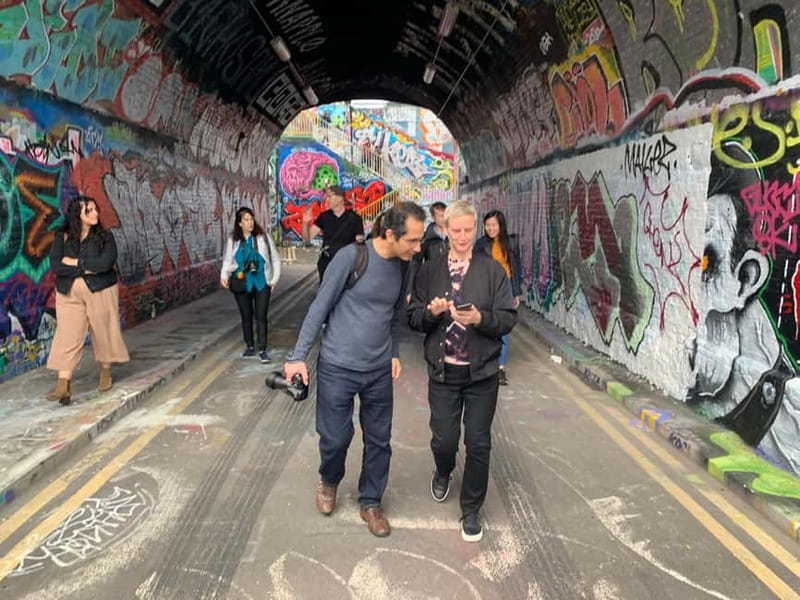
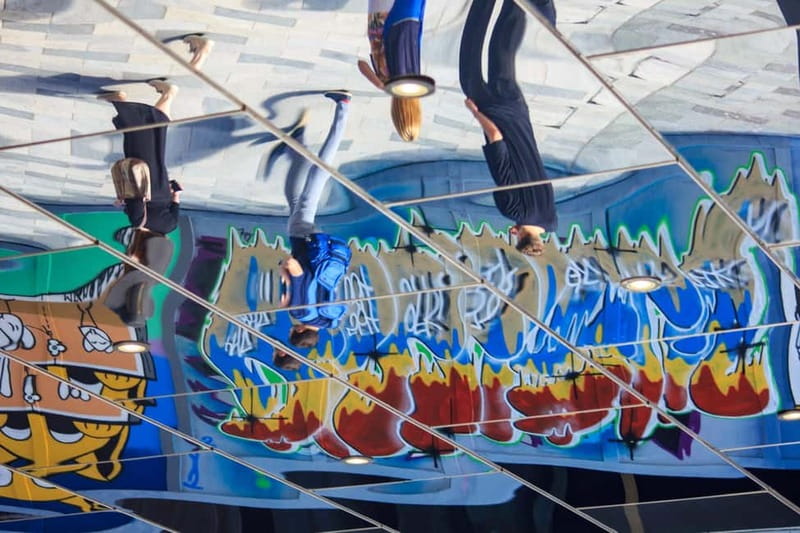
Shoreditch is the kind of place where you can walk past a wall for years and never notice what you are looking at. This tour fixes that. Instead of treating street art like a background decoration, you learn to see it as a set of messages, symbols, and social signals written for a specific audience.
You start with the big picture: graffiti and street art did not just happen. It evolved alongside class tensions, politics, gentrification, and later social media. That matters because once you know what changed in the world around it, the art stops feeling random. You begin to spot why certain images, styles, or locations show up when they do.
And yes, Banksy is part of the focus. But the tour doesn’t let him be the whole story. You get the origin and development of graffiti in the UK, and then you connect it to what happens on the street today. That mix is what makes the tour feel like more than a guided walk.
A few more London days worth comparing
- London: The London Eye Entry Ticket
★ 4.6 · 35,875 reviews - London: Tower of London and Crown Jewels Exhibition Ticket
★ 4.6 · 28,769 reviews - From London: Harry Potter Warner Bros Studio Tour
★ 4.7 · 26,588 reviews
How the 2.5 hours feels: small group, strong pacing, real Q and A
This is a 2.5-hour, English-language walking tour with groups capped at 15. In practice, that small size changes the experience. You are not shouting over a crowd. You can actually hear explanations, and you get to ask follow-up questions without the guide racing to the next landmark.
The guide for many departures is James, and the vibe from the group feedback is consistent: he is prepared, he talks clearly, and he answers questions directly. People who knew almost nothing about street art still left saying they were able to look at pieces differently afterward. That tells you the tour is built with beginners in mind, even while it is called Advanced.
You should also know the tour includes moments where photographers will want to pause. There are “look here” photo opportunities, and you get enough time to frame shots and capture context, not just close-ups. A key practical point: if you see artists at work, photography is allowed but you are asked to be discreet and not photograph anyone at work without permission.
Banksy in context: pieces, inspiration, and the controversies that come with fame
You should expect a dedicated section on Banksy, with at least three works covered in East London, and possibly up to four depending on what is accessible on the day. The point is not just to point at a stencil. It is to connect the work to the ideas behind it and to the wider story of why Banksy became such a flashpoint.
You learn about Banksy’s history and inspiration, plus the controversies that follow him. That part is important because street art lives in a tension: it can be seen as creative expression, a political voice, and also as something that challenges rules around property and permission. Once you hear the context, Banksy is easier to read. You stop asking only what it looks like, and you start asking what it is responding to.
What I like is the approach to comparison. The guide doesn’t treat each piece as isolated. You learn to notice references and how they relate to other parts of London’s graffiti and street art scene. That makes a Banksy stop feel more like a lesson with examples, rather than a checklist.
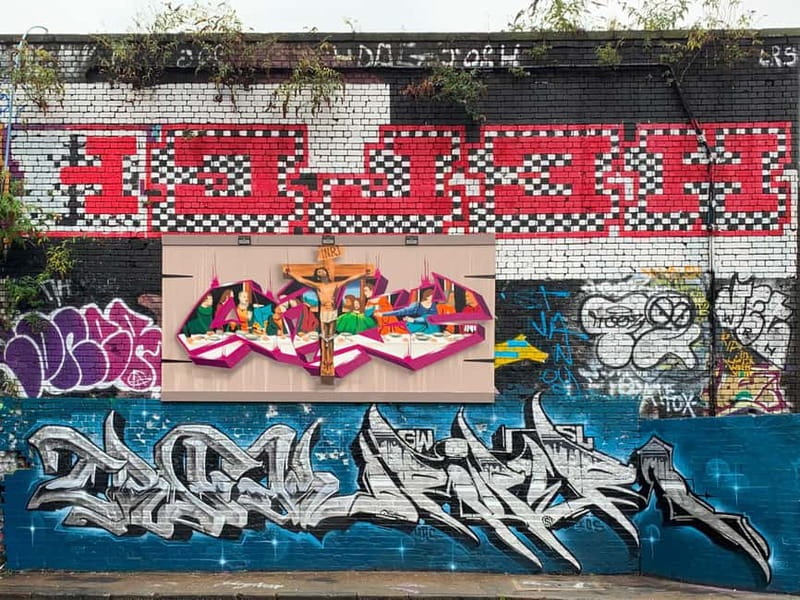
Photo-wise, Banksy pieces are often surrounded by layers of other marks. That is where the tour really helps. You are guided to think about what else is in frame, not just the big name work.
Beyond Banksy: Ben Eine and other writers who shape the scene
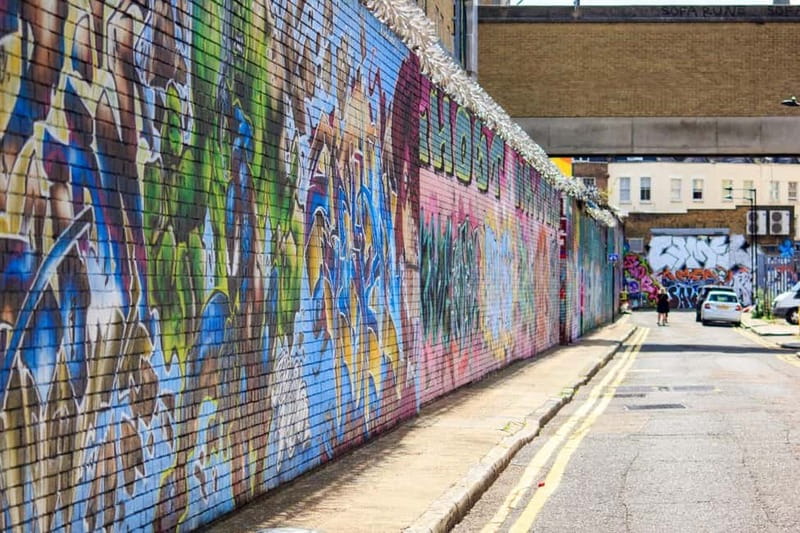
A lot of street art tours sell you Banksy first and everything else as leftovers. This one is different. It explicitly includes Ben Eine, the artist who has mastered both graffiti and street art, and it also brings in stories around multiple writers across London.
You will see more than Banksy on the route, and the tour pays attention to the ecosystem of artists, styles, and influences. That includes dozens of other graffiti writers, and the lesson is that street art is never one person’s show. Even when a famous figure dominates headlines, the walls are built by many hands over many years.
Why this matters for you is simple: once you learn how to recognize the scene beyond the headline artists, you will find more art on your own. People often think they need a guide just to locate famous pieces. After a tour like this, you start noticing the smaller signals too, the recurring motifs, and the ways different styles communicate status or affiliation.
If you are bringing family, this section helps. A 12-year-old can enjoy the visuals, and an adult can still get meaning from the stories. The tour’s structure supports both.
Same corner of Britain, a different sort of outing:
- Magical London: Harry Potter Guided Walking Tour
★ 4.7 · 22,044 reviews - London: Madame Tussauds London
★ 4.6 · 20,915 reviews - London: Warner Bros. Studio Harry Potter Tour & Branded Bus
★ 4.7 · 19,194 reviews - London: Tower Bridge Entry Ticket
★ 4.7 · 15,560 reviews
Reading graffiti like a language: codes, slang, and social rules
This is the part that makes it feel truly Advanced. You are not only learning the history. You are learning the internal logic of graffiti culture.
The tour covers graffiti codes and slang, plus hierarchies and rivalries. That means you get help decoding what certain pieces are referencing, and where those references come from. You also learn how to analyze a piece critically, instead of just reacting to it.
Think of it like learning a few basics of another language. You might not understand everything at first, but you start catching patterns. And once you catch patterns, you stop walking past walls like they are random.
People often describe a shift after this kind of tour: they return to the same streets later and actually know what to look for. That is not magic. It is because the guide teaches you an approach, not just facts. You learn to look at marks, placement, and styling choices as part of communication.
Also, because the guide takes questions during the walk, you can ask about specific styles you notice while walking. That turns the city into your classroom in a very practical way.
Team Robbo vs Banksy: rivalry as part of street art’s history
You will also hear about the infamous Team Robbo vs Banksy conflict. The way it is framed matters. It is not presented as tabloid drama. It is discussed as part of how street art communities operate, where rivalries sit alongside creativity and where reputations can shape opportunities, attention, and risk.
This is useful even if you already know the names. Rivalry in graffiti culture often reveals more than ego. It shows who influenced whom, which approaches were respected, and how the scene responded to fame. When you understand that, you can read pieces with more context.
And if you are the type who loves seeing the “why,” this is a strong stop. The conflict becomes a story lens you can apply to other rivalries and to the way different artists position themselves within the broader scene.
Shoreditch and Brick Lane route: where you find density and detail
The tour focuses on Shoreditch and Brick Lane, two areas where street art isn’t an occasional surprise. It is part of the everyday visual environment.
What makes this route valuable is the density. You get multiple chances to compare pieces in the same general part of town. That helps you notice differences in message and style. Even if you only remember two lessons, that comparison makes those lessons stick.
In addition, the tour covers the most exciting bits of East London for this scene, including corners and alleys you might otherwise miss. One of the recurring themes in the experience feedback is that people found themselves noticing the city differently, because the guide pointed them toward places with more meaning than the main streets.
If you are a photographer, Brick Lane and the surrounding areas are a strong match. You are given photo opportunities during the walk, and you learn how to frame street art with context. You also learn the practical difference between photographing an art surface and photographing active street work. If artists are working, you pause and follow guidance, including discretion and permission.
Practical photography rules (so you don’t ruin the moment)
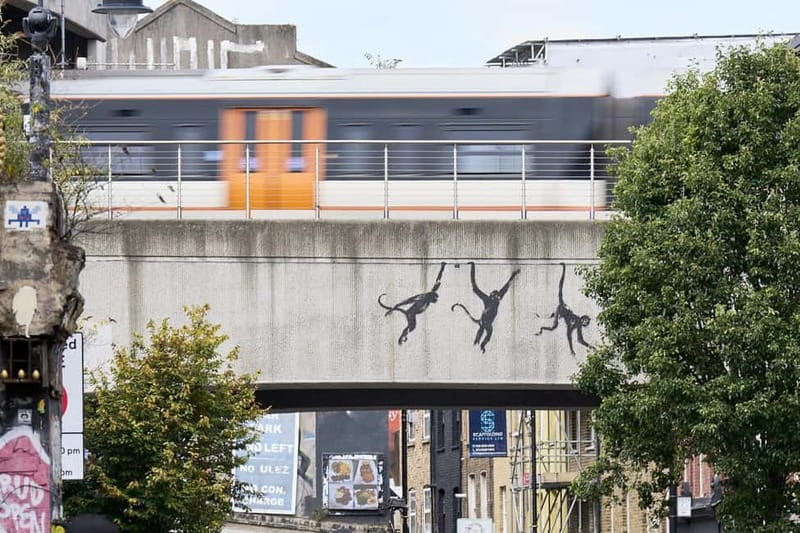
Photography is allowed and encouraged. That is great news if you love documenting what you find. Just be mindful about the one condition built into the experience: if you see artists at work, you should act discreetly and avoid photographing them without express permission.
For you, that means two things. First, set up quickly and move on when you can. Second, treat working artists like people, not scenery. The tour’s style is respectful, and it helps keep the atmosphere good for everyone.
If you bring a phone or a camera, expect good results. The streets provide natural backdrops, and the guide steers you toward angles that capture more than paint. You are more likely to get photos that feel like they belong to a story, not just a picture of a wall.
Price and value: why $22 can feel like a lot more
At $22 per person for 2.5 hours, this tour prices itself like a budget-friendly specialty experience. The value comes from three places.
First, you get multiple key stops, including at least three Banksy works. That alone turns the walk into something more than a general wander.
Second, the guide’s focus is on interpretation, not only sights. Learning graffiti codes, slang, and how to read references gives you a skill you can use after the tour.
Third, the group size cap matters. With max 15 people, you get a teaching vibe rather than a lecture with no air to breathe. That turns a short tour into an experience that sticks.
In other words, you are not paying for distance. You are paying for understanding, plus access to someone who can answer questions on the spot.
Who this tour is best for (and who might want something else)
This fits best if you want more than Instagram photos and you enjoy understanding context. You will like it if you care about how art intersects with politics, class, gentrification, and public space. You’ll also enjoy it if you want help learning how graffiti culture communicates, including codes, hierarchies, and rivalries.
It can work well for families too. One group feedback included a multi-age family with a 12-year-old and younger kids who stayed engaged, mainly because the guide kept explanations clear and paced the walk so everyone could follow.
One practical note: it is not suitable for wheelchair users. If mobility is an issue, you may need a different style of tour.
Should you book the Advanced Graffiti Street Art Tour in Shoreditch?
If your goal is to learn how to read graffiti and not just look at it, I think this is a strong choice. The best reason is the balance: Banksy is featured, but you also get Ben Eine, the wider London writer community, and the cultural rules that shape what you see on walls.
Book it if you enjoy asking questions, like structured walks, and want photo stops that come with meaning. Skip it if you only want a quick hit of famous names and you are not interested in the social and historical context behind the art.
If you do book, bring a camera, wear warm layers, and come ready to look closer than usual. Shoreditch has always had stories. This tour just helps you hear them.
FAQ
How long is the Advanced Graffiti Street Art Tour in Shoreditch?
The tour lasts 2.5 hours.
Where does the tour take place?
It focuses on East London, including Shoreditch and Brick Lane.
How many Banksy artworks are included?
The tour includes at least three Banksy artworks in East London, with the possibility of up to four depending on access on the day.
What kinds of topics will I learn about?
You’ll learn graffiti and street art history, including how it connects to class, politics, gentrification, and social media. You’ll also learn graffiti codes and slang, and how to read pieces critically.
Will I get time for questions?
Yes. The tour includes time to ask questions and the guide provides answers throughout.
Can I take photos during the tour?
Yes. Photography is allowed and encouraged. If you see artists at work, the tour asks for discreet behavior and not photographing them without express permission.
Is the tour suitable for wheelchair users?
No. It is not suitable for wheelchair users.
What language is the tour guide?
The live tour guide speaks English.
How much does the tour cost?
The price is $22 per person.
Is free cancellation available?
Yes. You can cancel up to 24 hours in advance for a full refund.
Newly listed near London
- London: 3-Hours Private Walking Tour★ 4.4 · 8 reviews
- London: 3-hour Outdoor Escape Room Game★ 4.0 · 5 reviews
- London: 3 Most Famous Art Galleries Tour★ 5.0 · 3 reviews
- London: 24-Hour Hop-On Hop-Off Bus Pass★ 3.1 · 133 reviews
- London: Secret Beer Tour★ 4.9 · 10 reviews
- London: 3 Days of Must-See Attractions including London Eye★ 4.5 · 22 reviews
- London: 30 Top Sights and Churchill War Rooms Tour★ 4.8 · 60 reviews
- London: Private Underground and Tube Tour★ 4.6 · 42 reviews
Street Art, compared.

Landmarks & Secrets Bike Tour with Pub & Street Art
Read our review →
East End Street Art Tour and Spray Painting Workshop
Read our review →
Browse the lists this tour appears in