
Review · HISTORICAL TOURS
City of London Historical Walking Tour
The City of London has a rebel streak. I love how this walk traces the area’s shift from Celtic roots through Roman, Saxon, and Norman rule, step by step. I also love the story thread about defying monarchy, plus the Magna Carta connections and the dragon emblem, but the pace stays brisk, so plan on steady walking and good shoes.
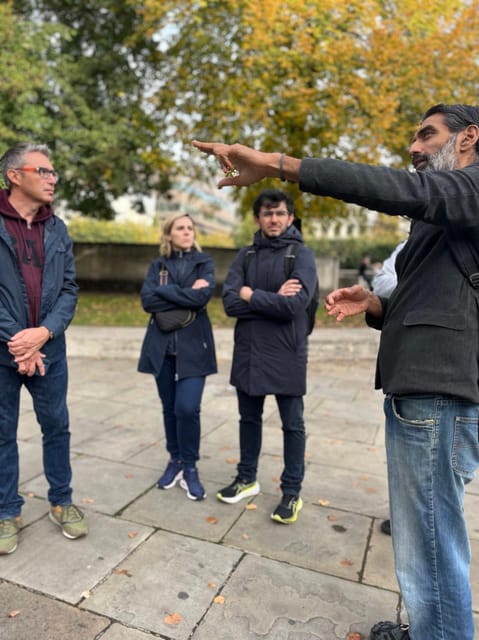
With a small group (up to 8), I found it easy to ask questions as we moved, and the guide, Arjun, keeps the history clear and story-driven. You also get a post-tour PDF, which is handy when you want to re-check what you just learned.
In This Review
- Key highlights to look forward to
- Why the City of London, not Westminster, is the real power story
- Barbie Green to the start of the square mile story
- Salters’ Hall, civic identity, and why merchants mattered
- Defiance against monarchy, and how democracy gets built
- The Magna Carta connection, and the corporate empire twist
- Guildhall, the Royal Exchange, and the dragon emblem in the middle of it all
- Mansion House to the Bank of England, ending with plague, fire, and revolution
- The walking pace, small-group size, and what 2.5 hours really means
- Practical tips for a smooth start at Barbie Green
- Who this tour is perfect for, and who may want something else
- Should you book this City of London historical walking tour?
- FAQ
- Where does the tour start?
- How long is the City of London Historical Walking Tour?
- How much does it cost?
- What is included in the tour?
- Is there any food during the tour?
- What languages are available?
Key highlights to look forward to
- From Celtic roots to Norman London: you see how each era left visible traces in stories and institutions
- A different power map than Westminster: the City’s stubborn independence shapes law and self-rule
- Magna Carta origin storytelling: you’ll connect the dots between legal foundations and civic authority
- The green dragon symbol: you learn why it became part of London’s identity and branding
- Survival through plague, fire, and revolution: the tour ends in the 17th century with a hard-won sense of continuity
Why the City of London, not Westminster, is the real power story
If London is a book, most sights are the big glossy chapters. This tour is about the dog-eared pages that explain how the book got its rules. You focus on the City of London, that tight one-square-mile area that historically acted like its own engine, often with opinions about royal authority.
I liked the way the guide keeps the timeline moving without getting lost in dates. You’re not just hearing about kings and battles. You’re hearing how everyday civic power, merchants, and institutions helped shape English legal foundations and the democratic ideas that followed.
And because it’s about the City, you also get a different kind of map in your head. Westminster may have the drama, but the City is where rules and privileges get defended, revised, and protected.
More City Tours in London
- City Sightseeing London Hop-On Hop-Off Bus & Bookable Extras
★ 4.4 · 7,374 reviews - London: Go City Explorer Pass® – Tickets for 2-7 Attractions
★ 4.3 · 1,111 reviews - London: Upside Down House Westfield White City Entry Ticket
★ 4.0 · 338 reviews
Barbie Green to the start of the square mile story
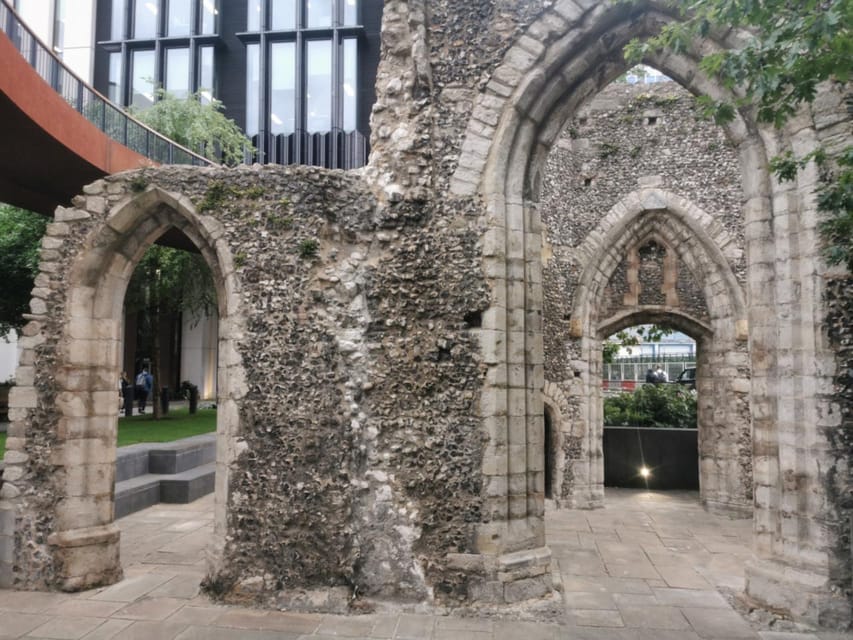
Your tour begins at Barbie Green, at the restaurant opposite the ruins. It’s a good starting point because it signals that you’re not starting at a postcard landmark. You’re starting where the City’s story can feel layered, older than the modern skyline that tourists usually fixate on.
Right away, you also know how to spot your guide. You’ll find someone with longish hair and a beard, and a felt image of a green dragon on their backpack. That detail matters on a busy day, because this tour is small and you’ll want to get to the right person fast.
You’ll then move into guided moments that feel like short chapters. Not constant lecture, more like, stop, story, walk, story again. That structure is part of why the walk stays engaging even when the weather is gray.
Salters’ Hall, civic identity, and why merchants mattered
One of the first named stops is Salters’ Hall. Even if you’ve never noticed it before, the point of the stop is clear: the City’s power has always been tied to trade, regulation, and the people who organized it.
When the guide talks about civic institutions, I found it helps to think of them as practical tools. They handled rules of conduct, professional organization, and the kind of continuity that outlasted any single monarch. That’s the recurring theme here: the City often acted like a system designed to survive leadership changes.
If you like history that connects to how things actually ran, you’ll appreciate this. If you only want royal palaces and battlefields, this stop might feel quieter than you expected. But it’s exactly those quieter institutions that explain why the City could keep negotiating with power, long after others lost leverage.
Defiance against monarchy, and how democracy gets built
A standout thread is the City’s defiance against monarchy. Instead of treating England’s path to democratic habits like a straight line, the tour frames it as something negotiated and defended. The square mile became known as an envy of kings, not because it had dragons on every corner, but because it had rights, privileges, and a stubborn institutional voice.
You’ll hear how this independence showed up in legal foundations and civic behavior. It’s not just dramatic storytelling. The guide keeps returning to the practical question: who had authority, and how did ordinary governance keep pushing back when power tried to control it?
This is also where you’ll start to see why the City is different from the rest of London, including nearby areas with their own political gravity. The tour makes that distinction feel real, not academic.
More History Tours in London
- London: Historic Pubs of Central London Walking Tour
★ 4.9 · 1,065 reviews - London: Soho Music and Historic Pubs Walking Tour
★ 4.9 · 836 reviews - London: Rock ‘n’ Roll History Tour
★ 4.6 · 645 reviews - London: Royal Historic Pubs Walking Tour
★ 5.0 · 536 reviews
The Magna Carta connection, and the corporate empire twist
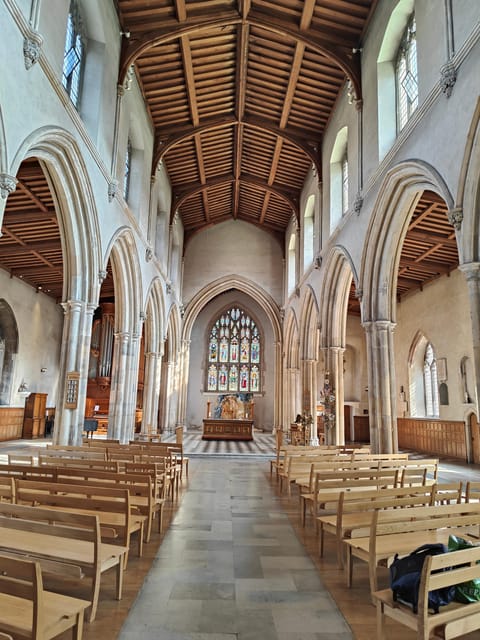
The tour promises an exploration of the birthplace of the Magna Carta and the idea that a corporation helped birth an empire. That might sound like a big claim, and the tour handles it as a story of civic authority, not just a museum label. You’re meant to understand how the City’s legal and commercial identity shaped the conditions under which landmark rights could take form.
Here’s what I think works about this angle. It turns the Magna Carta conversation into something bigger than parchment. You see it as part of a larger culture where collective institutions argued for restraints on power and protected certain privileges.
Then comes the corporate empire concept. The City is presented as a kind of organization with momentum, a machine built by people managing risk, trade, and governance. Even if you don’t care about business history, it’s a strong reminder that empires do not run on courage alone. They run on paperwork, charters, money, and legal permission.
It’s the perfect theme for this tour’s overall mood: London didn’t just inherit power, it learned how to administer it.
Guildhall, the Royal Exchange, and the dragon emblem in the middle of it all

As you continue, you reach Guildhall, London, one of the City’s big civic anchors. This is where the tour’s identity theme starts to click. The guide uses places like Guildhall to show how the City maintained continuity through centuries of change.
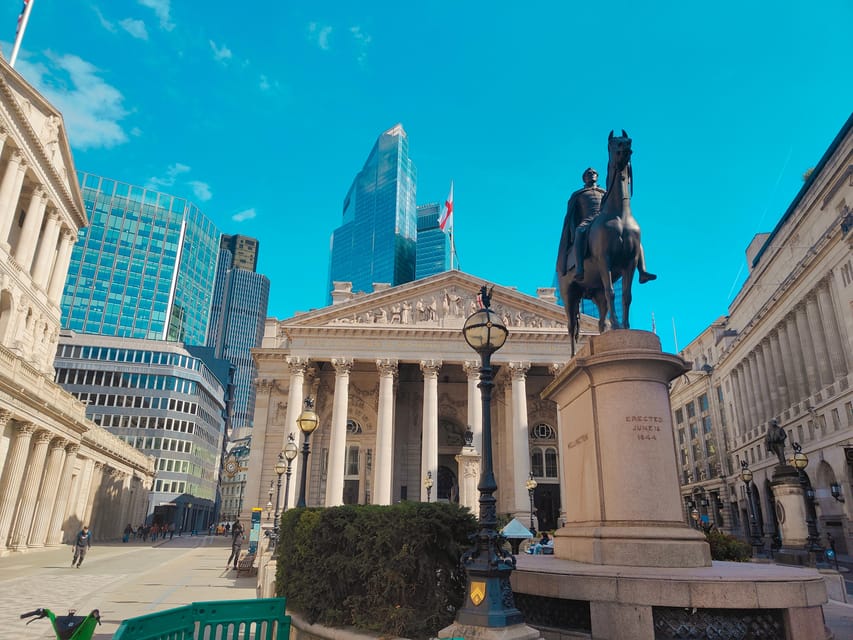
Then you move to the Royal Exchange. This stop reinforces the tour’s central idea that commerce and governance were braided together. The Exchange is not just about trading. In the guide’s telling, it’s about trust, systems, and the public face of a commercial culture that wanted order as much as it wanted profit.
After that, the dragon emblem returns as a symbol you can recognize in your mind. The tour specifically highlights the dragon emblem and why it became part of London’s identity. I liked how this was not treated like a trivia fact. It’s explained as a sign of the City’s self-image, a branding mark for resilience and civic pride.
If you’re the type who enjoys connecting symbols to institutions, you’ll get a lot out of these stops. If you’re expecting only architecture and dates, you may want to stay focused on what the guide says about meaning.
Mansion House to the Bank of England, ending with plague, fire, and revolution
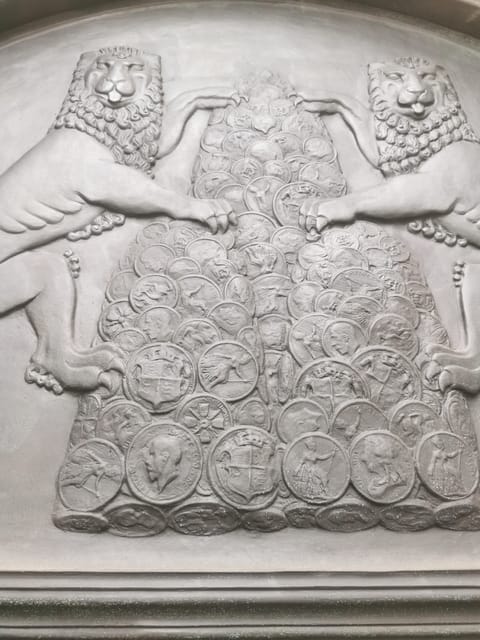
Near the end, you stop at Mansion House. The point here is the City’s ongoing role as a governing presence, not just a medieval artifact. You’re seeing the line from earlier civic authority into more modern London, carried forward through institutions that kept their voice.
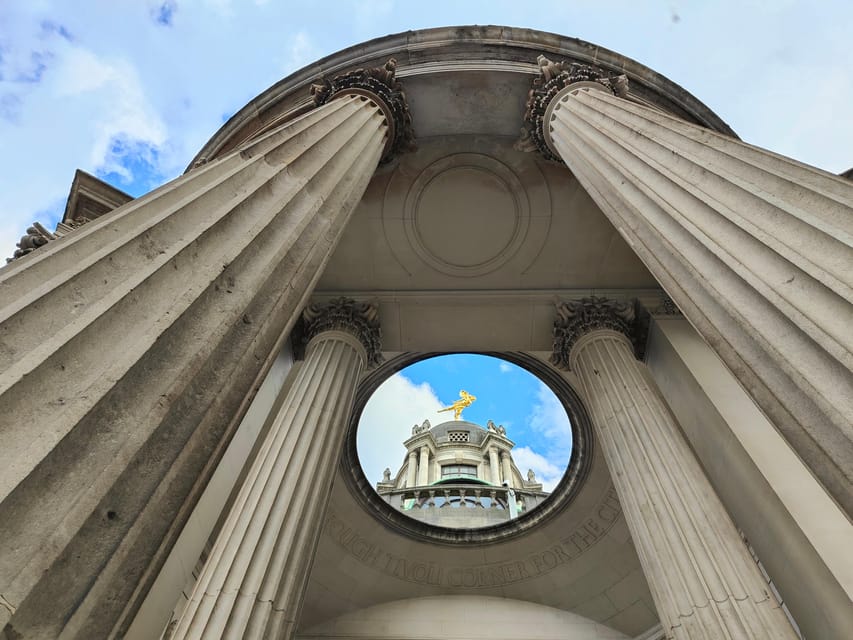
The tour also finishes at the Bank of England. That’s a smart closing point because it ties the entire story together: a place that regulates finance and trust in a city that historically cared deeply about privileges and legal order.
The ending chapter matters too. The tour concludes in the turbulent 17th century, with fire, plague, and revolution in the background. The message is resilience. Even when conditions got brutal, the City’s institutions kept pushing to secure rights and privileges for generations to come.
Walking toward the Bank of England with that context, I found myself looking at the area less like a landmark cluster and more like a living system. That’s the real value of the ending: it gives the whole tour a feeling of continuity.
The walking pace, small-group size, and what 2.5 hours really means
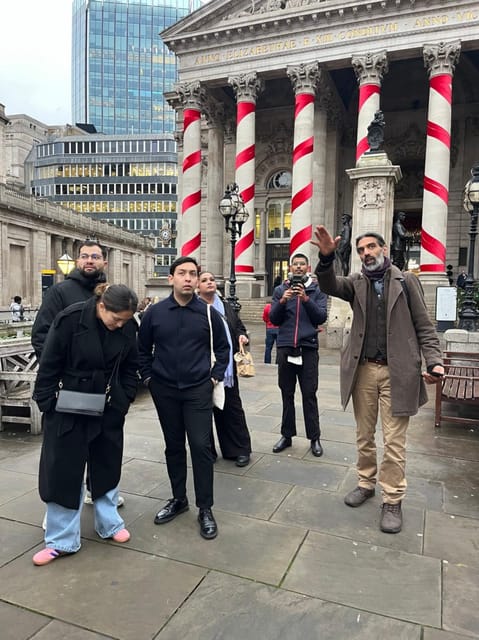
This is a 2.5-hour walking tour, and it’s designed for a small group, limited to 8 participants. Short guided moments are built into the walk, so you’re not stuck listening for the entire time. The trade-off is that you should expect a steady rhythm. You will be walking more than you’re standing around.
Wheelchair accessibility is listed as available, but you should still be honest with yourself about comfort and mobility on sidewalks. If your needs are specific, it’s worth checking with the operator before booking so you’re not surprised by uneven ground or crowded stretches.
No food is served. That’s not a dealbreaker, but it changes how you plan your day. If you’re the kind of person who gets hungry while learning, bring a snack for later, or eat before you go.
The tour also includes a post-tour PDF overview of locations and themes. I like when a tour gives you a way to review your mental timeline afterward, especially for a story that spans Celtic, Roman, Saxon, Viking-era references, Norman rule, and the 17th century.
Practical tips for a smooth start at Barbie Green
Here are a few small things that help you enjoy this more, not less:
- Arrive a few minutes early at Barbie Green so you can spot the guide easily.
- Bring water, even if the day is cool. The pacing is quick enough that you can feel it.
- Wear shoes that can handle city sidewalks. You’ll get more out of the story when your feet are comfortable.
- If you want multilingual help, plan ahead and tell the team your language before the tour.
If you care about getting the City’s timeline in order, the PDF is worth looking at soon after. It helps you connect the emotional story of defiance and resilience with the actual place names you walked past.
Who this tour is perfect for, and who may want something else
This tour fits best if you like history that explains how power worked, not just when something happened. It’s ideal for you if you want to see why the City of London became a separate political force, how it defended privileges, and how symbols like the dragon grew into identity.
It’s also a great choice if you’ve been to London before and you want something away from the most obvious visitor loops. The City can feel intimidating because it’s dense and practical. This kind of guided story helps you read it instead of just passing through it.
You might prefer a different tour if you want lots of interior time in famous museums or if you expect stops to be only famous landmarks. Here, the power is in the meaning of institutions and the way the guide ties them into a long arc.
Should you book this City of London historical walking tour?
If your idea of a great London day is a smart, story-driven walk where you learn why the square mile matters, I’d book it. The combination of Magna Carta-themed storytelling, the dragon emblem, and the City’s defiance against monarchy gives you a fresh lens on London that most people miss.
I’d especially recommend it when you want something focused but not heavy. The small group size (up to 8) and the style of guiding, led by Arjun, make it feel like a conversation you can follow, not a lecture you survive.
If you’re short on time, this is also a strong value: $30 for 2.5 hours with a live guide and a post-tour PDF is a practical way to understand a complicated history without spending all day hopping between far-apart sights.
FAQ
Where does the tour start?
You meet at Barbie Green, at the restaurant opposite the ruins.
How long is the City of London Historical Walking Tour?
It lasts about 2.5 hours.
How much does it cost?
The price is listed as $30 per person.
What is included in the tour?
Included items are the guide, the walking tour, and a post-tour PDF with an overview of the locations and themes.
Is there any food during the tour?
No, no food is served on this tour.
What languages are available?
The tour is listed as multilingual, with live guide English, and you can tell the provider your language in advance. The experience data specifically lists English as the language.
More History Walks in London
- London: Jack the Ripper Tour with Historic Pub Stops
★ 4.8 · 360 reviews - London: Medieval History Walking Tour from The Tower
★ 4.9 · 318 reviews - London: Witches and History Bankside Walking Tour
★ 4.8 · 223 reviews - London: Natural History Museum Entry Ticket and Guided Tour
★ 3.8 · 212 reviews
More Walking Tours in London
- Magical London: Harry Potter Guided Walking Tour
★ 4.7 · 22,044 reviews - London: The Original Jack the Ripper Walking Tour
★ 4.7 · 7,833 reviews - London: Harry Potter Movies Walking Tour (Kids Go Free)
★ 4.7 · 3,071 reviews - London: The Great British Rock and Roll Music Walking Tour
★ 4.9 · 1,783 reviews
Newly listed near London
- London: 3-Hours Private Walking Tour★ 4.4 · 8 reviews
- London: 3-hour Outdoor Escape Room Game★ 4.0 · 5 reviews
- London: 3 Most Famous Art Galleries Tour★ 5.0 · 3 reviews
- London: 24-Hour Hop-On Hop-Off Bus Pass★ 3.1 · 133 reviews
- London: Secret Beer Tour★ 4.9 · 10 reviews
- London: 3 Days of Must-See Attractions including London Eye★ 4.5 · 22 reviews
- London: Private Underground and Tube Tour★ 4.6 · 42 reviews
- London: 20-Minute Tower RIB Blast from Tower Pier★ 4.7 · 135 reviews
Historical Tours, compared.




Browse the lists this tour appears in