Review · GUIDED
Clapham South: Subterranean Shelter Guided Tour
London has a maze beneath your feet. I love the chance to see a 30 metres underground deep-level shelter system for yourself, then make sense of it with guides who connect the tunnels to real people and real nights. I also love the hands-on feel, from original cramped sleeping spaces to the wartime details you can actually get close to, including original bunks repurposed into benches.
One drawback to plan around: this tour is physically demanding and not for everyone. Expect low light, uneven ground, and walking up and down static escalators, plus it is not suitable for anyone with claustrophobia or mobility impairments.
In This Review
- Key things you will notice on this tour
- Why the Clapham South shelter tour feels like time travel
- Price and value for a 75-minute guided tour
- Meeting point, timing, and what to wear
- The descent: 11 storeys down and trains above your head
- Inside the shelter: how a place for 8,000 people works
- The warden, the canteen, and what the role-play adds
- Original bunks, WWII torches, and hands-on moments
- From WWII sheltering to Windrush arrivals under London streets
- Who this tour suits best, and who should skip it
- How to make the most of your 75 minutes underground
- Should you book the Clapham South subterranean shelter tour
- FAQ
- What is the duration of the Clapham South guided shelter tour?
- Where do I meet for the tour?
- How far is the meeting point from Clapham South station?
- What should I bring?
- What is not allowed during the tour?
- Is the tour suitable for people with claustrophobia?
- Is the tour step free or suitable for mobility impairments?
- What age is the tour suitable for?
- Can I cancel and get a refund?
Key things you will notice on this tour
- 30 metres down, mile of tunnels in an underground maze hidden under South London streets
- ARP Warden role-play and a family story that helps you picture a night in shelter conditions
- Refurbished warden spaces and the canteen recreated to wartime style
- Genuine WWII objects, including torches and a look at an Anderson shelter
- Original bunk beds turned benches, plus historical graffiti left by occupants
- WWII to Windrush connections, including Empire Windrush and post-war arrivals
Why the Clapham South shelter tour feels like time travel
This is not a museum lecture. It is a guided walk through a secret underground shelter system that was built for one job, protect people during air raids, and then later used again when the world changed.
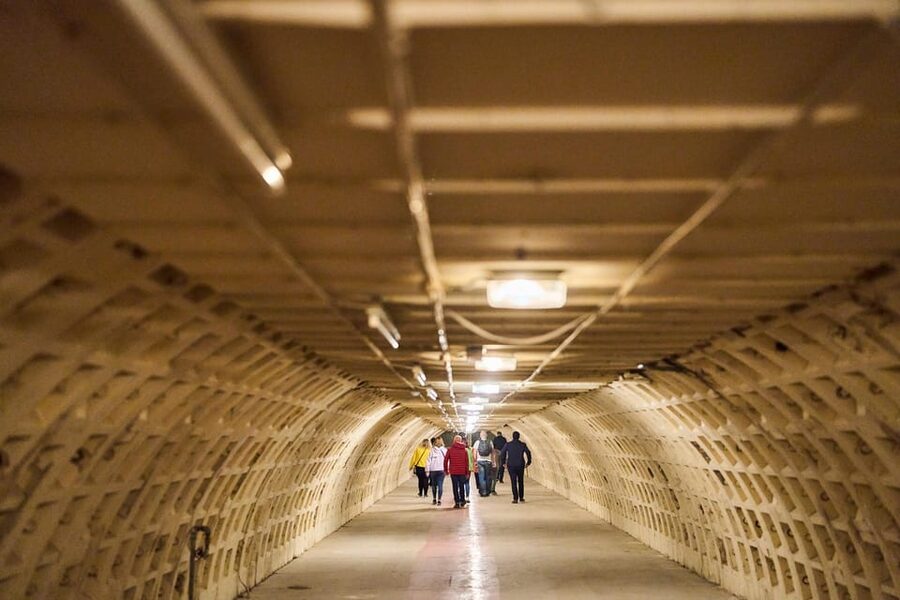
The setting does most of the work. You start at street level, then go down around 11 storeys, reaching a part of London that most people never see. Once you are underground, the scale of it clicks in your head: a warren of tunnels over a mile long, hiding in plain sight beneath Clapham South station.
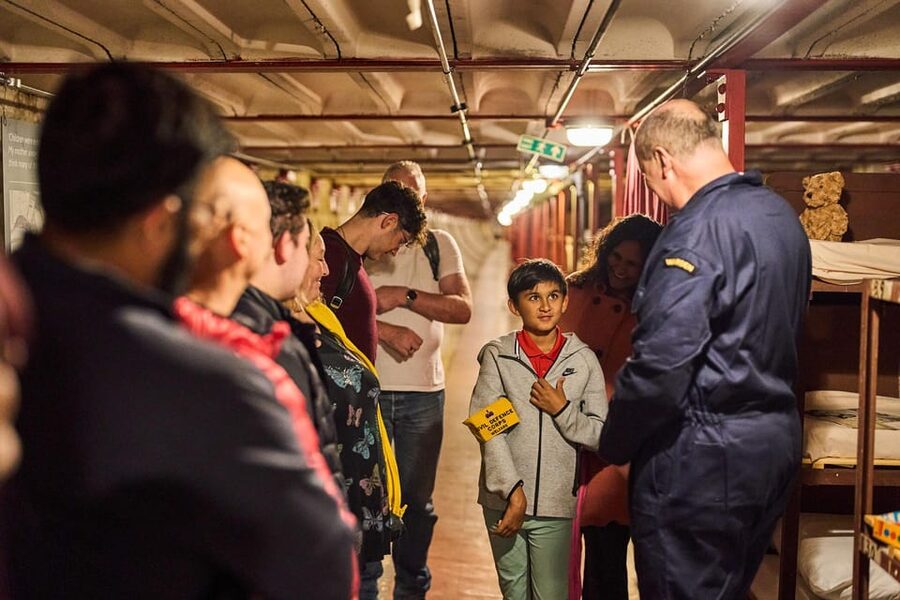
What makes it powerful is the way the story is paced. You do not just hear dates and facts. You get guided scenes that place you in the flow of shelter life, including the presence of an ARP Warden and the idea of a family spending their first night there. It is an effective way to turn the shelter from an abstract concept into something you can picture.
You will also get a clear sense of purpose. The shelter was opened in 1944 and constructed to shelter over 8,000 people. It is not only about escape, it is about keeping people functioning for hours, with spaces like canteens, medical stations, and sleeping areas.
A few more London days worth comparing
- London: The London Eye Entry Ticket
★ 4.6 · 35,875 reviews - London: Tower of London and Crown Jewels Exhibition Ticket
★ 4.6 · 28,769 reviews - From London: Harry Potter Warner Bros Studio Tour
★ 4.7 · 26,588 reviews
Price and value for a 75-minute guided tour
The tour costs $51 per person for 75 minutes, and it is worth judging it on what you get for that money.
First, you are paying for a guided experience into a site most visitors cannot simply wander into. You descend into a disused Second World War deep-level shelter system and get access to areas that are not open-ended sightseeing.
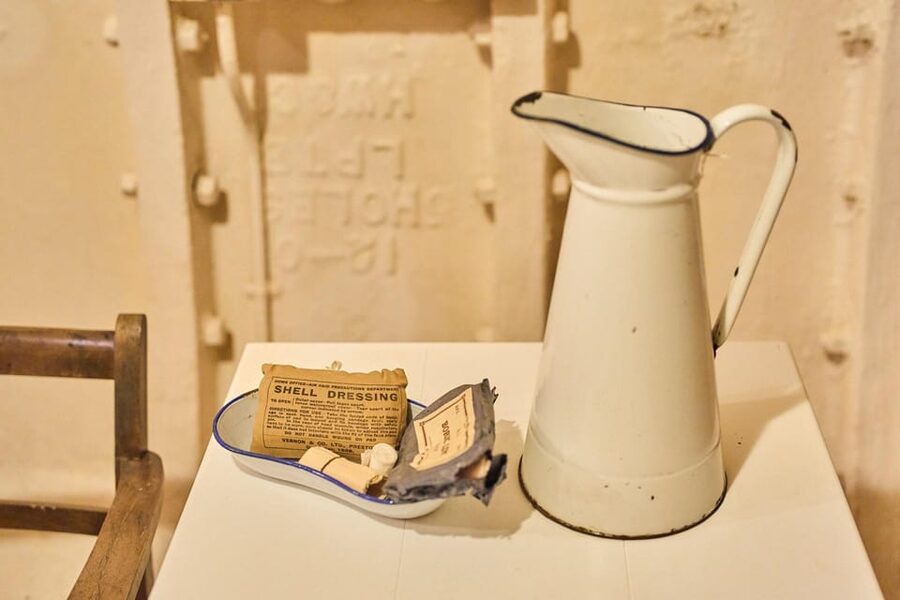
Second, the tour leans into what is hard to fake: physical details. You get to see the cramped bunks where thousands slept during air raids, read the graffiti left behind, and handle real WWII torches. That hands-on element, plus the staged wartime spaces, is part of why the time passes quickly.
Finally, the storytelling adds value. The connection between wartime sheltering and the post-war repurposing, including housing the first Caribbean migrants to Britain who arrived on HMT Empire Windrush, gives the tour more than one chapter. It connects London’s underground to London’s immigration story, not just its war story.
If you like history that you can see with your eyes and feel with your hands, this price tends to make sense. If you only want outdoor sightseeing or broad overviews, you may find it a bit intense for the time.
Meeting point, timing, and what to wear
Meet in front of the Marks & Spencer Food Hall on Balham HIII, SW12 9EA. It is about a 2-minute walk from Clapham South station. When you exit the station, turn right. If you like exact navigation, there is a WhatsWords address listed as ///really.orbit.beside.
Arrive 15 minutes early. Underground tours run on a tight flow, and you do not want to feel rushed while you are getting set up.
Wear comfortable, sturdy shoes. You will walk in low lighting and uneven ground. Open-toed shoes are not allowed, so skip sandals. Wear weather-appropriate clothing because you are starting above ground before you go down.
Also plan for no cloakroom. If you have a big bag or luggage, it is not part of this experience. The rules say no luggage or large bags, and no food and drinks inside.
The descent: 11 storeys down and trains above your head
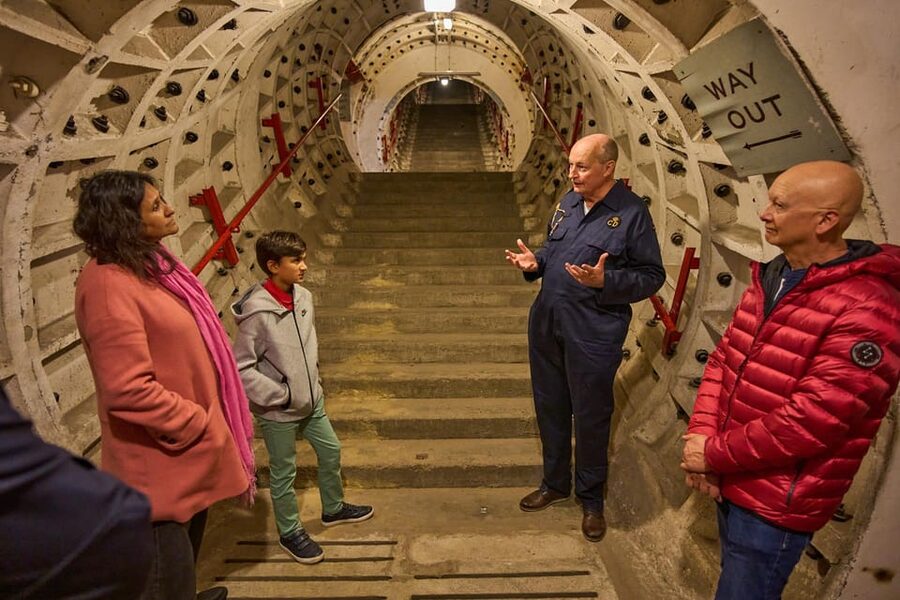
The moment the tour starts to feel different is the descent. You go down around 11 storeys into the underground network, reaching spaces hidden beneath Clapham South station. It is one of those London contrasts that you would miss if you only stayed on the surface.
As you go, you can feel the presence of the transport above you. You get the rush of Northern line trains passing overhead, which is a clever reminder that London does not stop moving, even when you drop into a wartime world.
Guides also explain how it was built in the 1940s. That matters because deep-level shelters are not just “tunnels.” They are engineered systems, carved out to create safe time and safe space when the air raid threat was immediate and unpredictable.
This is a good stage to pay attention to how the tour is structured. You are not wandering. You are being guided through key sections so you understand layout, purpose, and why certain areas feel cramped. If you are the type who likes to follow the story in order, the descent and early orientation section is where that payoff begins.
Same corner of Britain, a different sort of outing:
- Magical London: Harry Potter Guided Walking Tour
★ 4.7 · 22,044 reviews - London: Madame Tussauds London
★ 4.6 · 20,915 reviews - London: Warner Bros. Studio Harry Potter Tour & Branded Bus
★ 4.7 · 19,194 reviews - London: Tower Bridge Entry Ticket
★ 4.7 · 15,560 reviews
Inside the shelter: how a place for 8,000 people works
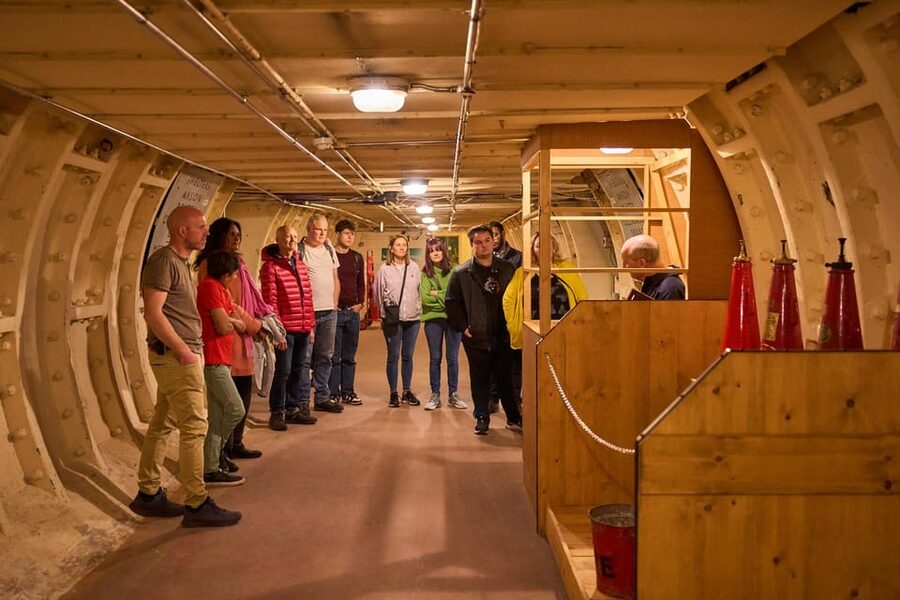
Once you are deeper underground, you start to appreciate what “shelter life” means in practice.
You will explore a mile of tunnels across this disused shelter system, and the guides connect what you see to daily needs in wartime: food, care, waiting, and sleep. The shelter was designed to shelter over 8,000 people, and you get a sense of how that many people could be managed using different spaces rather than one single room.
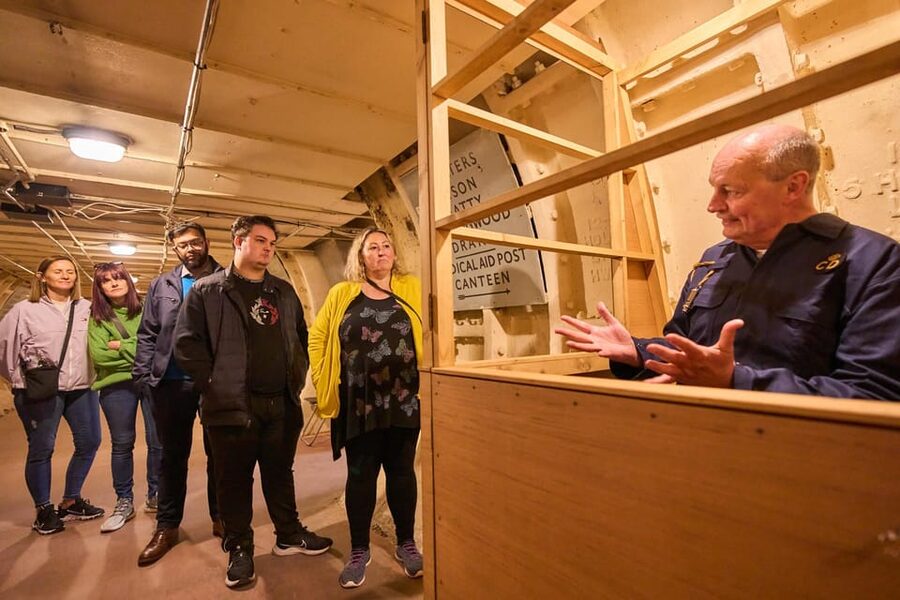
You will visit newly refurbished spaces recreated in a wartime style, including the warden’s cabin and the canteen. The recreation detail is useful, because it gives you visual landmarks, places that were part of the shelter’s everyday rhythm, not only the sleeping areas.
There are also connections to medical support. The tour information notes canteen, medical stations, and sleeping quarters as part of how the shelter was set up. Even if the tour focus varies by route that day, the point is consistent: people needed more than a bed. They needed a system that could run through an air raid night.
One small caution: this underground environment involves a lot of walking and low lighting. If you are sensitive to dim spaces, wear a watchful mindset and move slowly when you feel the ground shift.
The warden, the canteen, and what the role-play adds
One of the most praised parts of the tour is the presence of two expert guides, including one guide portraying a 1940s ARP Warden. That role-play is not there just for theatre. It helps the tour do something that a textbook cannot do: it gives you a voice to anchor the experience.
In the staged moments, you follow in the footsteps of a South London family spending their first night in the shelter. That choice is smart. First nights have anxiety, questions, and confusion, and the story helps you understand why people would rely on wardens and routines.
The warden’s perspective also makes sense of the shelter’s rules and atmosphere. When you picture someone monitoring order, assisting with needs, and coordinating responses, the shelter stops being just a set of rooms. It becomes a living system.
If you like interactive history, this part is a highlight. Guides also bring in details you can connect to what you see nearby, like how the canteen spaces would function and how people might pass the hours while the threat was overhead.
Original bunks, WWII torches, and hands-on moments
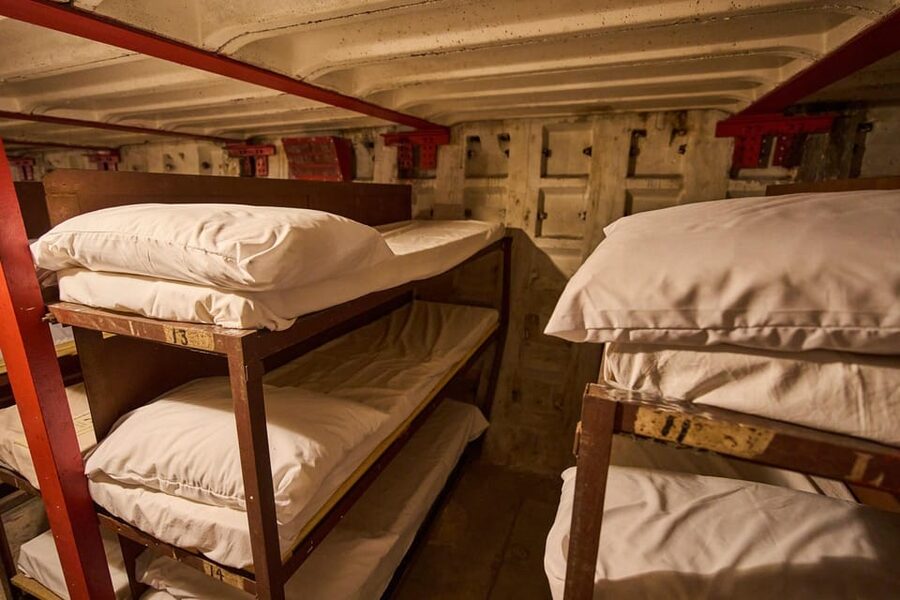
The tour is strongest when you move from description into physical contact.
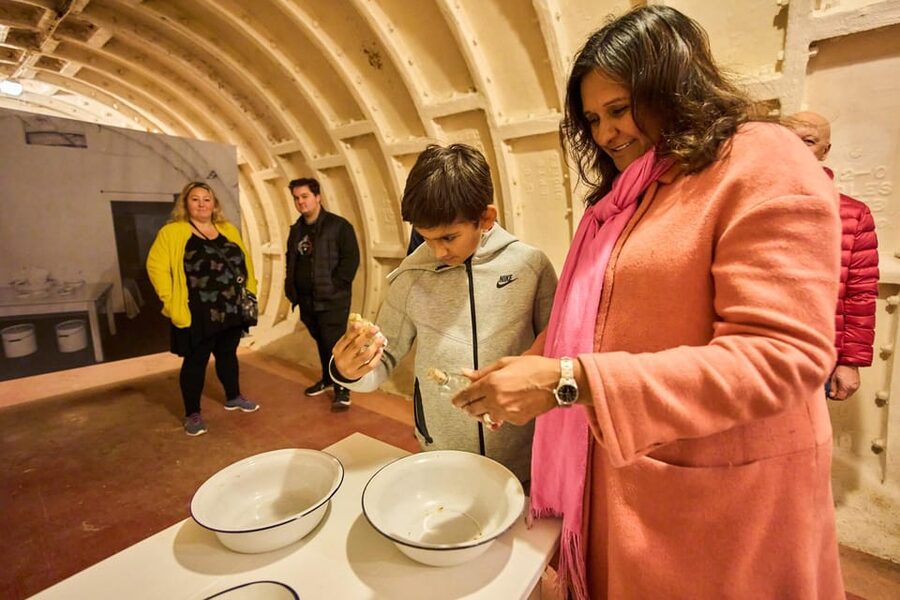
You get hands-on time with genuine WWII torches. That detail is small but memorable. It changes the experience from “watching history” to “handling history.” You can feel the weight and the shape of a tool that was built to function in difficult conditions.
You also learn what an Anderson shelter looked like. You may not see an entire shelter structure like you would outdoors, but you do get a sense of the broader sheltering context, how wartime households prepared and protected themselves.
Then comes one of the most vivid elements: seeing the original cramped bunks where thousands slept overnight during air raids. The tour also lets you sit on the original bunk beds turned benches. That is uncomfortable in the right way, and that is the point. It helps you understand how much compromise people accepted because safety mattered more than comfort.
On top of that, you get to read historical graffiti left by occupants. That is one of the quiet emotional touches in the whole experience. It reminds you that beneath the official role and official planning, there were people passing time, expressing feelings, and leaving their mark on the only space they had.
From WWII sheltering to Windrush arrivals under London streets
The tour does something important: it links two parts of London’s story that you might otherwise keep separate.
You hear first-hand accounts connected to Second World War shelterers, and then the narrative moves into post-war repurposing. The shelter was repurposed after the war, including housing the first Caribbean migrants to Britain who arrived on HMT Empire Windrush.
That shift changes the tone. You are still in the same physical place, but the purpose has transformed. Instead of an emergency wartime refuge, the shelter becomes part of a new life, one marked by arrivals, uncertainty, and the challenge of finding footing in an unfamiliar country.
You also hear about visitors connected to the Festival of Britain, which helps explain how the shelter’s underground identity kept evolving rather than disappearing.
If you are the kind of person who likes history with continuity, this is the part that will likely stick with you long after the tour ends. It turns underground space into a long-running character in London’s story, not just a wartime setting.
Who this tour suits best, and who should skip it
This is an intense walking tour underground, so match your expectations to your body and your comfort level.
You will likely enjoy it if you:
- like lived-in history with storytelling and role-play
- enjoy hands-on object moments like the WWII torches
- want to connect wartime sheltering to later London history, including Windrush
You should skip it if:
- you have claustrophobia
- you need step-free access or have mobility impairments, because it is not step free and includes walking up and down static escalators
- you are bringing young kids, since it is not suitable for children under 10
Also remember: there is low lighting, uneven ground, and no cloakroom. If you tend to feel anxious in dark or tight spaces, that may outweigh the historical value for you.
How to make the most of your 75 minutes underground
Plan for a steady pace. This is not a sit-and-watch production. You will walk a lot, and you will move through different kinds of surfaces and corridors.
Wear good shoes and keep your phone stowed until you are in safe moments. Low lighting can make navigation tricky, and you do not want to fumble while you are moving.
Try to listen for the way guides connect what you see to the story. The tour works best when you mentally label spaces. When you hear about wardens, canteen time, bunks, and the graffiti, it all clicks into one picture.
If you get nervous underground, you still have options. You can take slower steps, keep your eyes on the guide, and take a breath before transitions. Just be realistic about your comfort, because this is not designed to be “easy access” to claustrophobic spaces.
Should you book the Clapham South subterranean shelter tour
Book this tour if you want a guided, scene-based history experience inside a real deep-level air raid shelter. I think the combination of underground setting, the warden role-play, and the hands-on WWII objects makes it feel far more real than typical city walking tours. At $51 for 75 minutes, it also feels like solid value if you enjoy thoughtful storytelling paired with physical detail.
Skip it if you know you cannot handle low lighting, uneven ground, or tight underground conditions. And if you need step-free access, this one is not designed for that.
If you are on the fence, ask yourself one question: do you want your London history to be physical and close, not just informational? If yes, this is a very good fit.
FAQ
What is the duration of the Clapham South guided shelter tour?
The tour lasts 75 minutes.
Where do I meet for the tour?
Meet in front of the Marks & Spencer Food Hall on Balham HIII, SW12 9EA.
How far is the meeting point from Clapham South station?
It is about a 2-minute walk from Clapham South station. Turn right when you exit.
What should I bring?
Bring comfortable shoes and weather-appropriate clothing. You should also bring a passport or ID card.
What is not allowed during the tour?
Open-toed shoes are not allowed. Food and drinks are not allowed, and luggage or large bags are not allowed.
Is the tour suitable for people with claustrophobia?
No. The tour is not suitable for guests with claustrophobia.
Is the tour step free or suitable for mobility impairments?
No. The tour is not step free and it involves walking up and down static escalators, so it is not suitable for people with mobility impairments.
What age is the tour suitable for?
It is not suitable for children under 10 years old.
Can I cancel and get a refund?
Yes. You can cancel up to 24 hours in advance for a full refund.
Newly listed near London
- London: 3-Hours Private Walking Tour★ 4.4 · 8 reviews
- London: 3-hour Outdoor Escape Room Game★ 4.0 · 5 reviews
- London: 3 Most Famous Art Galleries Tour★ 5.0 · 3 reviews
- London: 24-Hour Hop-On Hop-Off Bus Pass★ 3.1 · 133 reviews
- London: Secret Beer Tour★ 4.9 · 10 reviews
- London: 3 Days of Must-See Attractions including London Eye★ 4.5 · 22 reviews
- London: Private Underground and Tube Tour★ 4.6 · 42 reviews
- London: 20-Minute Tower RIB Blast from Tower Pier★ 4.7 · 135 reviews
Guided, compared.

Magical London: Harry Potter Guided Walking Tour
Read our review →
City & Beatles Tour with Live Guide & Live Music
Read our review →
Emirates Stadium Entry Ticket and Audio Guide
Read our review →
University and City Walking Tour with Alumni Guide
Read our review →

Christmas Lights Nighttime Bus Tour with Live Guide
Read our review →