

Review · WALKING TOURS
Derry: Bloody Sunday and Bogside Murals Walking Tour
One street walk in Derry can change how you see history. This Bloody Sunday and Bogside Murals tour takes you through the people, events, and visuals that shaped the city’s 20th-century story, from civil rights marches to the day the world was watching in January 1972. I especially love two things: the chance to stand at key Bloody Sunday sites, and the way the guides read the Bogside murals like living testimony. One thing to consider, though, is that the subject matter is heavy, and the weather can be unpredictable, so plan for an emotional, outdoorsy 90 minutes.
The experience lives or dies on the guide, and the good news is that the guides here often mix sharp historical detail with real personality, humor, and personal connection. Expect a thoughtful pace, plenty of context, and a route that ends at the Bloody Sunday monument. If you prefer purely light entertainment, this tour might feel intense.
In This Review
- Key things I’d focus on before you go
- Meeting at the city walls: Tower Museum to the Bogside
- Derry in the 20th century: partition, discrimination, and civil rights
- Bloody Sunday in January 1972: the site and what followed
- The Bloody Sunday monument: a closing moment with weight
- Bogside murals: world-famous art you can read with your guide
- The Battle of the Bogside (1969) and why it matters
- How the guides bring it to life, from Ian to Gleann to Angela
- Price and value: $35 for 1.5 hours with real context
- Who should book this walking tour, and who should think twice
- Should you book: my take on the Bloody Sunday and Bogside Murals tour
- FAQ
- Where is the meeting point for the tour?
- How long is the Bloody Sunday and Bogside Murals walking tour?
- How much does the tour cost?
- Is the tour guided and in English?
- What should I wear or bring since it is outdoors?
- Is the tour suitable for people with mobility impairments?
- Can I get a full refund if I cancel?
- Can I reserve now and pay later?
Key things I’d focus on before you go
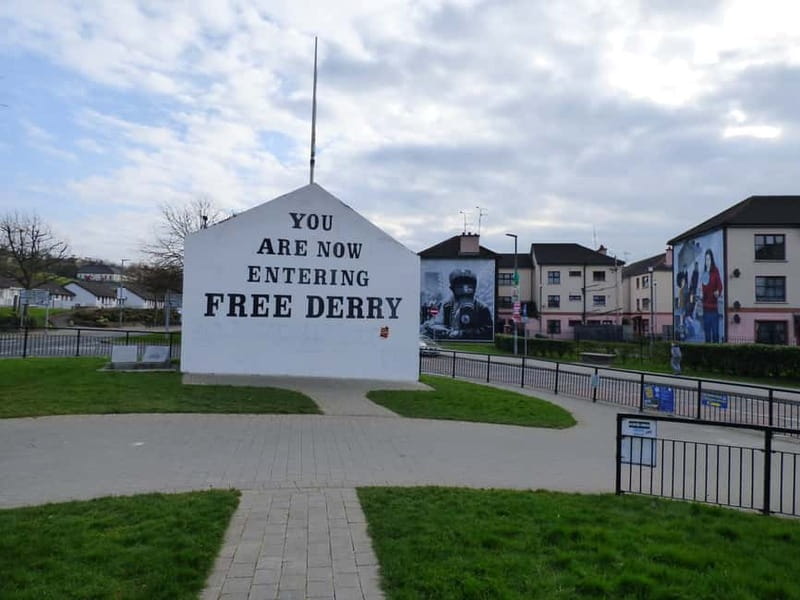
- Bogside murals as storytelling: you’re not just looking, you’re being shown what each scene meant then.
- Bloody Sunday firsthand locations: you visit the area tied to the massacre and hear what followed.
- Civil Rights and the lead-up: you connect discrimination, partition fallout, and the civil rights movement.
- The Battle of the Bogside (1969): it’s covered as a key step before 1972.
- A human guide style: multiple guides (Ian, Glyn, Gleann, Angela, and others) are praised for humor plus depth.
- Weather-ready walking: bring layers and plan for all-weather conditions.
Meeting at the city walls: Tower Museum to the Bogside
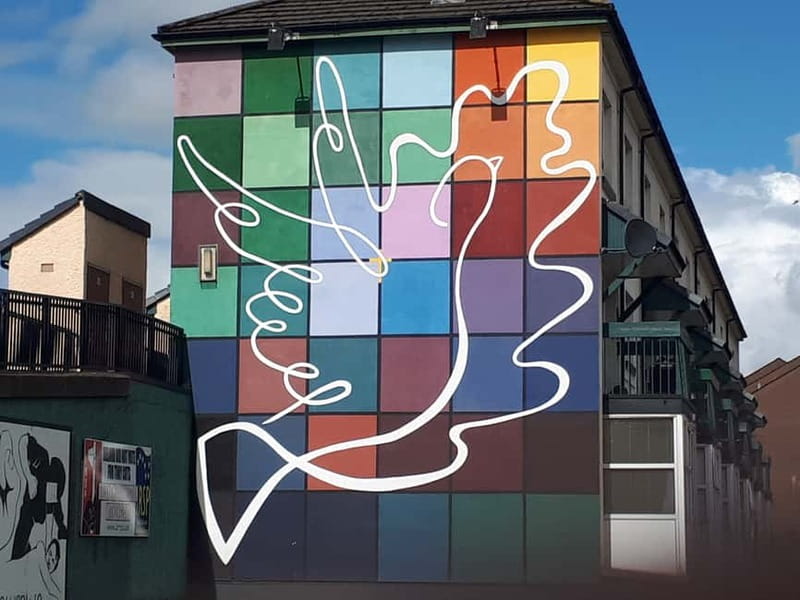
The tour starts outside the Tower Museum at Magazine Gate, just inside Derry’s city walls. That meeting point matters because it frames what you’re doing right away. You’re stepping off a visitor-friendly area and into the Bogside, a neighborhood that still carries memory in its streets.
Once you’re on the walk, you’ll get your orientation fast. The route is designed for an easy walking pace over about 1.5 hours, which is long enough to connect the dots, but short enough that you won’t feel like you’re dragged from stop to stop. Do yourself a favor and arrive a few minutes early, because once the guide starts setting the scene, it helps to be in it.
And yes, be ready for weather. This tour is outside, so come prepared for wind, rain, and changing conditions. I like to think of it as part of the deal, not a surprise.
More Walking Tours in Belfast & Northern Ireland
- Derry: McCrossan’s Public Walking Tour of the Historic City
★ 4.8 · 329 reviews - Derry City: The Troubles Bogside Walking Tour.
★ 4.9 · 274 reviews - Dublin: Belfast Walk, Dunluce Castle & Giant’s Causeway
★ 4.7 · 229 reviews
Derry in the 20th century: partition, discrimination, and civil rights
The core theme is Derry’s modern history, told through the Bogside as a key site in Ireland’s past. Your guide connects the major political events you’ve probably heard in headlines, like the partition of Ireland and the creation of a six-county state, to what people experienced on the ground.
From there, the story shifts toward discrimination faced by Irish Catholics and how that tension helped fuel civil rights demands. This is where the tour becomes more than dates. You start to understand why the Bogside was a focal point, not just a place where things happened.
If you like history that explains cause and effect, you’ll probably enjoy how the guide threads the timeline together. It’s not only what occurred, it’s the pressure leading up to it, including the civic momentum of the civil rights movement.
Bloody Sunday in January 1972: the site and what followed
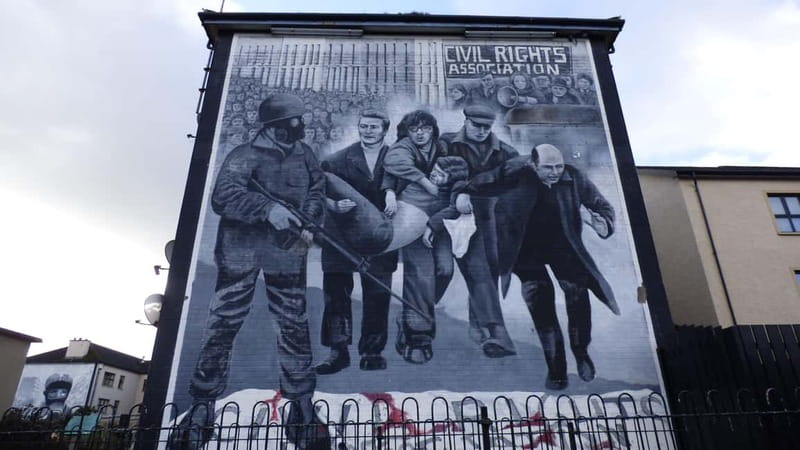
The emotional center of the tour is Bloody Sunday. You’ll visit the area tied to the massacre, and your guide explains what happened in January 1972 in a way that’s meant to be clear and respectful.
You’ll also hear about the inquiries that followed. That part is important because it moves the story beyond the single day. It’s how people tried to make sense of the tragedy, how accountability and narrative collided, and why the event remains a central reference point in Derry.
This is the stop where you’ll want to slow down mentally, not just physically. The guide style matters here, and many of the guides praised in feedback are described as both funny and deeply serious, which is a difficult balance to get right. In practice, it means they give you room to absorb what you’re hearing without turning the walk into a lecture.
The Bloody Sunday monument: a closing moment with weight
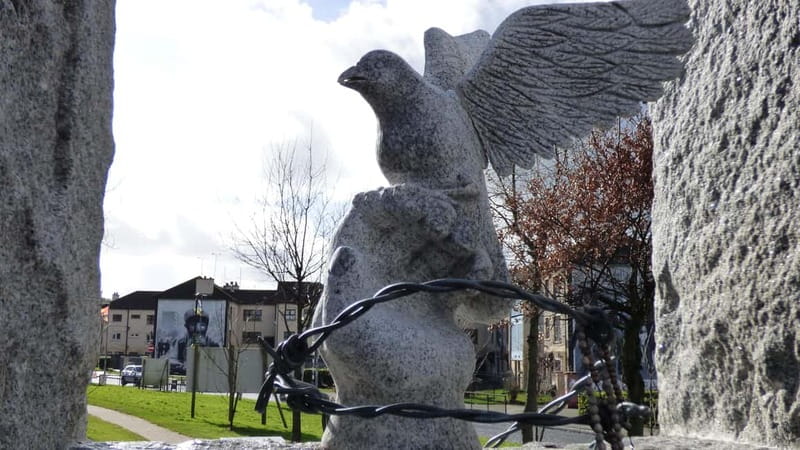
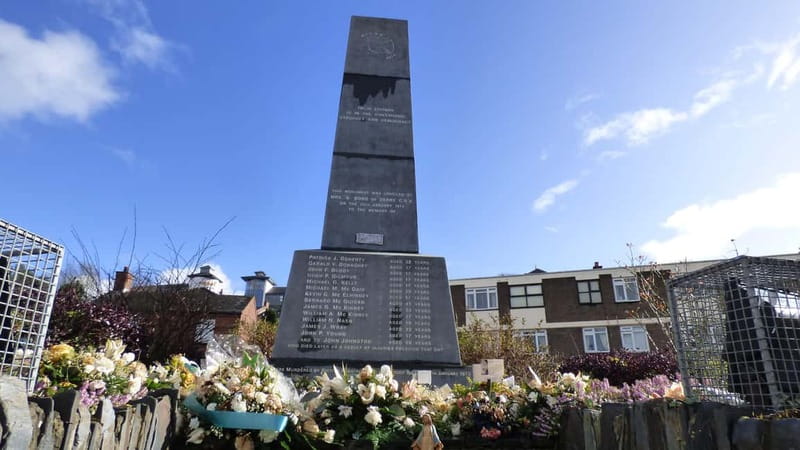
The tour ends at the Bloody Sunday monument, a lasting tribute connected to the Civil Rights Association. Ending here gives the story a physical punctuation mark. You’re not just leaving with information, you’re leaving with a place that holds meaning.
If you’re the type who likes to reflect for a minute before moving on, you’ll probably appreciate this finish. It’s also a good point to ask any last questions, since the walk’s structure typically builds toward this end.
I find monuments like this hit differently after you’ve walked the surrounding streets and heard the context. You’re seeing the event as something embedded in the community, not just something that happened somewhere else.
Same corner of Britain, a different sort of outing:
- From Belfast: Giant’s Causeway and Game of Thrones Day Tour
★ 4.7 · 1,520 reviews - Official Game of Thrones Studio Tour Admission Ticket
★ 4.8 · 1,002 reviews - Belfast: Giant’s Causeway, Dark Hedges, and Dunluce Castle
★ 4.7 · 317 reviews - Morning Giant’s Causeway Half Day Tour from Belfast
★ 4.6 · 258 reviews
Bogside murals: world-famous art you can read with your guide
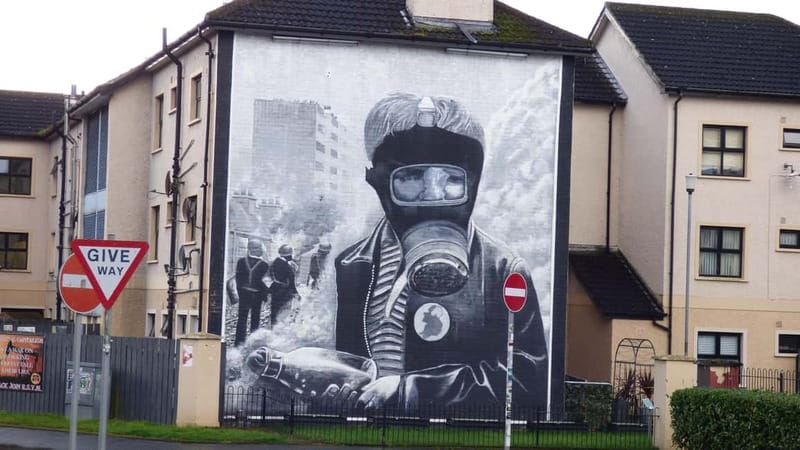
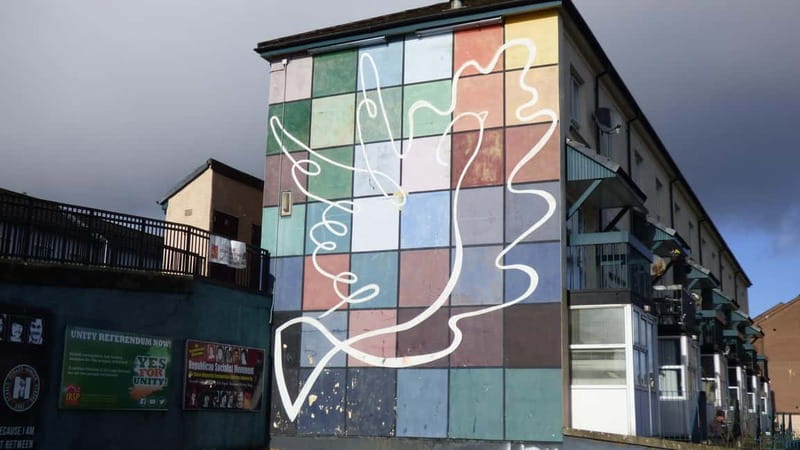
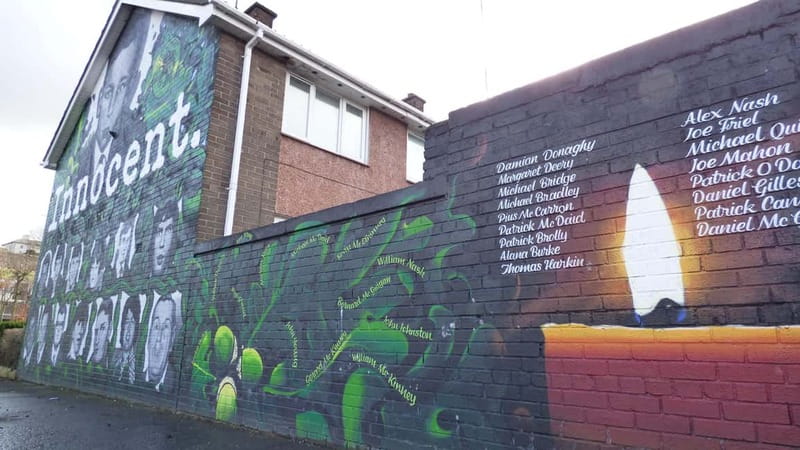
The Bogside murals are the other star of the show, and the guides treat them like open-air chapters. You’ll view the murals that depict the city’s past, then learn what the scenes communicate and how the artwork relates to the political and civil rights story.
This is a big reason I think this tour is worth your time even if you’ve read a bit about Bloody Sunday already. Murals work differently than books. They compress emotion, memory, and interpretation into images you can stand in front of. With a good guide, you stop seeing them as decoration and start seeing them as a record.
Here’s the practical tip I’d give you: take your time at the murals, even if your legs are ready to move on. If your guide is stopping to point something out, that’s usually your cue to look closer, not to rush through.
The Battle of the Bogside (1969) and why it matters
You also hear about the Battle of the Bogside in 1969. This matters because it sits between general civil rights agitation and the crisis of Bloody Sunday in 1972. In other words, it helps explain how the situation intensified.
On this tour, the battle isn’t presented like a standalone action scene. It’s framed as part of a larger pattern tied to the civil rights movement and the discrimination that shaped daily life. When you understand that lead-up, Bloody Sunday stops feeling like a random tragedy. It becomes part of a trajectory that people were living inside.
If you want to understand the Troubles in a clean, chronological way, this stop is doing heavy lifting. You’re getting the logic of escalation, not only the climax.
How the guides bring it to life, from Ian to Gleann to Angela
One of the most praised parts of this tour is the guide delivery. People mention guides like Ian, Glyn, and Gleann, plus Angela, Tony, and others, with consistent themes: strong storytelling, humor, and a lot of grounded detail.
What I like about this style is that it doesn’t treat you like a passive listener. Several guides are praised for being personable and funny while still handling serious material with respect. That combination helps you stay engaged, and it also makes questions feel welcome rather than inconvenient.
You’ll likely notice something else: some guides include personal connections or lived experience tied to the area and events. You don’t need those personal details to appreciate the history, but they can make the tour feel less abstract. It’s not just what happened, it’s what it meant, and what it left behind.
If you’ve already visited places like the Free Derry Museum, you may find this walk fits naturally into your day. The tour’s focus on the Bogside murals and Bloody Sunday sites gives you a stronger sense of place after you’ve learned the broader context.
Price and value: $35 for 1.5 hours with real context
At $35 per person for about 1.5 hours, this isn’t a cheap “quick stop” attraction. But it also isn’t trying to be a full-day tour. The value comes from expert guiding plus a route that hits the event sites, the murals, and the monument, all in one compact timeline.
For me, the deciding factor is how well the tour changes your understanding. If your time in Derry is limited, this style of guided walk gives you an efficient way to learn the modern history that shaped the city. You get context (partition, discrimination, civil rights), turning points (1969 and Bloody Sunday), and the visual memory system (the murals).
If you’re paying for one history experience in Derry, this is the kind that can anchor your trip. If you’re already planning to do a wider Troubles-focused tour in another city, you might treat this one as your Derry foundation.
Who should book this walking tour, and who should think twice
This tour fits best if you want modern Irish history that feels rooted in specific places. You’ll be happiest if you like walking, listening to a timeline explained clearly, and spending time with art that’s meant to be interpreted.
You might consider skipping it if you prefer light, purely scenic tours, because Bloody Sunday is tragic and emotionally heavy. Also, it’s not suitable for people with mobility impairments, so plan accordingly.
If your travel style is “tell me what matters and show me where it happened,” you’re in the right place. And if you’re sensitive to graphic or deeply distressing storytelling, go in with the expectation that the guide handles events respectfully but clearly.
Should you book: my take on the Bloody Sunday and Bogside Murals tour
I’d book this tour if you want Derry to make sense. The Bogside murals and the Bloody Sunday sites are the kind of things you can’t fully understand from photos or a quick read. With the right guide, you start to see how discrimination, civil rights demands, and conflict shaped the neighborhood you’re walking through.
I’d hesitate only if you know you can’t handle heavy history topics or you need accessibility options this tour can’t support. Otherwise, bring weather gear, wear comfortable shoes, and give yourself permission to take it slowly at the murals.
Bottom line: this is one of the most meaningful ways to understand Derry, because you’re not just learning facts. You’re walking a map of memory.
FAQ
Where is the meeting point for the tour?
Meet your guide outside the Tower Museum at Magazine Gate, just inside the city walls.
How long is the Bloody Sunday and Bogside Murals walking tour?
The tour lasts 1.5 hours.
How much does the tour cost?
It costs $35 per person.
Is the tour guided and in English?
Yes, it includes a live tour guide and the tour is offered in English.
What should I wear or bring since it is outdoors?
Be prepared for all weather, since the tour is a walking experience.
Is the tour suitable for people with mobility impairments?
No, it is not suitable for people with mobility impairments.
Can I get a full refund if I cancel?
Yes. You can cancel up to 24 hours in advance for a full refund.
Can I reserve now and pay later?
Yes, the booking option is Reserve now & pay later, so you can hold your spot and pay later.
Newly listed near Belfast & Northern Ireland
- Half day Giant’s Causeway Tour from Belfast★ 5.0 · 6 reviews
- From Belfast: Giant’s Causeway & Titanic Experience Belfast★ 4.6 · 92 reviews
- From Belfast: Giants Causeway Full-Day Private Guided Tour★ 5.0 · 9 reviews
- From Belfast: Giants Causeway Express Half-Day Tour★ 5.0 · 58 reviews
- From Belfast: The Giant’s Causeway & Game of Thrones Tour★ 5.0 · 4 reviews
- Derry: Guided Derry Girls TV Show Public Tour★ 4.8 · 6 reviews
- Derry: City Walking Tour & Exploration Game★ 3.1 · 3 reviews
- Derry: History and Politics Private City Walking Tour★ 4.7 · 6 reviews
Walking Tours, compared.

Magical London: Harry Potter Guided Walking Tour
Read our review →

University and City Walking Tour with Alumni Guide
Read our review →
Harry Potter Movies Walking Tour (Kids Go Free)
Read our review →
The Great British Rock and Roll Music Walking Tour
Read our review →
Jack the Ripper Walking Tour – Ripper Vision Tours
Read our review →
Browse the lists this tour appears in