
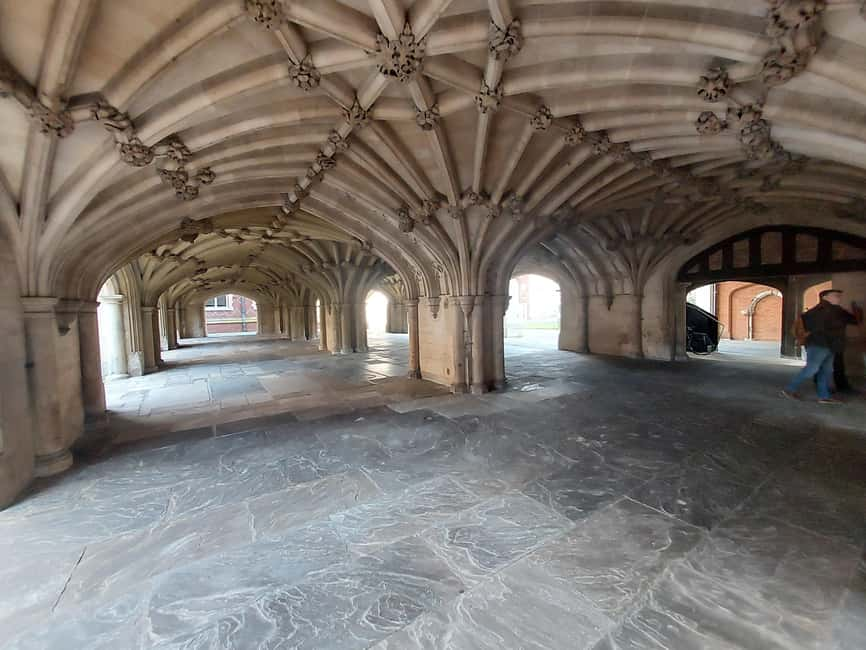
Review · WALKING TOURS
London: Legal Walking Tour of Inns of Court and Royal Courts
Legal London can feel surprisingly human. I loved how this walk turns English Common Law into a story you can picture, not a dusty textbook. Two things I especially liked: the stop at the Royal Courts of Justice with courts in action, and the Inns of Court details that explain how training, traditions, and even food shaped barristers over centuries. One thing to consider is that it is a lot of walking in an outdoor pocket of the city.
This is the kind of tour where your head keeps clicking into place. The guide, often Keith, mixes architecture, legal training, and quirky facts like why lawyers wear wigs and how the Inns worked as real communities. Just be ready for mostly outside viewing at the Inns, so if you want lots of interior access, you may need to plan a separate visit later.
In This Review
- Key moments and what makes them special
- The Inns of Court make London’s law feel real
- Starting outside Temple Underground, and why this route works
- Temple Church: where the Magna Carta story gets physical
- From Fleet Street to the legal training world
- Royal Courts of Justice: Gothic Revival outside, courts in action inside
- Middle Temple Hall: traditions that shaped who became a lawyer
- Inner Temple Hall and Gardens: Shakespeare, roses, and politics in the soil
- Elbows to the side alleys: courts-adjacent stops like Clifford’s Inn and Staple Inn
- Lincoln’s Inn: prime ministers, Bleak House, and the Old Hall
- Gray’s Inn: restoration after bomb damage, plus Dickens and corruption stories
- Guide style and what you should expect from the group
- Price and value, and how to know if it fits you
- Who should book this legal walking tour
- Should you book this tour?
- FAQ
- Where does the tour start and end?
- How long is the walking tour?
- How much does it cost?
- What is included in the Royal Courts of Justice visit?
- Will I go inside the Inns of Court buildings?
- What happens at Temple Church during the tour?
- What other stops are part of the tour?
- Is the tour suitable for children?
- What should I bring?
Key moments and what makes them special
- Temple Church and the Magna Carta link: A 12th-century church tied to the political story around King John.
- Royal Courts of Justice, opened by Queen Victoria: Gothic Revival grandeur plus a look at courts operating.
- The Inns of Court as training communities: These weren’t just schools, they were social worlds.
- Wigs, dinners, and qualification traditions: The tour makes old rules feel oddly understandable.
- Women’s legal barriers and the 70 dinners detail: Helena Normanton is a key turning point story.
- Shakespeare and political origins hinted in the gardens: A Henry VI reference connects literature to place.
The Inns of Court make London’s law feel real
If you picture London as a postcard of Big Ben and museums, this area gently messes with that idea. The Temple, the Inner and Middle Temple, Lincoln’s Inn, Gray’s Inn, and nearby legal institutions form a legal cluster with long memory. Walking here, you start to see how a system of common law grew from local practice into something exported across countries.
What I liked most is how the tour connects legal history to people you can actually name. You hear about figures tied to the American Declaration of Independence, plus Muhammad Ali Jinnah, Mahatma Gandhi, Sir Francis Drake, and Sir William Blackstone. That global reach matters, because it helps you understand why these London institutions became influential far beyond the UK.
This tour is also practical in the best way: it helps you place what you see today inside a much older framework. Even the odd details, like the old bar habits and travel routes from the Inns to courts, explain how the legal day worked.
More Walking Tours in London
- Magical London: Harry Potter Guided Walking Tour
★ 4.7 · 22,044 reviews - London: The Original Jack the Ripper Walking Tour
★ 4.7 · 7,833 reviews - London: Harry Potter Movies Walking Tour (Kids Go Free)
★ 4.7 · 3,071 reviews
Starting outside Temple Underground, and why this route works
You meet outside Temple Underground Station, under the MONCLE sign. From there, you walk through the legal heart of London in a tight loop, ending at Chancery Lane Underground Station. The tour runs about 3 hours and keeps groups small, limited to 8 people, so you get time for questions without feeling rushed.
The route is designed so you get both the “stage” and the “training grounds.” You see the famous courts building, but you also get the Inns of Court context that explains how lawyers were formed and certified. That matters, because if you only visit the courthouse, you miss the machinery that made the system function.
A small early win: it is set up for newcomers. You get a clear sense of what the English common law is, how it spread, and who helped carry it. If you are visiting London for your first time, you still come away with a coherent story, not just a list of sights.
Temple Church: where the Magna Carta story gets physical
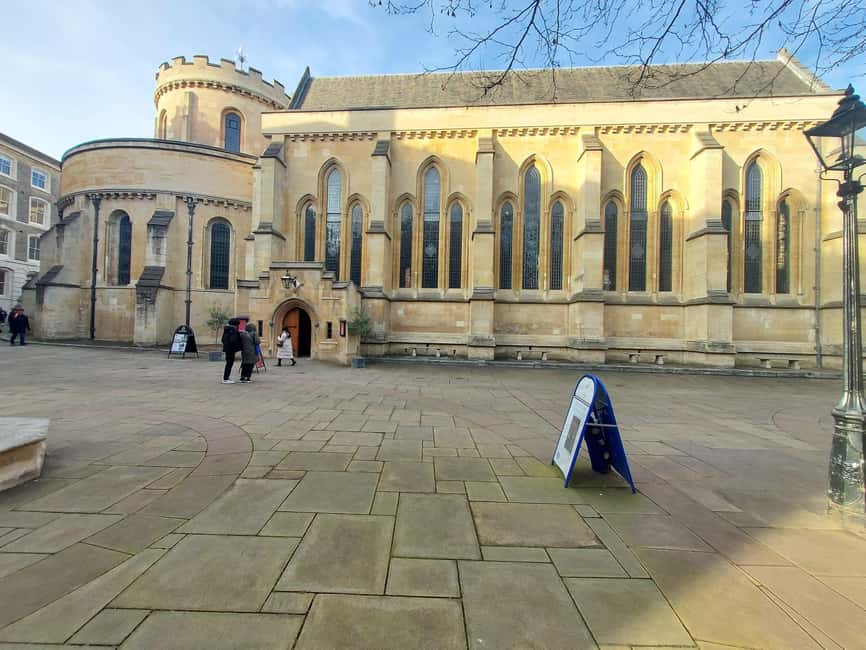
Temple Church is a key early stop, and it is not just because it is pretty. It was built in 1162 AD and consecrated in 1185 AD, which means you are stepping into a site that has watched centuries of legal and political change. The tour ties it to the Magna Carta negotiations, pointing out that it was one of King John’s bases during that era.
Even if you only see the outside on the main tour, it sets the tone. Medieval halls and religious buildings sit in the same space where legal tradition later became formalized. The result is a helpful mental image: the law was not floating in the abstract, it grew in a physical web of places people lived, prayed, and worked around.
There’s also a useful option: Temple Church can be visited after the morning tour for an extra fee of £5. So if you want more time inside, you can add it without losing the bigger tour.
From Fleet Street to the legal training world
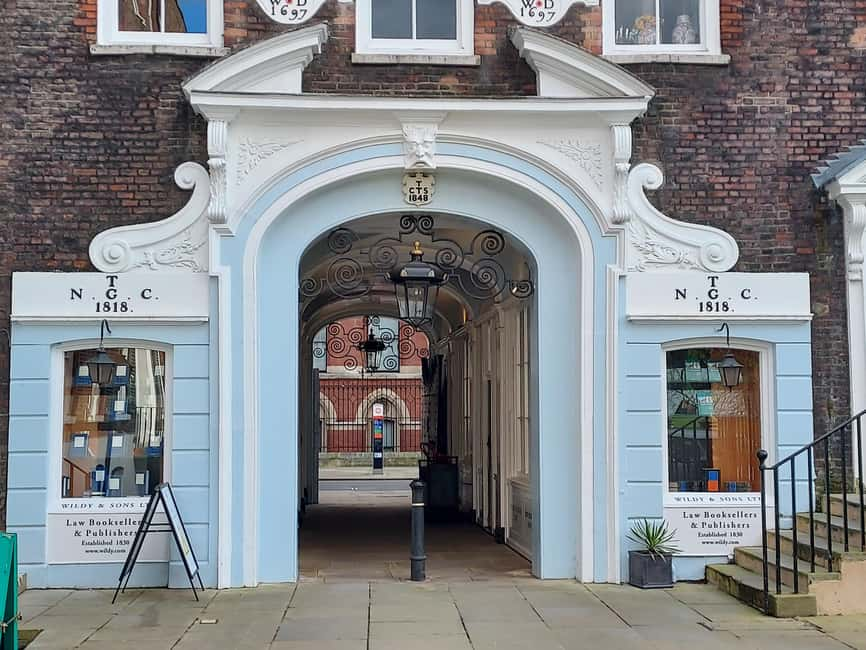
As you move along Fleet Street, the tour shifts from single monuments to the idea of a legal neighborhood. This area has always been about more than law courts. It is about daily rhythms, social connections, and how people trained for a long career.
You’ll hear that lawyers traveled from the Inns toward Westminster by rowing boats and later by steam ferries for many years. That detail sounds like a throwaway at first, but it actually helps you understand why traditions developed the way they did. If your commute is part of the day, it shapes schedules, customs, and even where communities concentrate.
Stops in this area include places tied to older legal and publishing streets, such as El Vino’s, described by Lord Justice Griffiths in 1982 (in the Court of Appeal) as no ordinary wine bar, and a unique institution in Fleet Street. The point is not food or drink. It is that the street has kept evolving while the legal identity stayed close by.
Same corner of Britain, a different sort of outing:
- London: The London Eye Entry Ticket
★ 4.6 · 35,875 reviews - London: Tower of London and Crown Jewels Exhibition Ticket
★ 4.6 · 28,769 reviews - From London: Harry Potter Warner Bros Studio Tour
★ 4.7 · 26,588 reviews - London: Westminster to Greenwich River Thames Cruise
★ 4.5 · 22,836 reviews
Royal Courts of Justice: Gothic Revival outside, courts in action inside
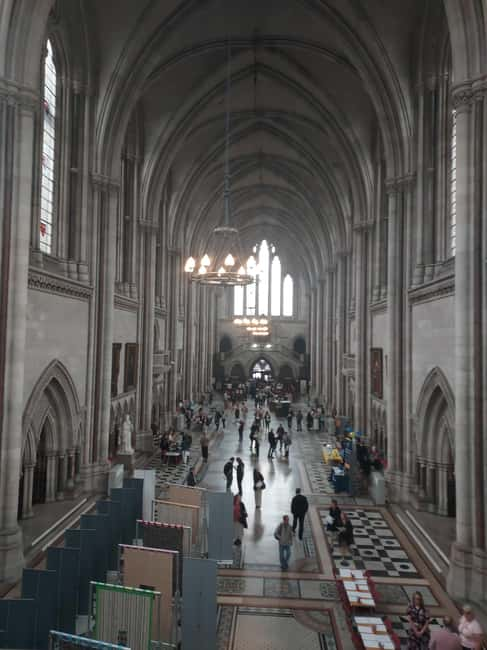
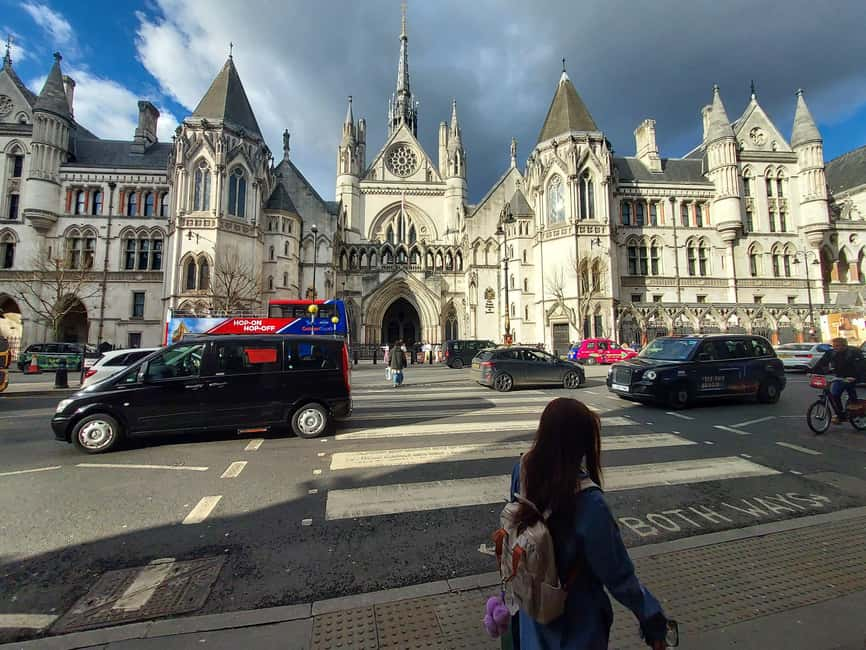
The Royal Courts of Justice is the big architectural moment, opened in 1882 by Queen Victoria. It was designed to house 19 courts originally, and now there are around a hundred. That scale tells you something about how the legal system expanded and reorganized over time.
During your visit, you get inside access and can see courts in action. That is one of the strongest value parts of the tour, because many walking tours stop at exteriors only. Here, you get a real sense of the courtroom atmosphere and how formal the space feels.
The building’s Gothic Revival look does not just exist for style. It reinforces how the legal system wanted to project authority and seriousness. When you stand inside, you start to understand why people treated law as a profession with its own culture, language, and rituals.
Middle Temple Hall: traditions that shaped who became a lawyer
Middle Temple is one of the most story-rich stops because it shows how training mixed with community life. You visit the Middle Temple Gates and the Middle Temple Hall from the outside, including a look at its 1573 build date and the claim that it is the most perfect example of an Elizabethan building remaining in central London.
Then the tour does something smart: it connects architecture to training. You hear about hall traditions that endured for centuries, including eating dinners in the halls. In other words, qualification was not only exams and statutes. It was also a shared life that created identity and discipline.
A standout detail is the explanation of why lawyers wore wigs. That costume is often treated like a random quirk, but the tour frames it as part of the profession’s established culture. Another strong story is about women breaking into the profession. Helena Normanton is discussed alongside her misstep involving eating 70 dinners at Middle Temple to qualify as a lawyer. It is both funny in a dark way and historically important, because it shows how strict the old pathway was.
Inner Temple Hall and Gardens: Shakespeare, roses, and politics in the soil
Next you move to the Inner Temple area, including outside visits to Inner Temple Hall and the gardens if open. The gardens are where the tour gets especially fun if you like literature tied to real geography.
The tour points to Shakespeare’s Henry VI Part 1, where the War of the Roses origin story gets linked to the picking of red and white roses in Temple Gardens. Even if you already know the plot, it lands differently because you see the actual space the play references.
This stop also gives you contrast. You are not just hearing about old legal rules. You are also watching how the Inns functioned as places where art, politics, and society overlapped. The legal profession lived among people who read Shakespeare, argued about power, and used stories to make sense of conflict.
Elbows to the side alleys: courts-adjacent stops like Clifford’s Inn and Staple Inn
The tour includes several outside stops that may look like simple street scenes, but they add texture to the legal map. You’ll pass by Clifford’s Inn and St. Dunstan’s Church (outside), and you’ll also stop at Staple Inn (outside). Those smaller sites matter because they show how dense the legal world is in this district.
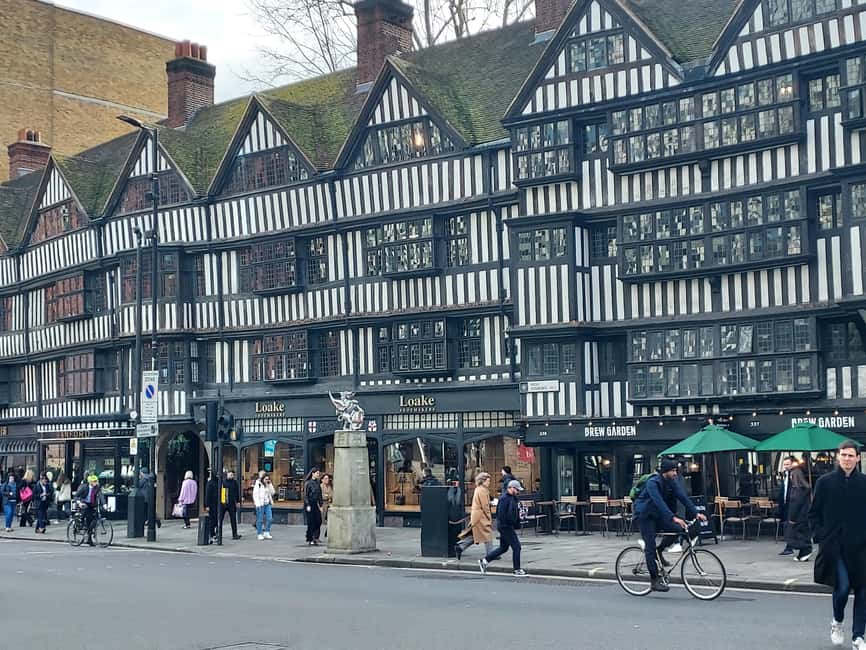
Staple Inn also connects to the Tudor era. The tour highlights it as a standout Tudor timber-framed building in London, which is a great reminder that the legal institutions grew across multiple architectural ages, not just one grand style.
These stops can feel like “extra credit,” but I found them useful. Without them, you’d remember only the big names like Royal Courts of Justice. With them, the area feels like a working ecosystem, full of institutions that supported the main legal engines.
Lincoln’s Inn: prime ministers, Bleak House, and the Old Hall
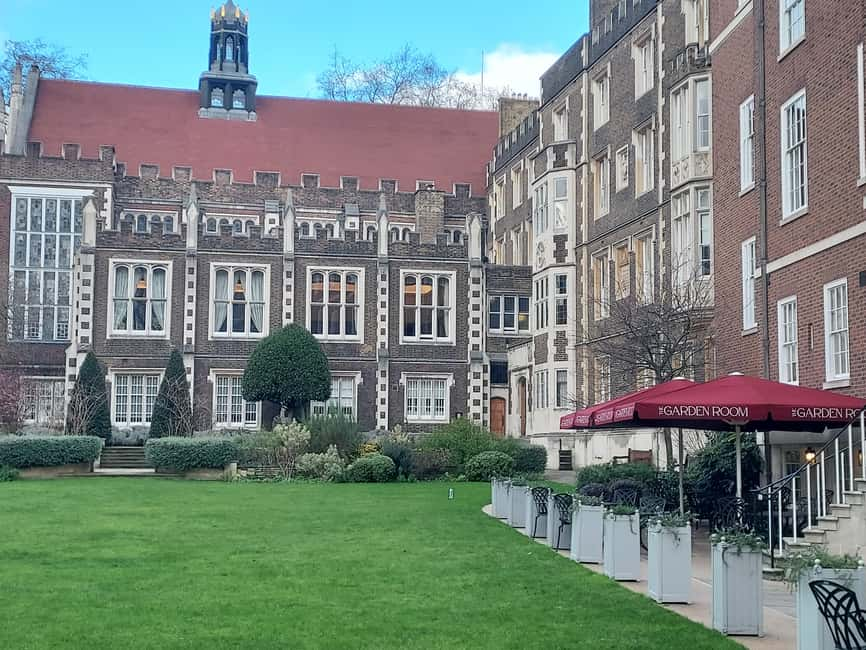
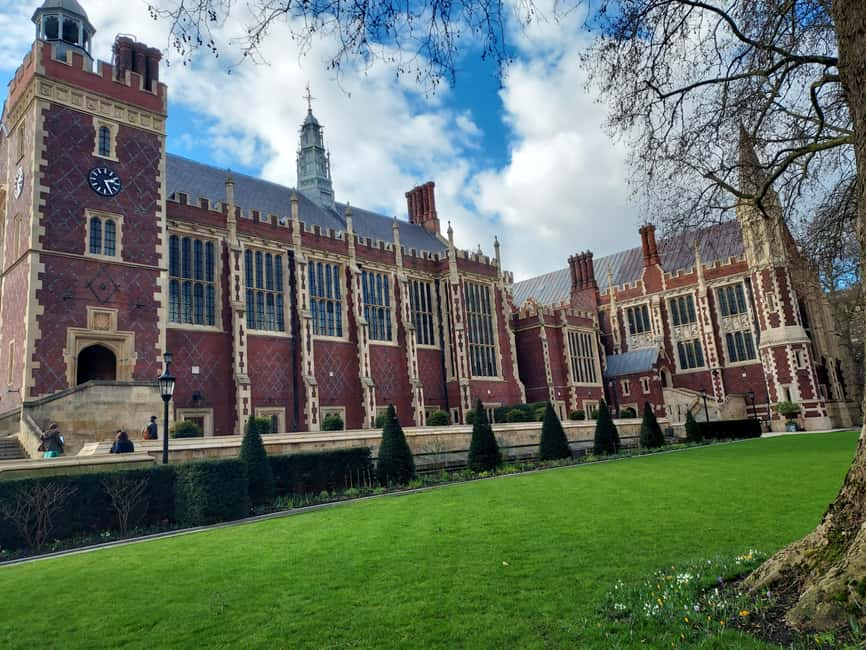
Lincoln’s Inn is another anchor stop. The Old Hall and chapel are visited from the outside, and you learn how Lincoln’s Inn produced 15 prime ministers, including Tony Blair, Margaret Thatcher, Gladstone, and Disraeli. That political connection is not a trivia fact. It reinforces how the Inns acted as pipelines into national leadership.
The Old Hall built around 1490 comes up next, and the tour notes it was used as a Court by the Lord Chancellor. Charles Dickens’ Bleak House is also tied to the central court area, which helps you connect Victorian literature to legal space.
This stop is a good example of why the tour is more valuable than a pure architecture walk. You are not just looking at old stone. You are learning how power and law shared the same geography over multiple eras.
Gray’s Inn: restoration after bomb damage, plus Dickens and corruption stories
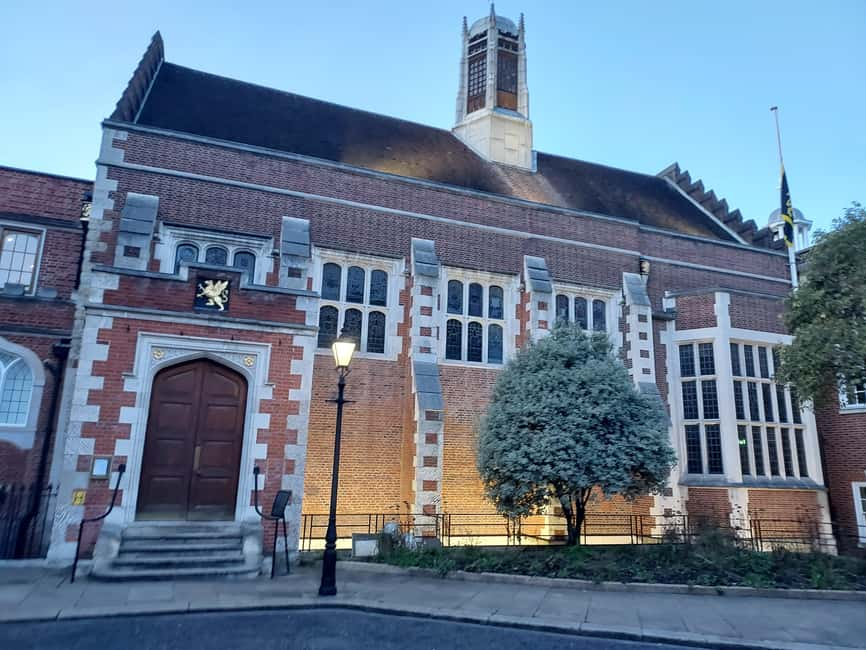
Gray’s Inn adds another layer, mixing resilience with complicated history. You visit the area including its ancient hall built in 1558, and the tour mentions restoration help from the American Bar Association after bomb damage.
Then the tour gets dramatic about legacy. It discusses one of Gray’s Inn’s most famous former members who, as Lord Chancellor, was convicted of 23 cases of corruption. There is even mention of a statue in the Inn’s central square that makes you stop and wonder how such stories get memorialized.
Charles Dickens also appears here, with the detail that he worked as an office boy at Gray’s Inn. That kind of real-life link is powerful for me because it shifts Dickens from an author name to a person embedded in the professional world of law.
Guide style and what you should expect from the group
A major reason this tour earns top marks is how the guide teaches. Keith often leads, and several past groups describe him as friendly, patient, and very detailed, with a professional background in law. One review notes he is a retired lawyer, and another mentions he even provided umbrellas when rain hit briefly.
That matters for your comfort and your comprehension. When the guide can connect rules, traditions, and people, you do not leave with random facts. You leave with an organized mental map of how the system worked, and why the old rituals mattered to career paths.
The group size is small, up to 8, which helps you hear stories clearly and ask questions. The tour is also in English, and it is designed for adults and older teens rather than small kids.
Price and value, and how to know if it fits you
At $34 per person for a 3-hour guided walk, the value is strong if you want a focused introduction to legal London. You get a guided experience, multiple major Inns sights, and an interior visit to the Royal Courts of Justice with courts in action. That is harder to replicate on your own without already knowing where to go and what to look for.
You also get a narrative you can carry. The tour explains common law’s global impact and tells you why these Inns influenced countries far beyond the UK. If that topic is on your interests list, this price feels fair for the time and instruction you get.
Where the value might not match your expectations is inside access. The Inns are mostly outside viewing, and Temple Church on the main tour is outside as well. If you want lots of indoor Inn buildings, you might find the experience more satisfying if you treat it as the foundation, then add optional independent visits later.
Who should book this legal walking tour
You should book if you like history with real places attached, and if you want to understand how a legal system became a global export. It is also a great choice if you are studying or curious about law, because it explains training traditions, courtroom culture, and career pathways.
If you dislike long walks or you need step-free routes, this one may not work. The tour involves a lot of walking outdoors and is not suitable for people with mobility impairments. It also has a minimum age requirement, not recommended for children under 10 and with further age cutoffs up to under 16.
Should you book this tour?
I think it is an easy yes if you want a smart, story-driven tour of London’s legal core. The Royal Courts of Justice stop, plus the way the Inns build the context behind what you see, makes the 3-hour format feel efficient rather than rushed. Add in the strong guide reputation, including Keith and the professional law experience some groups noted, and you get a higher chance of leaving with real clarity.
I would hesitate only if you expect lots of interior access at the Inns or if you cannot handle outdoor walking. If you can do the walk and you enjoy history that connects to how systems work, this tour is a great way to see London from a perspective most visitors skip.
FAQ
Where does the tour start and end?
The tour starts outside Temple Underground Station, under the MONCLE sign. It ends at Chancery Lane Underground Station.
How long is the walking tour?
The duration is 3 hours.
How much does it cost?
The price is listed as $34 per person.
What is included in the Royal Courts of Justice visit?
You visit the Royal Courts of Justice and see the courts in action, with access inside.
Will I go inside the Inns of Court buildings?
The tour includes Middle Temple Hall and Inner Temple Hall as outside visits. It also includes visits to other Inns areas mostly from the outside, as listed.
What happens at Temple Church during the tour?
Temple Church is included as an outside visit during the tour. It can be visited after the morning tour for an additional £5 fee.
What other stops are part of the tour?
The tour includes outside visits connected to Middle Temple, Inner Temple Gardens (if open), El Vino’s/Sergeants’ Inn (outside), Clifford’s Inn and St. Dunstan’s Church (outside), Lincoln’s Inn Old Hall and Chapel (outside), Staple Inn (outside), and Gray’s Inn (outside).
Is the tour suitable for children?
It is not suitable for children under 10, and there are additional minimum age cutoffs listed through under 16.
What should I bring?
Wear comfortable shoes and bring weather-appropriate clothing, since the tour is outdoors and involves a lot of walking.
Newly listed near London
- Women in art – National Gallery★ 5.0 · 3 reviews
- Woking: Royal Horticultural Society Wisley Garden Ticket★ 4.7 · 24 reviews
- Windsor Stonehenge Bath Private Tour from London with Passes★ 4.8 · 5 reviews
- From London: Windsor, Stonehenge & Oxford Private Car Tour★ 3.5 · 4 reviews
- Windsor Castle Tour with Fish and Chips Lunch in London★ 4.4 · 25 reviews
- Windsor Castle & Hampton Court Palace VIP Black Taxi Tour★ 4.9 · 14 reviews
- London: Windsor Castle & Tower of London Tour with Tickets★ 3.3 · 15 reviews
- From London: Windsor Castle, Bath, and Stonehenge Day Trip★ 4.4 · 153 reviews
Walking Tours, compared.

Magical London: Harry Potter Guided Walking Tour
Read our review →

University and City Walking Tour with Alumni Guide
Read our review →
Harry Potter Movies Walking Tour (Kids Go Free)
Read our review →
The Great British Rock and Roll Music Walking Tour
Read our review →
Jack the Ripper Walking Tour – Ripper Vision Tours
Read our review →
Browse the lists this tour appears in