
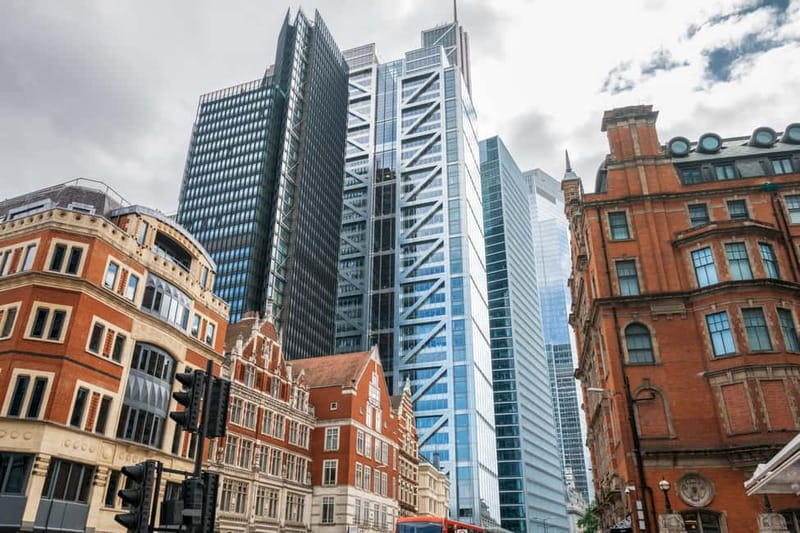
Review · WALKING TOURS
London: Modern Architecture & Building Guided Walking Tour
Modern London can look different when someone points out the details. This 2-hour guided walk focuses on the skyline giants of the City, with clear technical stories you can actually follow. I especially liked Sam’s construction-management perspective and the way the route gives you close views of the Shard, Walkie Talkie, and Gherkin without rushing. A small drawback to plan around: it is a proper walk, so it is not a fit for mobility impairments or wheelchair users.
You start on the north side of the Thames at Sugar Quay Jetty near the Tower of London, then move through the Square Mile business district, ending at the NLA (inside The London Centre). The pace is relaxed enough to ask questions, but you are still outside most of the time, so comfortable shoes and weather-ready clothing matter.
What makes the ending work is that the tour finishes with context. You get free access to browse the NLA space and its scale models of London skyline, but you should plan extra time because the building is only open certain days and until 17:00.
In This Review
- Key highlights worth your attention
- Meeting Sam at Sugar Quay Jetty, then walking straight into the City’s skyline
- The Thames start: why the river matters to modern buildings
- City Hall and the Square Mile: modern design in a working district
- The Shard: close views plus the engineering logic behind the icon
- The Walkie Talkie (Fenchurch Building): reading form, not just fame
- Lloyd’s of London and the Leadenhall Building: finance, function, and structure
- The Gherkin and The Can of Ham: two views of one kind of ambition
- Liverpool Street Station and the Barbican: modern architecture with a human scale
- End at NLA in The London Centre: the free models that make it all click
- What the tour is really buying you for the $52 price
- Timing, comfort, and who this tour suits best
- Should you book this modern architecture walking tour?
- FAQ
- How long is the London Modern Architecture & Building guided walking tour?
- Where does the tour start?
- Is entry into the buildings included?
- Is the tour free to enter at the NLA?
- What days and times is NLA open?
- Is the tour suitable for wheelchair users or mobility impairments?
Key highlights worth your attention
- Close-up skyline moments: Shard, Walkie Talkie, Gherkin, Lloyds Building, City Hall, and more, on a single walk
- Engineering stories you can picture: what lies beneath the streets and how major civil projects shaped the city
- A guide with real construction management experience: Sam’s background in London and Sydney shows in the explanations
- A well-timed finish at NLA: free entry to view information and scale models at your leisure
- Portable visuals on the go: the guide uses extra materials to help you understand what you are seeing
Meeting Sam at Sugar Quay Jetty, then walking straight into the City’s skyline
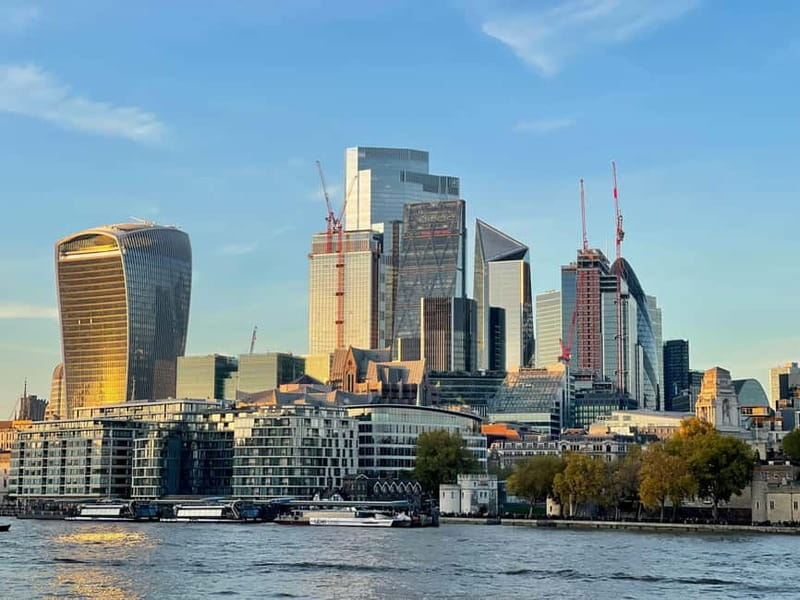
The tour starts at Sugar Quay Jetty, near the Tower of London, which is a smart move. You begin where the Thames feels present, and that helps you understand how London’s modern buildings relate to the river edge and the wider city. Before you even reach the first skyscraper, your guide is already setting the theme: modern architecture is not just design, it is also logistics, structure, and engineering choices made under real urban pressure.
I like that Sam does not treat the walk like a list of famous names. He has a background in construction management from both London and Sydney, and it shows in how he translates complicated topics into practical, street-level explanations. He also brings along extra visual support (a portable screen) so you can follow along when concepts get technical.
One more thing that makes the start feel easy: the group moves through the Square Mile with enough structure to keep you oriented, but not so tightly that you cannot stop for questions. If you have mild interest in architecture, this format usually pulls you in fast because it connects each building to something you can observe right where you are standing.
More Walking Tours in London
- Magical London: Harry Potter Guided Walking Tour
★ 4.7 · 22,044 reviews - London: The Original Jack the Ripper Walking Tour
★ 4.7 · 7,833 reviews - London: Harry Potter Movies Walking Tour (Kids Go Free)
★ 4.7 · 3,071 reviews
The Thames start: why the river matters to modern buildings
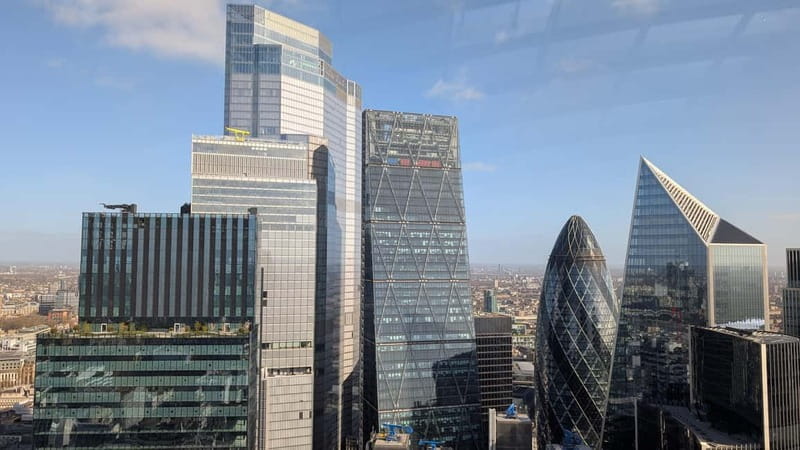
This walk is framed as modern London rising above an older foundation system. Starting near the Thames helps you grasp that the city is engineered at multiple levels, not only above ground. Your guide points you toward the bigger idea that London has been shaped by major civil engineering projects for generations, and the modern skyline is part of that same long story.
Even if you only catch small details along the river, it gives you a helpful reference point. You see how the business district sits in relation to the water, and you start noticing how sightlines and building placement affect what you experience up close.
Then, as you head east and into the City, the buildings start to feel less like random icons and more like a timeline of construction ambitions. That is the tour’s rhythm: you look, you learn, you connect.
City Hall and the Square Mile: modern design in a working district
Once you enter the Square Mile area, the feel changes. This is not a decorative museum district, it is active London. You get modern architecture sitting in the middle of daily schedules, business logistics, and public circulation.
At City Hall, you get an early lesson in how contemporary buildings carry both civic identity and practical function. Your guide’s explanations tend to focus on what makes these structures work, not just how they look. That is a big reason the tour hits for both architecture fans and people who are unsure they care.
The Shard: close views plus the engineering logic behind the icon
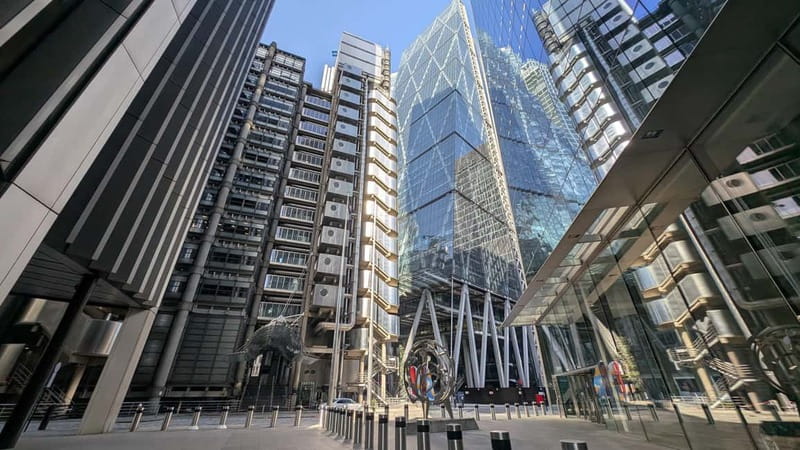
The Shard is usually the moment people recognize immediately, but the tour does more than satisfy recognition. You are positioned to see it in a way that feels immediate rather than distant, and you get background on what makes it notable from a structural and planning standpoint.
What I liked here is how the guide keeps the story grounded. Instead of only talking about style, Sam connects the building to the realities of high-rise construction in a dense city environment. You end up understanding why this tower looks the way it does and why its impact is bigger than a skyline photo.
This stop also sets you up for the rest of the walk. After the Shard, you start watching for patterns: how architects responded to space constraints, view corridors, and the need to build safely while keeping the city moving.
Same corner of Britain, a different sort of outing:
- London: The London Eye Entry Ticket
★ 4.6 · 35,875 reviews - London: Tower of London and Crown Jewels Exhibition Ticket
★ 4.6 · 28,769 reviews - From London: Harry Potter Warner Bros Studio Tour
★ 4.7 · 26,588 reviews - London: Westminster to Greenwich River Thames Cruise
★ 4.5 · 22,836 reviews
The Walkie Talkie (Fenchurch Building): reading form, not just fame

Next comes the Fenchurch Building, often called the Walkie Talkie. The building’s shape makes it easy to admire from multiple angles, but your guide helps you interpret what you are seeing. You get fun facts and stories that explain how such a distinctive form fits into the Square Mile.
If you like when a tour points out details you would miss, this is a good match. You will likely find yourself looking at the building’s character, then immediately hearing why that character exists and how it relates to construction choices.
Lloyd’s of London and the Leadenhall Building: finance, function, and structure
At Lloyd’s of London and the Leadenhall Building, the tour leans into the idea that modern architecture often serves a clear purpose. These buildings are not only designed for views and headlines, they also work for the organizations inside them.
Your guide’s style is to connect the dots quickly: what the building does, what makes it technically interesting, and why it belongs in this area. It becomes less about memorizing facts and more about understanding the pattern of how London’s modern growth concentrated in this zone.
This part of the walk also feels like a nice reset. You have iconic towers back-to-back, then the explanations slow you down just enough to notice architectural features that do not pop in a quick glance.
The Gherkin and The Can of Ham: two views of one kind of ambition
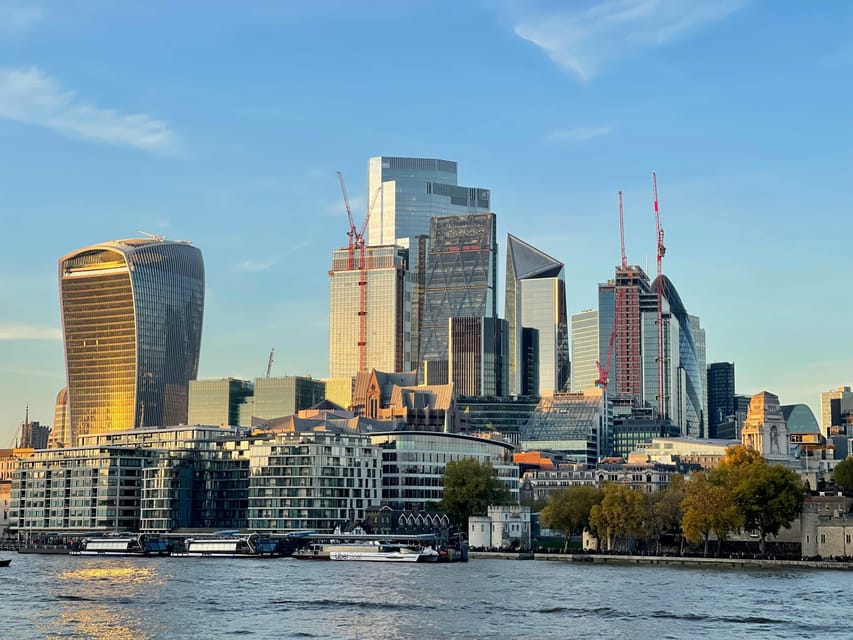
When you reach 30 St Mary Axe, better known as the Gherkin, you get one of the most recognizable contemporary silhouettes in London. Then you continue to 70 St Mary Axe, nicknamed The Can of Ham.
The tour treats these buildings like more than photo stops. You learn why they are engineering-worthy, and you hear stories about how London’s skyline evolved through specific design and construction approaches. You also get practical perspective on why these buildings work so well in a crowded city: they fit into a skyline that already had expectations for density and land use.
I like this pair because it helps you compare without needing technical training. You start noticing how form can influence performance and how city planners and engineers think when they have limited space but big demands.
Liverpool Street Station and the Barbican: modern architecture with a human scale

As the tour moves toward Liverpool Street Station, the vibe becomes more grounded again. It is still part of the City, but you start thinking about everyday movement and how large developments relate to transit.
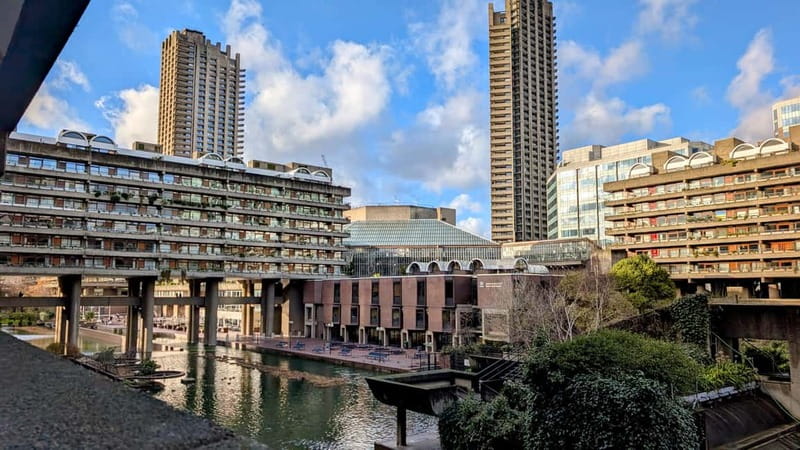
Then you finish this run of highlights at the Barbican area. Even if you are mostly here for the skyscrapers, this stop adds balance. It gives you a sense that modern London is not only towers. You see how planning and architectural choices can shape a city block in a different way, with its own atmosphere and logic.
This is also where the tour pace feels most useful. By now you have context, so each new stop feels like a new chapter, not just another skyline photo.
End at NLA in The London Centre: the free models that make it all click
Your final stop is NLA, inside The London Centre. This is the payoff for people who like to understand how a skyline is assembled. Entry is free here, and you can browse at your leisure, including information and scale models of London’s skyline.
I found the NLA moment particularly helpful because it turns what you saw outside into something you can grasp as a whole. Instead of only remembering individual buildings, you can connect the wider picture, seeing how the modern skyline fits among older structures.
One practical consideration: plan extra time after the walk. The tour itself is about 2 hours, and it is smart to allow 15 to 30 minutes at NLA. Also note the opening window: NLA is open Tuesday to Saturday until 17:00. If your day does not match that schedule, you may not be able to enter, especially on Sunday or Monday or on evening tours.
What the tour is really buying you for the $52 price

At $52 per person for about 2 hours, you are paying for a guided, structured walkthrough of modern London with real context. You are not paying for paid entry into buildings, and that matters for value.
Instead, you are getting three things that usually cost more when you seek them separately:
- A route built around skyline storytelling, not random sightseeing
- Explanations that connect architecture to construction management and engineering realities
- The NLA stop, where free admission lets you see scale models without extra ticket costs
If your main goal is just to take photos of famous buildings, you could do that independently. But if you want the “why” behind what you see, the guide turns the walk into something more than sightseeing. The consistently high ratings also point to one major value driver: Sam’s ability to keep technical content clear without making it feel like a lecture.
Timing, comfort, and who this tour suits best
You should expect to walk steadily across the City. That means comfortable shoes are not optional. The tour proceeds in normal conditions, so bring water and dress for weather. If it is raining or windy, plan for a real outdoor walk.
Also, the tour is not suitable for people with mobility impairments or wheelchair users. If you are traveling with someone who needs step-free access, this one may not work.
Best matches:
- You like modern architecture and want an explanation you can actually follow
- You enjoy engineering stories and construction context
- You want a compact, high-impact route without spending all day traveling between sites
- You want skyline views plus a satisfying end stop where you can read and compare
Should you book this modern architecture walking tour?
If you are the kind of traveler who wants more than postcard views, I think this one is a strong yes. The tour offers close, iconic sightings and pairs them with clear technical storytelling, guided by Sam, who brings construction management experience and a friendly, question-friendly approach.
I would skip it only if you cannot do a longer outdoor walk or if you are visiting on days that do not align with NLA opening hours and you were hoping to enter. Otherwise, this is a great way to understand how London’s skyline gets built, including what lies beneath the streets and how past and future engineering projects shape what you see today.
FAQ
How long is the London Modern Architecture & Building guided walking tour?
The tour lasts about 2 hours. I suggest allowing an additional 15 to 30 minutes at the end for time inside NLA.
Where does the tour start?
Meet at Sugar Quay Jetty, near the Tower of London.
Is entry into the buildings included?
Entry into any of the buildings seen on the tour is not included. The tour includes the guided walk and commentary.
Is the tour free to enter at the NLA?
NLA entry is free. You can read information and view scale models at the end of the tour, if the site is open.
What days and times is NLA open?
NLA is open Tuesday to Saturday, until 17:00. That means Sunday, Monday, and some evening tours may not be able to enter.
Is the tour suitable for wheelchair users or mobility impairments?
No. The tour is not suitable for people with mobility impairments or wheelchair users.
Newly listed near London
- Women in art – National Gallery★ 5.0 · 3 reviews
- Woking: Royal Horticultural Society Wisley Garden Ticket★ 4.7 · 24 reviews
- Windsor Stonehenge Bath Private Tour from London with Passes★ 4.8 · 5 reviews
- From London: Windsor, Stonehenge & Oxford Private Car Tour★ 3.5 · 4 reviews
- Windsor Castle Tour with Fish and Chips Lunch in London★ 4.4 · 25 reviews
- Windsor Castle & Hampton Court Palace VIP Black Taxi Tour★ 4.9 · 14 reviews
- London: Windsor Castle & Tower of London Tour with Tickets★ 3.3 · 15 reviews
- From London: Windsor Castle, Bath, and Stonehenge Day Trip★ 4.4 · 153 reviews
Walking Tours, compared.

Magical London: Harry Potter Guided Walking Tour
Read our review →

University and City Walking Tour with Alumni Guide
Read our review →
Harry Potter Movies Walking Tour (Kids Go Free)
Read our review →
The Great British Rock and Roll Music Walking Tour
Read our review →
Jack the Ripper Walking Tour – Ripper Vision Tours
Read our review →
Browse the lists this tour appears in