
Review · MUSEUMS
London: Natural History Museum Guided Tour
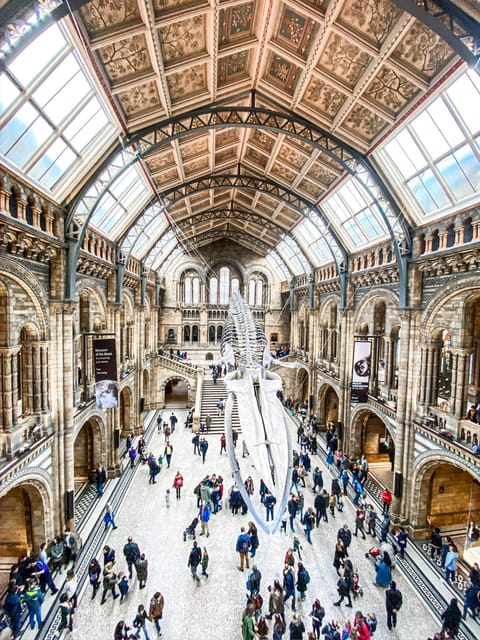
Big fossils, clear stories, and quick security set the tone for this Natural History Museum tour. I especially like the chance to see Sophie the Stegosaurus and stand under the cross-section of the Giant Sequoia, with a guide steering you toward the most mind-bending details.
You’ll also get a live English Tour Guide, and that express security check matters when you want to get inside and start looking fast. The possible drawback: the format can feel fairly basic for people who already know the basics of evolution, volcanoes, gems, and dinosaur lore, and one past booking reported a guide not showing up, so arrive early and be ready to confirm the meeting point.
In This Review
- Key Highlights Worth Booking For
- Why This Natural History Museum Tour Works Better Than Wandering
- Meeting Outside the Exhibition Road Entrance, and Getting In Quickly
- Sophie the Stegosaurus, the Skeleton Stop You Will Remember
- Darwin’s First Edition: How Ideas Become Objects
- Archaeopteryx and the Birds-Dinosaurs Link
- Giant Sequoia Cross-Section: When Deep Time Is Visible
- Pompeii Plaster Casts and the Science of Volcanic Disaster
- Earth Vault Gems, and Rocks From the Moon and Mars
- Price and Value at $93 Per Person
- The Guide Makes the Difference, and You Can Spot the Best Days
- Who This Tour Suits Best
- Should You Book This Natural History Museum Tour?
- FAQ
- How long is the London Natural History Museum guided tour?
- Where do I meet the guide?
- What is included in the tour price?
- Do I skip the security line?
- Is flash photography allowed?
- Is the tour private?
- What language is the tour guide?
- Is the tour wheelchair accessible?
- Can I get a refund if my plans change?
- Is pay later available?
Key Highlights Worth Booking For
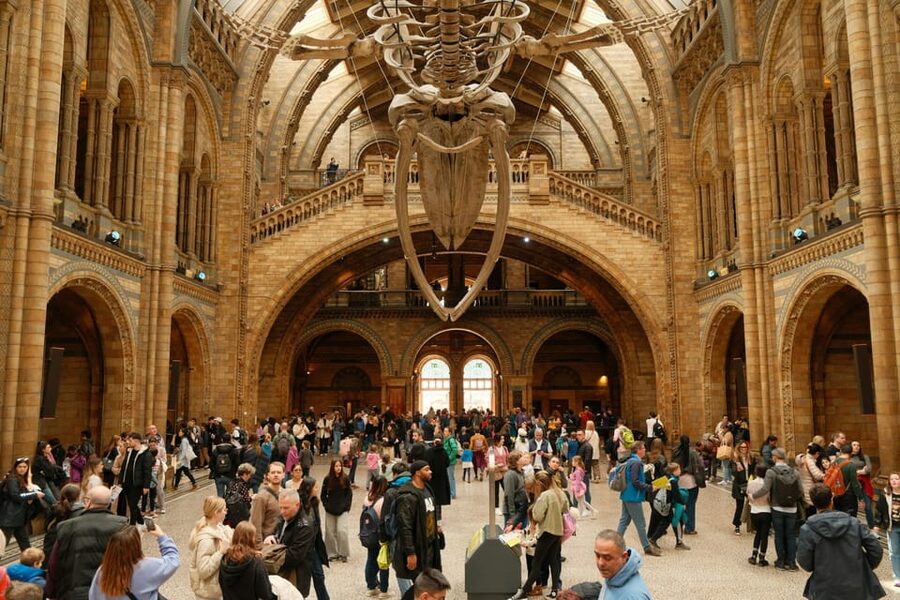
- Sophie the Stegosaurus: world-famous, extremely complete stegosaurus skeleton
- Giant Sequoia cross-section: a tree already about 1,300 years old when felled in the 19th century
- Archaeopteryx: the famous “missing link” fossil tied to birds and dinosaurs
- Pompeii plaster casts: victims of Mount Vesuvius, presented as a real scientific record of disaster
- Darwin’s On the Origin of Species (first edition): a high-impact stop for anyone who loves ideas, not just objects
- Skip-the-line express security: you start the tour with less time wasted
Why This Natural History Museum Tour Works Better Than Wandering
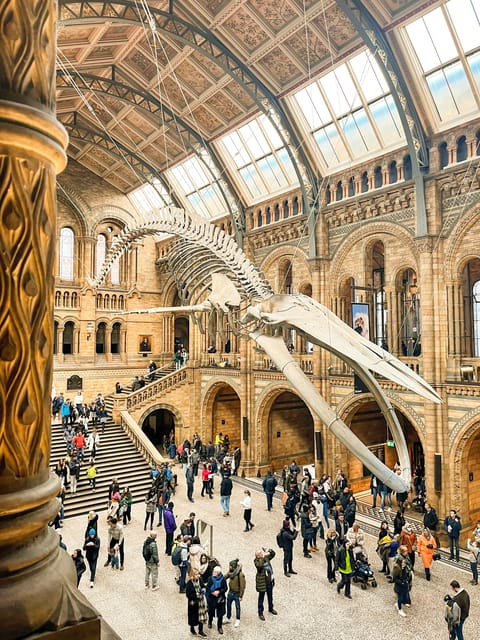
London’s Natural History Museum can feel like drinking from a firehose. You’re surrounded by treasures, but without a plan, it is easy to rush past the things that would have made the biggest impression if you had known where to look.
This tour gives you that plan. You focus on the museum’s main highlights in about 2.5 hours, with a guide who pulls you toward the most story-rich objects. The result is less aimless walking, and more “okay, I get it” moments.
I also like that the tour doesn’t treat the museum like a random cabinet of curiosities. It links natural history across time and topics. Fossils lead to evolution. Deep time leads to geology. Disaster casts lead to science, not just tragedy. If you’re the type who enjoys a connected explanation, you’ll feel it here.
More History Tours in London
- London: Historic Pubs of Central London Walking Tour
★ 4.9 · 1,065 reviews - London: Soho Music and Historic Pubs Walking Tour
★ 4.9 · 836 reviews - London: Rock ‘n’ Roll History Tour
★ 4.6 · 645 reviews
Meeting Outside the Exhibition Road Entrance, and Getting In Quickly
You meet outside the red telephone box opposite the Exhibition Road entrance to the Natural History Museum. Show up a few minutes early so you do not end up standing around while your group waits to be located.
One practical win is the skip the line through express security check. Even when the museum itself is open and lively, security lines can eat up your energy and your schedule. Starting early inside means you spend your best viewing time actually looking at specimens, not shuffling.
One more quick note: flash photography is not allowed. Plan on using your regular camera settings without flash, and expect that some rooms can have lighting that is more dramatic than bright. Bring a charged phone or camera, because you’ll want to keep proof for friends back home.
Sophie the Stegosaurus, the Skeleton Stop You Will Remember
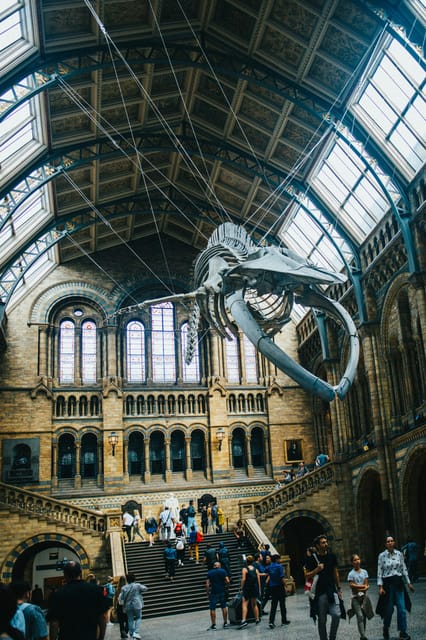
The tour’s fossil centerpiece is Sophie the Stegosaurus. You are not just seeing a big dinosaur. You’re seeing a famously complete stegosaurus skeleton, the kind of object that instantly makes deep time feel physical.
Here is what makes this stop worth your time. A skeleton does not just look cool. It helps you picture posture, movement, and anatomy. When the guide points out features and how scientists interpret them, the dinosaur stops being a cartoon and becomes a real animal that once lived.
Sophie also works as the emotional anchor for the whole tour. Once you have that first big “wow,” later stops like the birds-dinosaur connection and the fossil history of ideas feel more connected. Your brain is already in the right mode.
If you are traveling with kids, this is the stop that usually gets the most eye contact and the most questions. If you are traveling solo, it is still the cleanest entry point into the rest of the museum.
Darwin’s First Edition: How Ideas Become Objects
Not every museum tour includes a stop that feels like literature class. This one does, thanks to the first edition of Darwin’s On the Origin of Species.
For many people, evolution can feel like a set of facts you either already believe or already question. Seeing a scientific classic in original form shifts the focus. It turns evolution into a human story: careful observation, argument, and evidence presented in book form.
This is a smart pacing choice. After dinosaurs and deep time, you get a moment that centers thinking, not just bones. You might find this stop especially satisfying if you like the “how did we learn this” side of science.
The guide’s job, ideally, is to connect the written ideas to the museum’s physical evidence. If you enjoy that kind of explanation, you’ll appreciate how the tour is structured around turning information into context.
More Museum Tours in London
- London: Tower of London and Crown Jewels Exhibition Ticket
★ 4.6 · 28,769 reviews - London: Chelsea Football Club Stadium and Museum Tour
★ 4.8 · 4,576 reviews - London Transport Museum Entrance Ticket
★ 4.5 · 1,323 reviews - London: British Museum Guided Tour
★ 4.3 · 1,182 reviews
Archaeopteryx and the Birds-Dinosaurs Link
Next comes the fossil that many people remember from textbooks: Archaeopteryx. The tour frames it as the “missing link” between dinosaurs and birds, and that is exactly why the stop matters.
This is where you get to see evolution as a transition, not a switch flipped. Archaeopteryx is famous because it sits at the intersection of traits. When a guide walks you through what makes it special, you start to understand why scientists treat it as such an important piece of the puzzle.
If you already know the basic story, do not expect brand-new science lectures. Still, the museum presentation helps you slow down. A fossil is not a paragraph you skim. You have time to look, and that makes the idea stick.
One thing to watch for: if you want advanced paleontology debate, this tour may not go as far as you want. The overall format is built around highlights, so consider it a strong introduction and a guided way to focus your attention.
Giant Sequoia Cross-Section: When Deep Time Is Visible
Standing in front of the cross-section of the Giant Sequoia is one of those moments that makes you stop thinking like a tourist and start thinking like a time traveler.
You are looking at a tree that was already about 1,300 years old when it was felled in the 19th century. That single fact changes how you interpret everything else in the museum. If you can grasp that much lifespan in one physical object, the rest of deep time stops feeling abstract.
This stop also gives your brain a break from fossils and anatomy. Instead of asking what an animal looked like, you start asking what Earth looked like. The museum turns biology into geography and geology into a story you can see.
If you like science explained through visuals, you will appreciate this. It is easier to understand a timeline when you can stand in front of a slice of it.
Pompeii Plaster Casts and the Science of Volcanic Disaster
Another major highlight is the plaster casts of the victims of the eruption of Mount Vesuvius in Pompeii. These displays can hit harder than dinosaur skeletons, because the stakes are human.
What makes the casts so valuable is that they are not just dramatic. They are a scientific record. A guide can help you connect why these casts matter, how scientists interpret them, and why volcanic hazard is more than a scary headline.
In a tour built around natural history, this stop is the bridge between Earth systems and real consequences. The museum is full of objects, but Pompeii is a reminder that nature changes lives in very direct ways.
If you have any interest in earthquakes, volcanoes, or how disasters are studied after the fact, this can become one of the more memorable sections of the tour.
Earth Vault Gems, and Rocks From the Moon and Mars
Toward the later part of the tour, you’ll see some of the finest gemstones housed in the museum’s Earth vault, plus rock samples from the Moon and Mars.
This stop is a good example of why guided tours can be more than a list of exhibits. You do not just look at pretty minerals. You learn how geology connects to the larger solar system, and how the same basic processes that shape Earth also show up in other worlds.
You also get a nice contrast: gemstones give you Earth’s beauty, while moon and Mars rocks remind you that rocks are not only local. They are messages from the bigger neighborhood we live in.
The tour framing matters here. With the guide’s help, the objects start telling you a unified story about materials, formation, and scientific curiosity across distances.
Price and Value at $93 Per Person
At $93 per person for a 2.5-hour experience, value depends on what you want from your museum time.
If you like museums at your own pace, you could build your own self-guided route. The museum has plenty to see without a guide. But you would likely lose two kinds of value this tour provides: time savings through express security, and the guided selection of what to prioritize.
For many people, the biggest reason the price feels fair is the combination of access to main highlights plus a live guide. You are paying for someone to help you focus, and to explain why the highlights matter.
If you already have strong baseline knowledge of dinosaurs, evolution, volcanic science, or gemstones, the experience may feel less like a must-buy and more like a well-organized walkthrough. One review flagged that the content can feel basic, which is a fair consideration.
In other words: if you want structure and stories, you’ll likely feel good about the spend. If you want deep subject mastery, this may not satisfy that craving on its own.
The Guide Makes the Difference, and You Can Spot the Best Days
The tour provider is The Great Weekender, and the quality can vary with the guide you get. Two different reviews highlight what “great” feels like.
- One review praised Sasha for engaging the whole family and keeping energy up.
- Another review praised Wesley for being so well-informed that the time passed without boredom.
That lines up with what you should look for in a museum guide: clarity, pacing, and the ability to connect facts to what you are seeing in front of you.
There is also a caution from one unhappy booking that the guide was not present. I cannot predict whether that will happen to you, but it is enough to justify a practical move. Arrive at the meeting point early, and be willing to verify you are in the right place for the right tour. If something feels off, ask at the front desk or follow the operator’s contact instructions.
Who This Tour Suits Best
This is a strong fit if you:
- Want to hit the museum’s top highlights in a short window
- Like your science with clear explanations and visible objects
- Enjoy cross-topic connections, like fossils leading into evolution, and Earth materials linking to space
- Are traveling with family, since the big-name displays tend to work across ages
It may be less ideal if you:
- Already know most of what’s covered and want advanced content
- Want a totally wheelchair-friendly experience, because the tour is listed as not suitable for wheelchair users
- Are hoping for an ultra-detailed, subject expert lecture in each room, since the format is built around must-see highlights rather than long deep dives
Should You Book This Natural History Museum Tour?
I would book this tour if you want a focused, time-efficient way to see the Natural History Museum’s biggest “wow” objects with a live guide. The combination of Sophie the Stegosaurus, Darwin’s first edition, Archaeopteryx, the Giant Sequoia cross-section, and Pompeii casts is a rare mix of life science, Earth science, and human history.
It is also a good choice if you value logistics. Meeting at the Exhibition Road entrance and getting through express security helps you start watching sooner.
You might skip it if you are a serious science deep-specialist already fluent in the key dinosaur and evolution basics, because the format may feel more like a highlight tour than a course. Also, arrive early and confirm your guide, since at least one booking reported a guide absence.
If you want, tell me your travel dates and whether you’re going with kids or science nerds. I can suggest a smart plan for what to do after the 2.5 hours, so you get the most out of the rest of your museum time.
FAQ
How long is the London Natural History Museum guided tour?
The tour duration is 2.5 hours, and it includes a 2-hour guided portion.
Where do I meet the guide?
Meet outside the red telephone box opposite the Exhibition Road entrance to the Natural History Museum.
What is included in the tour price?
It includes a 2-hour tour of the Natural History Museum, access to the museum’s main highlights, and access to the museum accompanied by a tour guide.
Do I skip the security line?
Yes, there is an express security check that lets you skip the line.
Is flash photography allowed?
No, flash photography is not allowed.
Is the tour private?
The tour is offered as private or small groups.
What language is the tour guide?
The tour guide language is English.
Is the tour wheelchair accessible?
No, it is not suitable for wheelchair users.
Can I get a refund if my plans change?
Free cancellation is available up to 24 hours in advance for a full refund.
Is pay later available?
Yes, you can reserve now and pay later.
More History Walks in London
- London: Royal Historic Pubs Walking Tour
★ 5.0 · 536 reviews - London: Jack the Ripper Tour with Historic Pub Stops
★ 4.8 · 360 reviews - London: Medieval History Walking Tour from The Tower
★ 4.9 · 318 reviews - London: Witches and History Bankside Walking Tour
★ 4.8 · 223 reviews
More Museum Visits in London
- London: British Museum Guided Tour with Entrance Tickets
★ 4.9 · 748 reviews - London: Tour of the British Museum
★ 4.1 · 678 reviews - Afternoon Tea at the British Museum
★ 4.2 · 511 reviews - London: Paradox Museum Entry Ticket
★ 3.9 · 441 reviews
Newly listed near London
- Women in art – National Gallery★ 5.0 · 3 reviews
- Woking: Royal Horticultural Society Wisley Garden Ticket★ 4.7 · 24 reviews
- Windsor Stonehenge Bath Private Tour from London with Passes★ 4.8 · 5 reviews
- From London: Windsor, Stonehenge & Oxford Private Car Tour★ 3.5 · 4 reviews
- Windsor Castle Tour with Fish and Chips Lunch in London★ 4.4 · 25 reviews
- Windsor Castle & Hampton Court Palace VIP Black Taxi Tour★ 4.9 · 14 reviews
- London: Windsor Castle & Tower of London Tour with Tickets★ 3.3 · 15 reviews
- From London: Windsor Castle, Bath, and Stonehenge Day Trip★ 4.4 · 153 reviews
Museums, compared.

Tower of London and Crown Jewels Exhibition Ticket
Read our review →
Liverpool Football Club Museum and Stadium Tour
Read our review →
Chelsea Football Club Stadium and Museum Tour
Read our review →

British Museum Guided Tour with Entrance Tickets
Read our review →Browse the lists this tour appears in