
Review · MUSEUMS
London: Official Natural History Museum Tour – Architecture
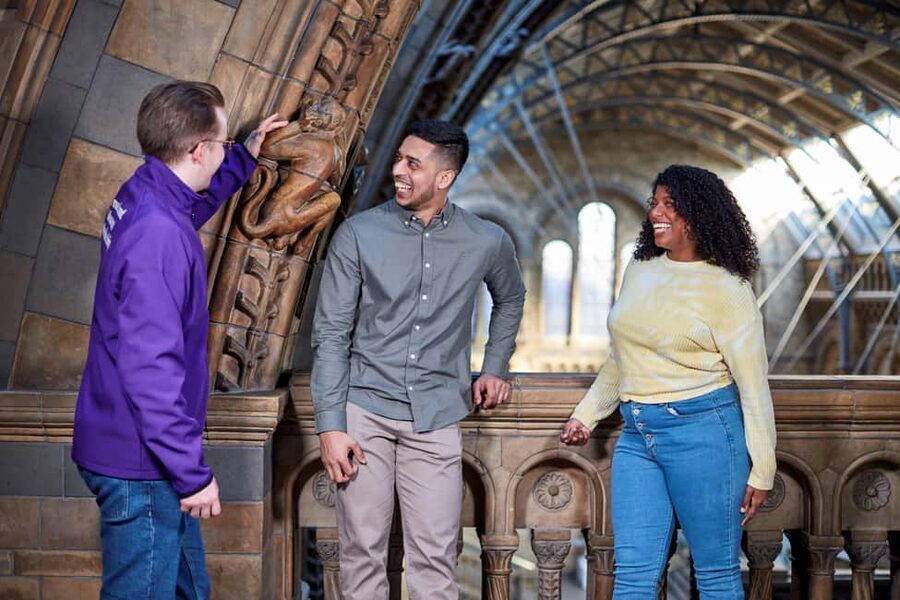
Stone animals stare back at you. This 1-hour Natural History Museum architecture tour is all about the building, not the usual exhibits, and I love how the guide teaches you to read the stone like a story. I also love the small group size, capped at 7, so you can actually ask questions and hear the details.
You’ll start on Exhibition Road and end inside the Darwin Centre, so the whole flow feels focused and satisfying. One possible drawback: it is short, so you will not have time to roam and do every gallery on your own, and paid temporary exhibitions are not part of the tour.
The experience is led in English with a live guide, plus skip-the-queue entry and headsets during peak visitor hours. You’ll get the fun mix of late-1800s design origins and 21st-century additions, with plenty of time to spot the natural-world details built into the architecture.
In This Review
- Key things you will notice on this Natural History Museum architecture walk
- Romanesque stone that treats nature like the main character
- Where to meet: Exhibition Road, next to the main entrance
- Outside first: gargoyles, carvings, and clues on what the building is saying
- Late-1800s design plans you can actually connect to what you see
- Spot the terracotta animal menagerie, including Darwin’s look-alike monkey
- From Victorian concept to the Darwin Centre’s modern additions
- Price and value: $20 for an hour that changes how you see the museum
- Who should book this Natural History Museum architecture tour?
- Should you book it? My take
- FAQ
- How long is the Natural History Museum architecture tour?
- What is the price?
- What group size should I expect?
- Where exactly do I meet the guide?
- Does the tour include skip-the-queue entry?
- Is a guide included?
- Are headsets provided?
- Is general museum entry included?
- Is there an audio guide?
- What is not included in the tour?
Key things you will notice on this Natural History Museum architecture walk
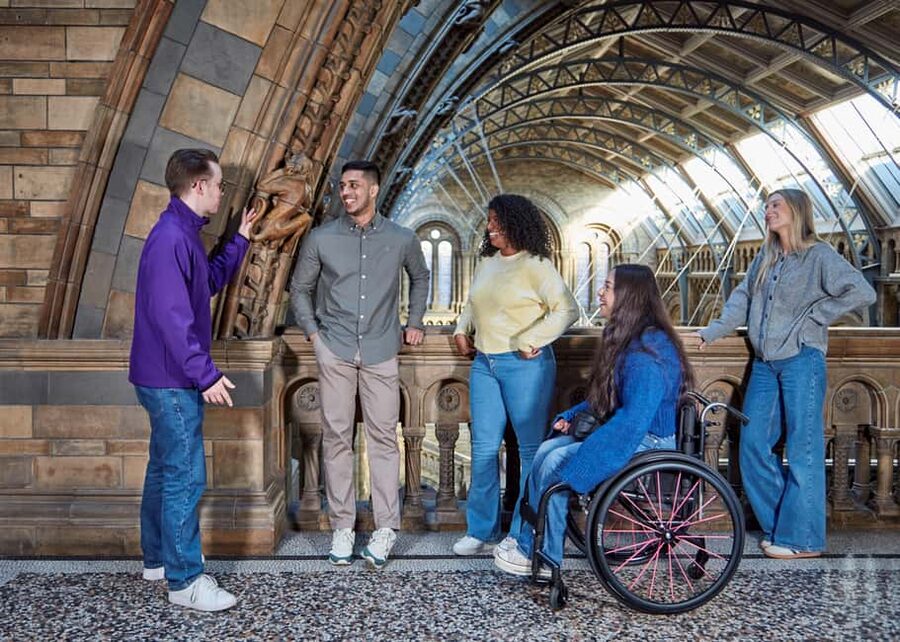
- Romanesque stonework that feels like nature turned into architecture, from gargoyle-style figures to carved ceilings
- A terracotta animal menagerie, including a monkey carved with a human face that draws a clear line to Darwin
- Digital copies of original sketches and plans, so you can see how the museum was imagined in the late 1800s
- A clear arc from the Victorian concept to modern additions, ending in the Darwin Centre
- Small-group pacing with headsets when it gets loud, which makes the guide easy to follow
Romanesque stone that treats nature like the main character
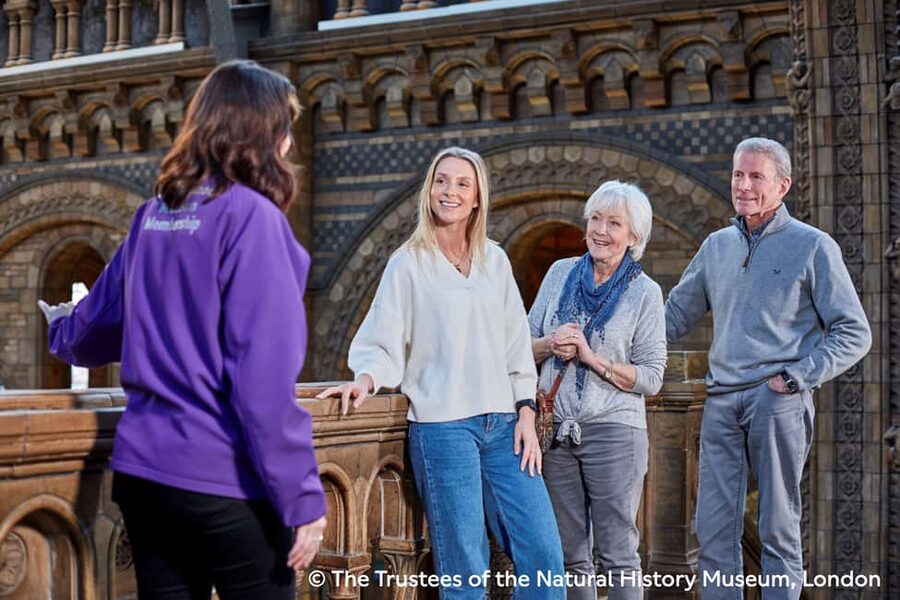
If you have ever walked through the Natural History Museum and thought, This place is gorgeous, but I wish someone showed me what to look for, this tour is for you. In a normal visit, your eyes tend to lock onto specimens and display cases. On this architecture-focused walk, the priorities flip. You spend the hour looking at the museum’s outer skin and inner features, then connecting those design choices to the museum’s mission: science, nature, and observation.
I like that the building’s style is not just described in broad strokes. The museum is a standout example of Romanesque architecture from the late 1800s, and the tour keeps pointing to how each element of the design pays homage to nature. You hear about imposing stone figures and decorative ceilings, but the guide steers you to the smaller bits too, the ones you would otherwise walk right past.
And if you care about Darwin, you will get extra satisfaction. The stonework includes a carved monkey with a human face that resembles Charles Darwin, and that detail gives the whole architecture theme a wink. It is not just pretty carving. It is visual storytelling, turning the museum into a “natural history” text you can read with your feet.
More History Tours in London
- London: Historic Pubs of Central London Walking Tour
★ 4.9 · 1,065 reviews - London: Soho Music and Historic Pubs Walking Tour
★ 4.9 · 836 reviews - London: Rock ‘n’ Roll History Tour
★ 4.6 · 645 reviews
Where to meet: Exhibition Road, next to the main entrance
Getting the start right makes the whole hour go smoothly. The tour begins outside the Natural History Museum staff/Flett theatre entrance on Exhibition Road, opposite Victoria & Albert Museum. It is next to the public museum entrance on Exhibition Road.
Important detail: this is not the main entrance on Cromwell Road, which you access through the gardens. If you show up at the wrong doors, you can lose time, and the tour is only an hour long.
If you like precision, the meeting point is also listed as what3words: ///bunny.moment.seated. That can be useful if you are walking in from a tube station and want to stop guessing at street corners.
Once you are at the correct spot, the tour’s vibe is practical. It is a live, English guide with general museum entry included, plus skip the ticket line. That matters here because the Natural History Museum can get crowded, and in a one-hour format, every minute counts.
Outside first: gargoyles, carvings, and clues on what the building is saying
The architecture tour is built on a simple idea: before you go inside, look at what the museum is already communicating. So you start by taking in the imposing stonework outside, with attention to the decorative elements that make the building feel more like a monument than a warehouse for specimens.
You are guided to notice gargoyles and intricate carvings, and to treat them like a set of clues. The guide’s job is not to overwhelm you with jargon. It is to point you to recurring themes, especially the way nature shows up in the stone. Once you start seeing the building this way, it is hard to unsee it on future visits.
You also learn why this matters for your experience. Architectural details like these are meant to be seen up close, but most people never slow down. On this tour, you slow down on purpose. And because it is a small group, you are not stuck craning your neck around a crowd just to read one figure.
If you like photos, bring your phone, but keep it realistic. You will get plenty of chances to capture details, yet the tour’s focus is interpretation, not a selfie route. The best photos will come when you pause to look first, then frame after the guide explains what you are looking at.
Late-1800s design plans you can actually connect to what you see
A big reason this tour works is that it does not treat the museum as a frozen object. You start with the late 1800s, when the building’s original vision was taking shape, and you get a chance to see digital copies of original sketches, detailed drawings, and plans.
This part is valuable because it gives your eyes a timeline. Instead of just admiring stonework, you understand why those details are there and how architects and designers imagined the project from the beginning. It is one thing to hear the museum is late-1800s Romanesque. It is another to connect today’s surfaces to the planning documents that shaped them.
Think of it like learning to read a map. Once you know what the designers were aiming for, you notice how later additions and visible features follow or reinterpret the original concept.
One practical tip for this segment: listen for the guide’s cause and effect explanations, not just the facts. When you hear how a design choice ties to nature-themed storytelling, you will start spotting those connections in the carvings and ceiling details.
More Museum Tours in London
- London: Tower of London and Crown Jewels Exhibition Ticket
★ 4.6 · 28,769 reviews - London: Chelsea Football Club Stadium and Museum Tour
★ 4.8 · 4,576 reviews - London Transport Museum Entrance Ticket
★ 4.5 · 1,323 reviews - London: British Museum Guided Tour
★ 4.3 · 1,182 reviews
Spot the terracotta animal menagerie, including Darwin’s look-alike monkey
Here is the part I would circle on your mental calendar: the tour guides you beyond the specimens to the stonework itself, where a terracotta animal menagerie is built into the museum’s design.
You are pointed toward terracotta animals scattered through the architecture, and that shifts the experience from decorative sightseeing into detective work. The guide points out that the building’s “natural world” theme is not abstract. It is physical, crafted, and intentionally placed.
The standout described detail is a carved monkey with a human face that bears a striking resemblance to Charles Darwin. Even if you are not a hardcore Darwin fan, this is the kind of detail that turns the tour memorable. It also reinforces the larger theme: the museum was designed to make you think about nature while you walk through it.
And you get the benefit of a guide here. It is difficult to find these details on your own because the building is busy with visual cues. A good guide does two jobs at once: they direct your attention, and they explain why the details matter. In past sessions, guides like Glenn Harper have been praised for showing passion and pointing out things that are nearly impossible to notice without help, especially small carvings tucked into busy corners.
From Victorian concept to the Darwin Centre’s modern additions
A one-hour tour needs momentum, and this one delivers it with a clear endpoint. The tour finishes inside the newest part of the museum building, the Darwin Centre.
Ending in the Darwin Centre is smart for two reasons. First, you close the narrative arc: you start in the late 1800s with the original story, then move forward to how the museum has added layers in the 21st century. Second, the “Darwin” link lands naturally. You spend the earlier portion spotting nature motifs and Darwin-adjacent symbolism, then finish in the section that modernizes and extends the museum’s Darwin focus.
This final stretch also helps if you have been to the museum before. Even when you know your way around, the architecture-first approach tends to reveal “new” aspects because you are not spending your time only where the exhibits pull you. You notice ceilings differently. You notice the stonework around displays differently. You notice the museum as a designed environment rather than a container.
If you are planning your day, give yourself a little breathing room afterward. You will likely want to linger, at least briefly, to look again at the features the guide highlighted. Just do not plan to see everything else immediately, because the hour will naturally make you want to pause.
Price and value: $20 for an hour that changes how you see the museum
At around $20 per person for a 1-hour guided architecture experience, the value is in what you are buying beyond basic entry. This price includes a live English guide, general museum entry, and skip-the-queue access.
That last part matters more than it sounds. When you only have one hour, waiting in line can eat your time and drain the energy you came with. Skip the ticket line helps you get into the building while your attention is still sharp.
You also get small-group instruction capped at 7. In a crowd, architectural details are harder to see and easier to miss. Here, you get a better shot at hearing the guide clearly and staying oriented, which is not guaranteed in a larger group format.
During peak visiting hours, headsets are provided. That is a quiet but meaningful quality upgrade for an architecture tour, because you may be looking up at ceilings or turning your head to inspect a carving. If you cannot hear instructions while you look, you lose the point of the guided interpretation.
Not included items are straightforward. Audio guide is not included, and paid temporary exhibitions are not part of the tour. For most people, that is fine because the hour is engineered to focus on the building and the Darwin-themed story tied to it.
Who should book this Natural History Museum architecture tour?
This tour is a good fit if you like architecture, design details, or museums that explain themselves. It is also ideal if you have limited time in London and want to feel like you learned something real without turning the day into an exhausting checklist.
You will likely enjoy it most if:
- You have been to the Natural History Museum before and want a different angle on the same building
- You care about Darwin or science history, especially in how ideas get expressed in architecture
- You prefer small-group touring where the guide can keep a close eye on what your group is looking at
- You want a practical, 1-hour plan that pairs well with other nearby stops
It is not a match for very young kids, since it is not suitable for children under 4. And if you are the type who wants to wander freely for hours, you might find the structure a bit limiting. But if you value focus, this format is hard to beat.
Should you book it? My take
Book this tour if your goal is to see the Natural History Museum in a deeper, more visual way. The hour is long enough to get multiple “aha” moments, especially the terracotta animals and the Darwin-like monkey detail, and it is short enough to keep you moving without losing momentum.
Skip it if you mainly want to spend your day on temporary exhibits or if you plan to rely on self-guided browsing only. This tour is about the building, and the paid temporary exhibitions are not part of it.
If you want the best experience, arrive a few minutes early at the exact Exhibition Road meeting spot and then let the guide do the directing. In a museum this ornate, you get far more out of a guided plan than you might expect, and the Darwin Centre finish gives the tour a satisfying close.
FAQ
How long is the Natural History Museum architecture tour?
The tour lasts 1 hour.
What is the price?
It is priced at $20 per person.
What group size should I expect?
It is a small group, limited to 7 participants.
Where exactly do I meet the guide?
Meet outside the Natural History Museum staff/Flett theatre entrance on Exhibition Road, opposite Victoria & Albert Museum. It is next to the public museum entrance on Exhibition Road, and it is not the main Cromwell Road entrance accessed through the gardens.
Does the tour include skip-the-queue entry?
Yes. Skip-the-ticket line is included.
Is a guide included?
Yes. You get a live tour guide in English.
Are headsets provided?
Headsets are provided during peak visitor hours.
Is general museum entry included?
Yes. General museum entry is included with the tour.
Is there an audio guide?
No, an audio guide is not included.
What is not included in the tour?
Paid temporary exhibitions are not included.
More History Walks in London
- London: Royal Historic Pubs Walking Tour
★ 5.0 · 536 reviews - London: Jack the Ripper Tour with Historic Pub Stops
★ 4.8 · 360 reviews - London: Medieval History Walking Tour from The Tower
★ 4.9 · 318 reviews - London: Witches and History Bankside Walking Tour
★ 4.8 · 223 reviews
More Museum Visits in London
- London: British Museum Guided Tour with Entrance Tickets
★ 4.9 · 748 reviews - London: Tour of the British Museum
★ 4.1 · 678 reviews - Afternoon Tea at the British Museum
★ 4.2 · 511 reviews - London: Paradox Museum Entry Ticket
★ 3.9 · 441 reviews
Newly listed near London
- Women in art – National Gallery★ 5.0 · 3 reviews
- Woking: Royal Horticultural Society Wisley Garden Ticket★ 4.7 · 24 reviews
- Windsor Stonehenge Bath Private Tour from London with Passes★ 4.8 · 5 reviews
- From London: Windsor, Stonehenge & Oxford Private Car Tour★ 3.5 · 4 reviews
- Windsor Castle Tour with Fish and Chips Lunch in London★ 4.4 · 25 reviews
- Windsor Castle & Hampton Court Palace VIP Black Taxi Tour★ 4.9 · 14 reviews
- London: Windsor Castle & Tower of London Tour with Tickets★ 3.3 · 15 reviews
- From London: Windsor Castle, Bath, and Stonehenge Day Trip★ 4.4 · 153 reviews
Museums, compared.

Tower of London and Crown Jewels Exhibition Ticket
Read our review →
Liverpool Football Club Museum and Stadium Tour
Read our review →
Chelsea Football Club Stadium and Museum Tour
Read our review →

British Museum Guided Tour with Entrance Tickets
Read our review →Browse the lists this tour appears in