
Review · HORSES
Meditate With Horses
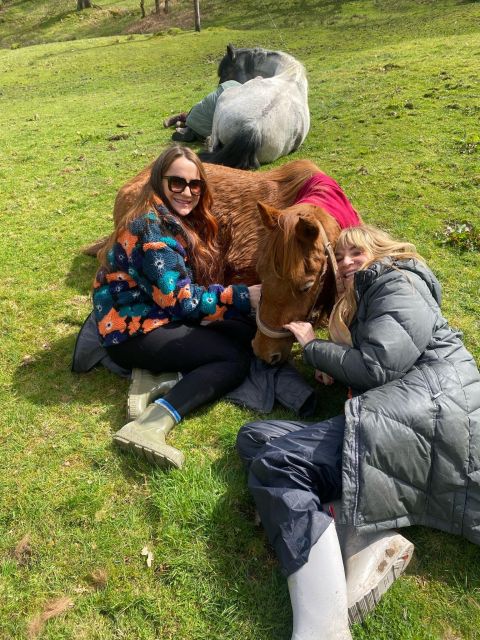
A quiet field and big, gentle horses. It sounds simple, but meditation with rescue horses in the Lake District changes your pace fast, from first breathwork to the moment you feel their calm. I especially like how you start by learning horse body language and then you use that awareness during guided stillness.
The horses here are rescue animals, and the focus is on connection, not riding or performance. One watch-out: this is an intentionally quiet, low-key experience, so if you want an active, chatty “tour” feel, you might find the pacing a bit slow.
In This Review
- Key takeaways
- Holmeshead Farm in Ambleside, Cumbria: where the calm starts
- Rescue horses, herd instincts, and why “synchronising” feels real
- The 30-minute safety briefing: how they keep it gentle and grounded
- First workshop on the Lake District grounds: grooming, focus, and presence
- The break hour: why stopping matters before the deeper part
- Guided meditation with a horse beside you: breath, heartbeat, and calm
- After the session: sharing what you learned from the horses
- What the $114 price really buys you
- Who this is for, and who should think twice
- What to bring: warm layers and horse-friendly basics
- A realistic view on the group feel and timing
- Should you book Meditate With Horses in Cumbria?
- FAQ
- Where does Meditate With Horses take place?
- How much does the experience cost?
- How long should I plan for?
- Is horse riding included?
- What should I wear or bring?
- Is there any food rule for the horses?
- What language is the instruction in?
- Is it wheelchair accessible?
- How do I find the meeting point?
- Can I get a refund if my plans change?
Key takeaways
- Rescue-horse connection: all horses are rehabilitated and the fee supports their care
- You read their signals: you’ll learn how horses communicate through posture, breathing, and attention
- Breathwork to match the herd: guided meditation is designed to help you slow down and settle
- Small-group calm: you’re not squeezed into a crowd, so the quiet actually works
- No riding: this is about grounded relaxation and mindful presence
Holmeshead Farm in Ambleside, Cumbria: where the calm starts
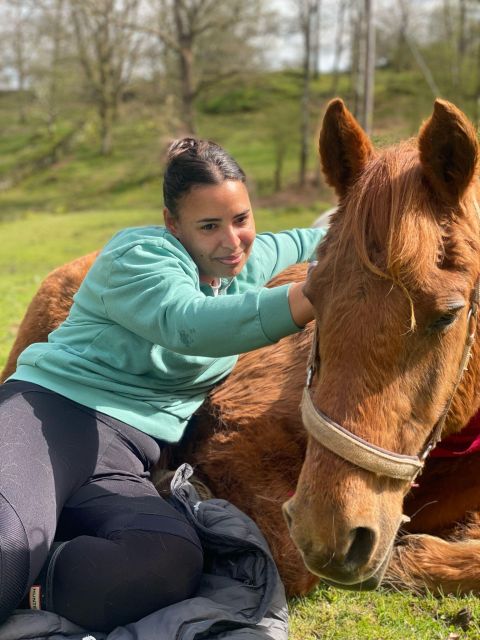
The setting is a big part of why this works. You meet at Holmeshead Farm in Ambleside, with the working farm life all around you and views toward the Langdales. Even before the guided part begins, you can feel the difference between a normal day and a day that’s meant for slowing down.
What surprised me is how quickly the environment nudges you into the right mindset. You’re outdoors, you’re breathing the scent of hay and wet earth, and you’re not being rushed from stop to stop. The whole experience is built around that one idea: get your attention back to the present.
Holmeshead Farm is also where the horse learning starts. You’re not just told to “relax.” You’re shown how to be with the animals, the way they want to be with you.
More Lake District days out:
- From Manchester: Lake District Bus Tour & Windermere Cruise
★ 4.8 · 927 reviews - From Windermere: Ten Lakes Full-Day Tour of Lake District
★ 4.8 · 785 reviews - Manchester: Lake District Tour with Lake Cruise & Train Ride
★ 4.6 · 314 reviews
Rescue horses, herd instincts, and why “synchronising” feels real
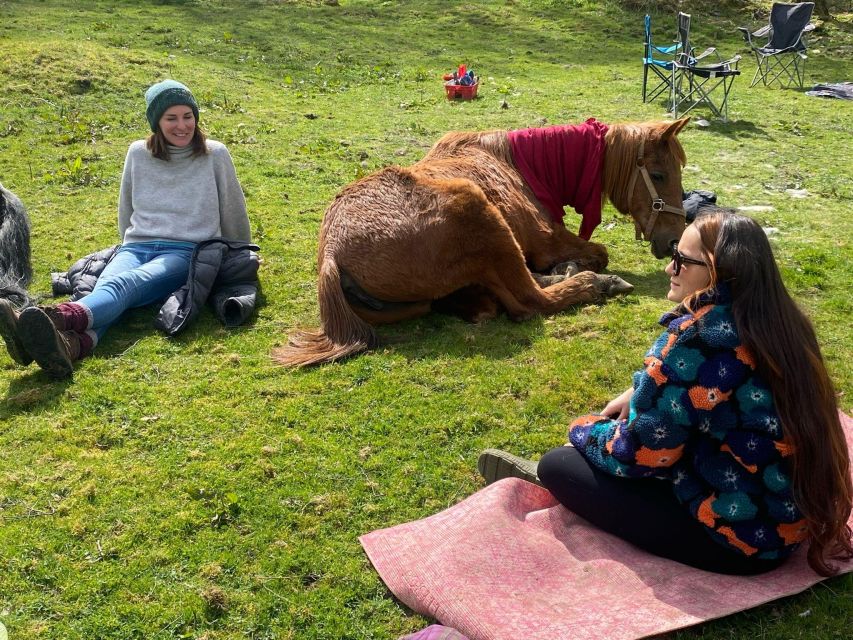
This experience uses a gentle, meditation-led approach with rescue horses that have been rehabilitated. You’re told up front that horses are herd animals, and that they pick up on each other’s hormones and heart rates. That’s not just a fun fact. It explains why the group can settle so dramatically when the meditation begins.
You also learn that your body changes during meditation, and the horses mirror those shifts. The guides describe it in plain terms: the horses often become gooey and sleepy as the calm spreads. For me, the value is this. You’re not chasing a vibe. You’re participating in a real, observable exchange between animal and human.
If you’ve ever tried to meditate and your mind fought back, this is an important contrast. The horses give you something concrete to notice. Their breathing, their stillness, their pace. When you follow those rhythms, it becomes easier to stop arguing with your thoughts.
The 30-minute safety briefing: how they keep it gentle and grounded
Before you jump into the field, you get a safety briefing. It’s about staying comfortable and safe around large animals, and it matters because it sets the tone. You’re reminded how to move, how to behave, and how to focus on what the horses are communicating, not what you’re guessing.
You’re also encouraged to wear the right clothes for being outside and being close to the ground. Warm layers and sturdy boots are the practical base here. This isn’t a “cute outfit” kind of activity. You’ll get more out of it if you feel steady and warm.
The benefit of the briefing is more than safety. It reduces nervous energy. When you feel prepared, you can actually pay attention.
First workshop on the Lake District grounds: grooming, focus, and presence
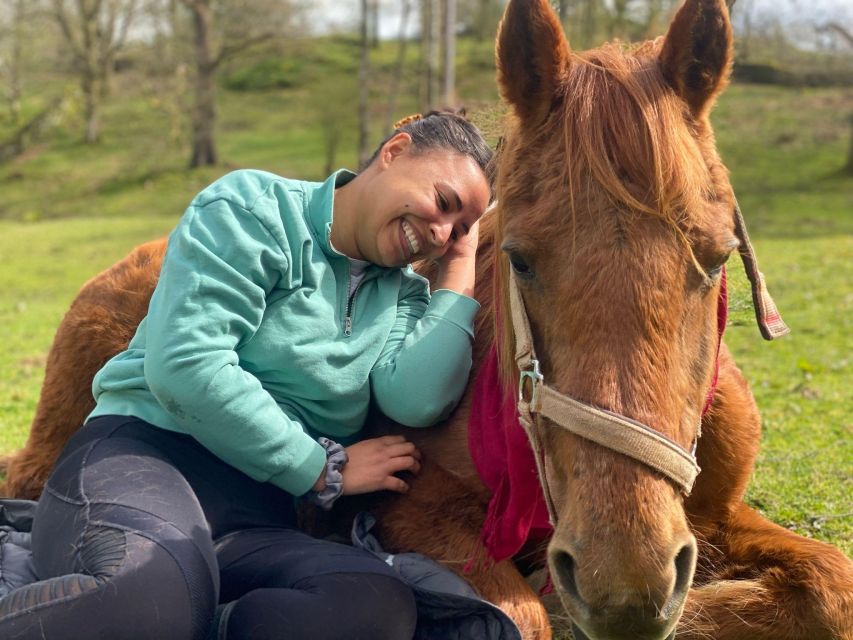
After the safety briefing, you step into the main session in the Lake District setting. This is where you start learning how to read horse body language in a way that feels natural, not clinical.
You begin with a gentle grooming rhythm using curry combs, with slow circular motions. The horses respond, lowering their heads and showing pleasure through their relaxed posture. Even if you start out a little tense, you get feedback quickly. The horses aren’t judging you. They’re reacting to your pace and your calm.
Then the guided focus starts to tighten. You’re coached into breathing and attention in a way that makes it harder for your mind to run in circles. You might notice that small shift, the one where your thoughts stop darting and you start feeling your own body again.
One of the most useful things you’ll leave with is the sense that you can tell what a horse is feeling without needing special knowledge. The “signals” are there, and your job is to slow down enough to see them.
Same corner of Britain, a different sort of outing:
- From Liverpool: Lake District Sightseeing Adventure Day Trip
★ 4.7 · 278 reviews - Liverpool: Lake District Tour with Lake Cruise & Train Ride
★ 4.7 · 201 reviews - Lake District: Beatrix Potter Half-Day Tour
★ 4.8 · 191 reviews - Windermere Red Cruise: Sail Between Bowness and Ambleside
★ 4.5 · 142 reviews
The break hour: why stopping matters before the deeper part
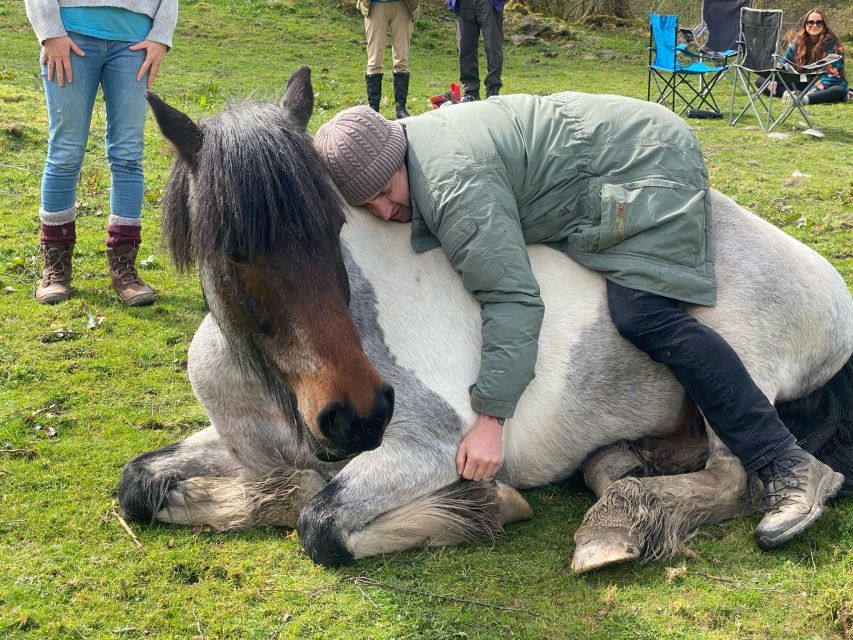
There’s a scheduled break after the first workshop. It’s one hour, and it’s not filler. This kind of experience can get surprisingly intense in a good way, even though the goal is relaxation.
A break gives you a chance to reset your body temperature, check your clothing, and let the experience land. Outdoors in Cumbria can turn chilly fast, and you’ll want to stay warm so you can stay comfortable in the second session.
If you tend to push through fatigue, use this hour as your reminder to do the opposite. Drink something warm if you can, stretch your legs, and let your mind quiet for a moment before you go back.
Guided meditation with a horse beside you: breath, heartbeat, and calm
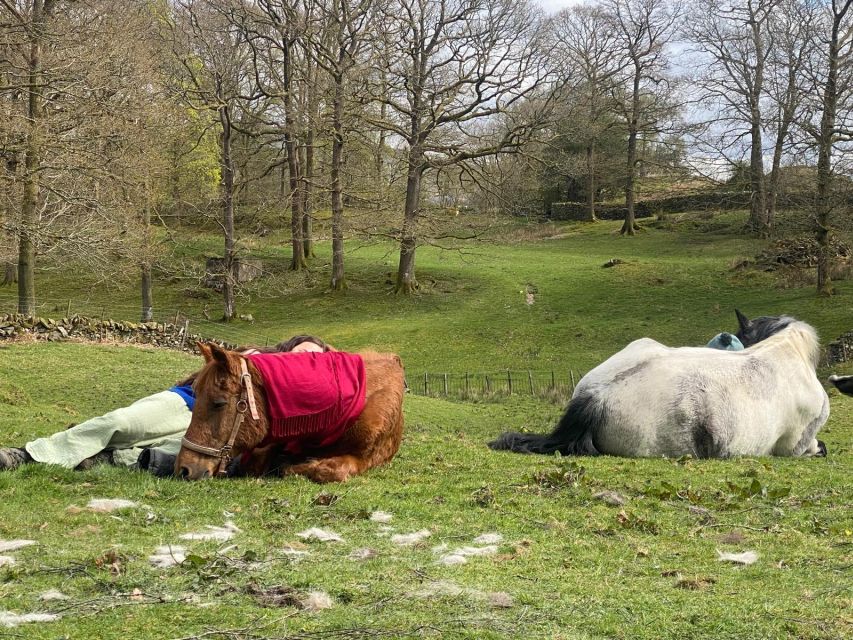
The second workshop is longer, with extra guided meditation time. This is the part people remember, the part where you can feel the horse as a calm presence rather than an object in your day.
You may lie down with the horses as part of the experience, which is a big reason it feels so different from typical animal encounters. When you’re physically settled, your brain stops scanning for movement and starts listening to sensation.
The guide cues you to breathe and to connect with the horse’s internal rhythm. A moment like feeling a horse’s heartbeat under their body, with your eyes closed and your palms placed gently, changes your scale of time. Your heart slows. The horse stays steady. That contrast does the work.
You’ll also be placed in a shared quiet environment with other participants. The group stands in a field with the mountains around you. Nobody has to perform. The main sounds are breathing, movement in grass, and wind through trees. That matters because it keeps the session from becoming self-conscious.
As the guidance continues, the horses move into a healing state, and you’re encouraged to co-synchronise with that calm. The result, as described by people who’ve done it, is intense relaxation that can feel almost sedative in effect. Even if you don’t reach that same level, you’ll still likely feel noticeably steadier afterward.
After the session: sharing what you learned from the horses
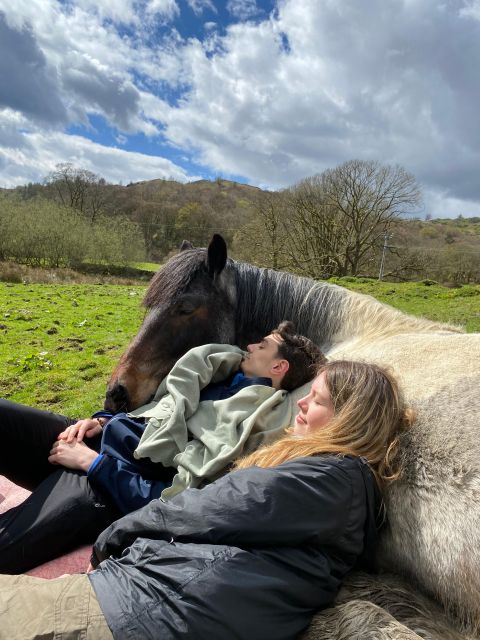
At the end, you gather and speak in a circle. This is a nice touch because it turns an emotional experience into practical learning. People typically share what they noticed, what horse signals felt clear, and what parts of stillness helped most.
You also get a sense of how quickly strangers can become less strange when everyone is paying the same kind of attention. It’s not small talk time. It’s reflection time.
Then there’s the simple payoff: you walk away with the feeling of warm horse coat lingering in your memory, and a mind that’s a bit quieter than when you arrived. That’s the kind of souvenir you can’t buy.
What the $114 price really buys you
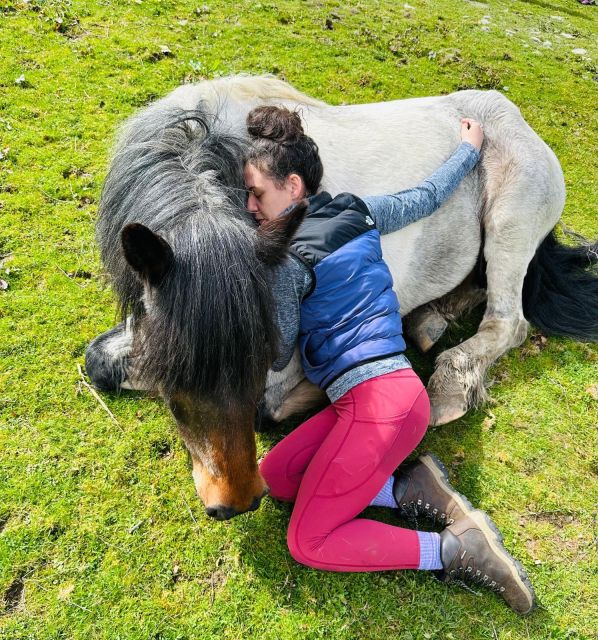
This costs $114 per person, and the value depends on what you want from your holiday.
First, the money goes directly to caring for the horses. Every dollar of the experience fee supports looking after these rescue animals. That’s a big difference versus experiences that feel extractive, where you pay for entertainment but the animals get no long-term care.
Second, you’re not paying for riding access or a big infrastructure. You’re paying for guided instruction, breathwork, safety coaching, and a structured amount of focused time. The session is built to last, with a total duration from 2 to 6 hours depending on starting times. You’re given time for setup, two workshop blocks, and a break.
Third, you’re paying for something measurable inside your own body. If you struggle to relax, this style of guided meditation with constant sensory feedback can be easier than traditional meditation alone.
If you want a checklist of attractions, this is not that. If you want a reset, it’s priced fairly.
Who this is for, and who should think twice
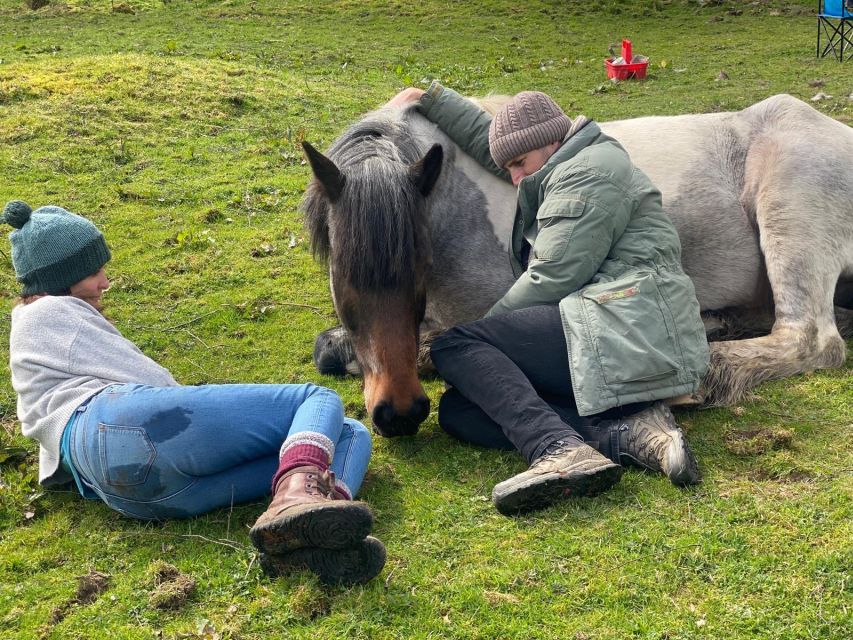
This is ideal if you:
- want a calm Lake District experience with real animal connection
- enjoy mindful activities like breathwork and guided meditation
- like learning practical body-language cues you can actually observe
It can be a rough fit if you:
- expect horse riding
- want an energetic, talk-heavy day
- don’t do well with quiet, low stimulus activities
One more practical point. Wear old clothes and sturdy boots, because you’re on a farm and outdoors in cold weather. Comfort will affect how well you can participate, especially for the lying-down and stillness parts.
What to bring: warm layers and horse-friendly basics
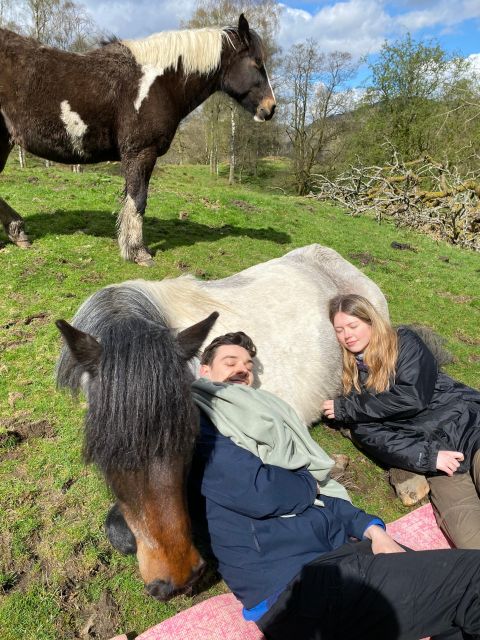
For this experience, your packing list is simple. The goal is to stay warm, stay steady on your feet, and avoid sweet smells.
Bring:
- warm clothing
- warm shoes, ideally sturdy boots
- full waterproofs if the weather is wet or cold enough to need them
- old clothes that can handle farm conditions
A small but important instruction: please don’t have sugar in your pockets. It’s a practical horse-safety and animal-care note.
If you’re doing this early in your trip, you’ll likely appreciate how much it sets the tone for everything after.
A realistic view on the group feel and timing
It’s a small group experience, and that’s not just a comfort detail. Small group size helps keep the quiet intact and lets you follow the guide’s cues without feeling lost.
The overall session time ranges from 2 to 6 hours depending on starting times, with a safety briefing at the front, then a workshop block, a break, and another guided workshop. Plan your day around it, not before it. You’ll probably want a calm next block afterward, not a sprint.
If you’re staying in the Ambleside area, it’s a good early-day activity, because you can leave the everyday noise behind and return to your holiday with a clearer mind.
Should you book Meditate With Horses in Cumbria?
If you’re looking for a Lake District activity that does more than entertain, this is a strong yes. The combination of rescue horse care, hands-on learning through body language, and guided meditation in a genuinely quiet setting is hard to replicate.
Book it if you want intense relaxation, better awareness of how animals communicate, and a reset you can feel for days. Skip it if you want riding, thrills, or constant conversation.
FAQ
Where does Meditate With Horses take place?
It takes place at Holmeshead Farm in Ambleside, Cumbria.
How much does the experience cost?
The price is $114 per person.
How long should I plan for?
The experience lasts from 2 to 6 hours, depending on the starting time.
Is horse riding included?
No. Riding is not included.
What should I wear or bring?
Bring warm clothing and warm shoes. Wear old clothes and sturdy boots. On cold or wet days, use full waterproofs if necessary.
Is there any food rule for the horses?
Yes. Please don’t have sugar in your pockets.
What language is the instruction in?
The instructor speaks English and French.
Is it wheelchair accessible?
Yes, it is wheelchair accessible.
How do I find the meeting point?
You meet at Holmeshead Farm B&B. You will be sent a What3Words link for directions.
Can I get a refund if my plans change?
Yes. You can cancel up to 24 hours in advance for a full refund.
Newly listed near Lake District
- Windermere Yellow Cruise: Sail between Bowness and Lakeside★ 4.5 · 75 reviews
- Ultimate Lake District Tour Visiting 10 Lakes★ 5.0 · 8 reviews
- Ullswater Lake District Return Cruise from Pooley Bridge★ 4.6 · 28 reviews
- From Lake District: Full-Day Yorkshire Dales Tour★ 4.6 · 5 reviews
- The Brontes, Wuthering Heights & Jane Eyre Tour★ 5.0 · 8 reviews
- Half-Day Tour of Beatrix Potter Country and Places★ 4.7 · 19 reviews
- From Manchester: Lake District Sightseeing Day Trip★ 4.7 · 69 reviews
- Literary Lake District: Online Road Trip Travel Guide★ 5.0 · 4 reviews
Horses, compared.
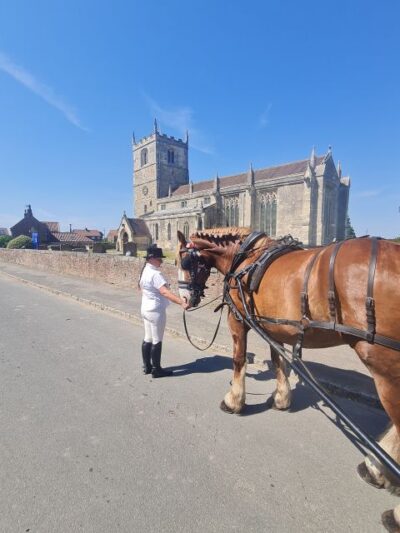
Horse Drawn Carriage Ride Around the Countryside York
Read our review →
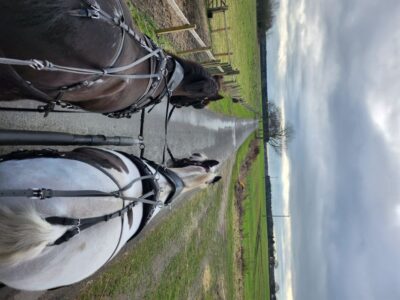
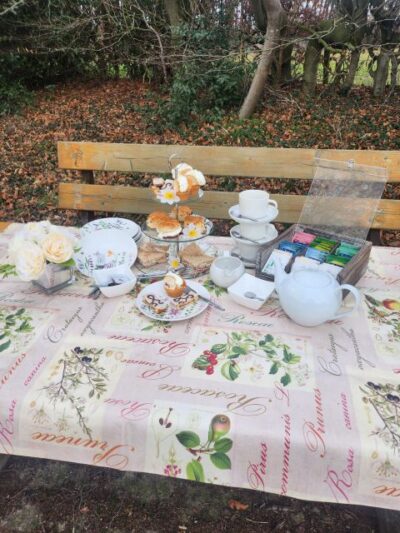
Private Horse-Drawn Carriage Ride and Afternoon Tea
Read our review →Browse the lists this tour appears in