
Review · WORKSHOPS
Newquay: Taster Surf Lesson
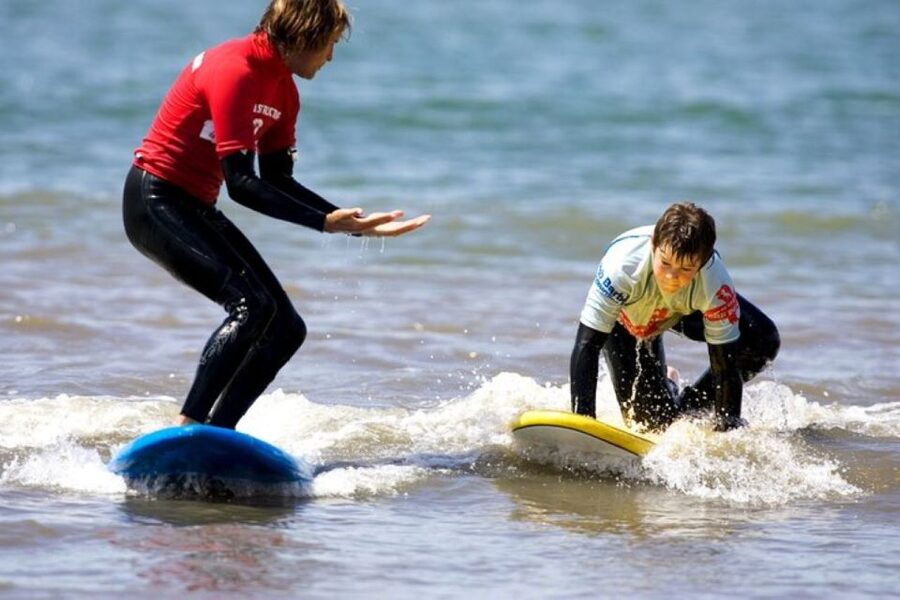
There is something about standing on a surfboard that hooks you fast, and this Newquay taster lesson is built for total beginners. You start with toasty-warm wetsuits and a clear safety setup, plus you get personal coaching in a small group. One thing to keep in mind is that conditions and the ocean mood can shape how the 2-hour lesson feels day to day.
You’ll spend a short but complete chunk of time learning the basics, not just watching someone else do it. The format works because you move through the same sequence most people need: safety, board control, then prone riding, and finally standing and basic ride mechanics.
And yes, surfing has a habit of turning into a repeat activity. If you’re curious, this is a smart first step, especially with the lesson focused on fundamentals instead of performance.
In This Review
- Key things to know before you go
- Inside the Newquay taster surf lesson at Towan Beach
- Starting warm: wetsuits, lockers, and getting kitted out
- Equipment that favors learning: Swell foam surfboards
- Beach safety talk and surf terminology, in plain language
- The warm-up on Towan Beach: movement before the water
- Board handling and prone riding: the skills that build real control
- The money skill: jumping up, accelerating, and stopping safely
- Small group size: why up to 8 people matters
- What I’d expect day-of, from start to finish
- Value for the money: is $60 a fair deal?
- Practical tips so you feel ready, not frantic
- Who this lesson fits best
- Language and instructor setup
- Dog sitter option for your plans
- After the surf: what to do next
- Should you book this Newquay taster surf lesson?
- FAQ
- How long is the Newquay taster surf lesson?
- What is included in the lesson price?
- Do I need to bring anything?
- Is this lesson for complete beginners?
- How big are the groups?
- What language are the instructors?
- Is food included?
Key things to know before you go
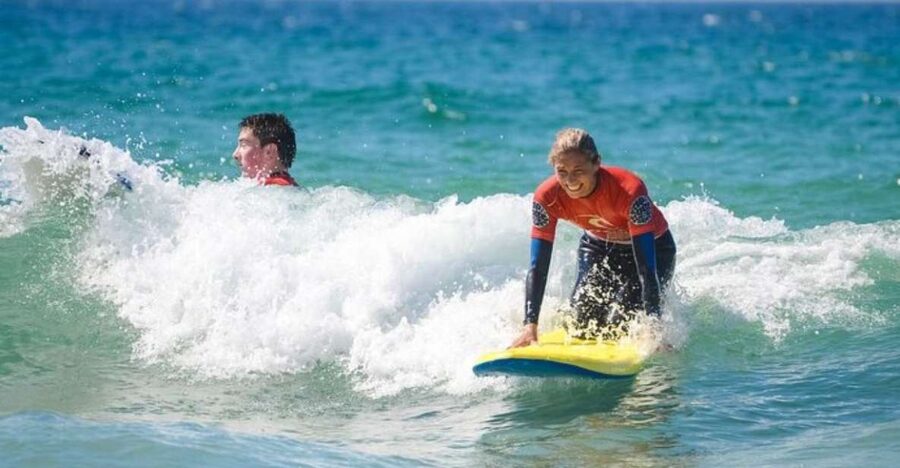
- Small group coaching (up to 8 people) helps you get faster, more useful feedback
- Heated changing rooms and warm gear reduce that pre-surf misery
- Swell foam boards make early balance and board handling easier
- Towan Beach warm-up gets you moving before you hit the water
- Core skills taught in order, from prone riding to safely stopping
- Après-surf value with a 15% discount card for food and the Rip Curl shop
Inside the Newquay taster surf lesson at Towan Beach
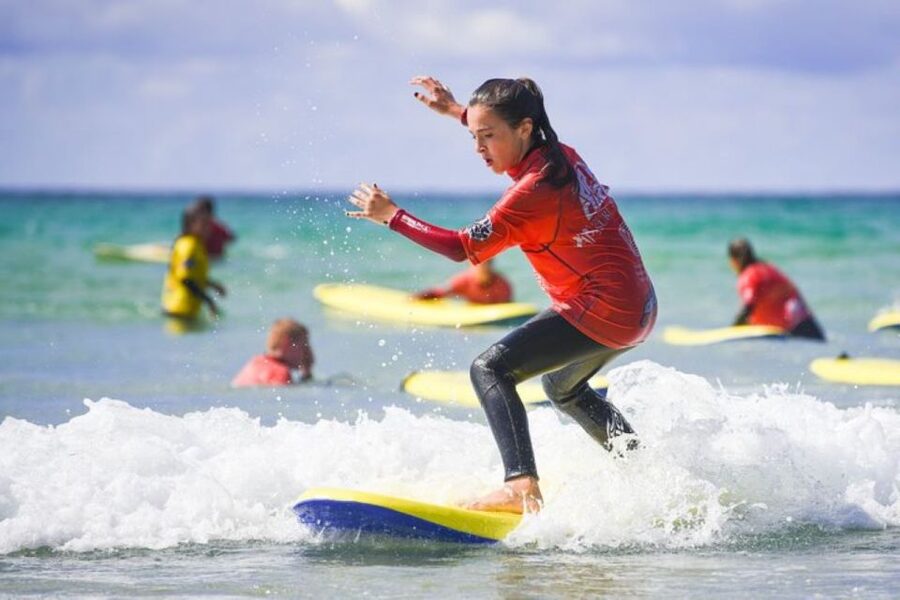
If you want to learn surfing, you usually need two things: correct basics and enough time in the water to actually practice. This taster lesson is set up for exactly that. It is short, hands-on, and structured around the early skills that keep you from getting stuck in the deep end without a plan.
The price is about $60 per person for a 2-hour lesson, but you should think of it as a roughly 3-hour outing from arrival to departure. That extra time matters. You need it for gear up, learning terms and safety basics, and then settling into the rhythm of paddling, popping up, and stopping safely.
A few more Cornwall days worth comparing
- Newquay: Kids Surf Lessons, For 8-13 Years. Fun & Safe!
★ 5.0 · 5 reviews - Newquay: Paddleboarding Lesson & Tour
★ 5.0 · 3 reviews - York: Chocolate Bar Making Workshop at York Cocoa Works
★ 4.7 · 401 reviews
Starting warm: wetsuits, lockers, and getting kitted out
Before you ever see waves, you’ll be inside the surf school getting ready the right way. You’ll use heated changing rooms, then put on a Rip Curl wetsuit and an ID vest. It sounds like a small thing, but warm gear changes everything for beginners. It helps you stay focused on technique instead of shivering through the first lesson.
You also get a safety locker for your clothing and valuables before heading to the beach. This is one of those details you’ll appreciate later when you are in surf mode and do not want to worry about where your phone is.
On the beach, the instructors also assess ocean conditions. That matters because the sea can be different every day, even when the location looks the same from the shore.
Equipment that favors learning: Swell foam surfboards
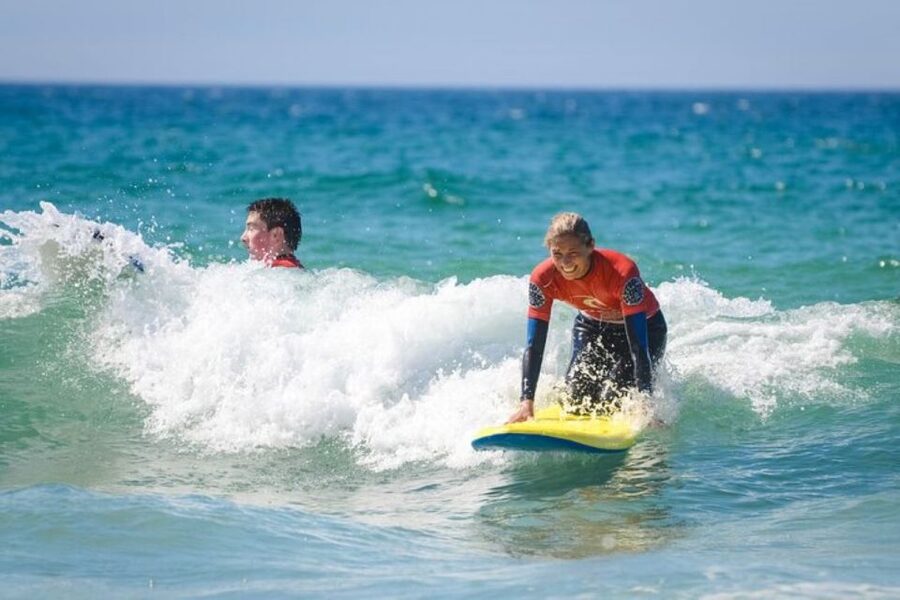
For beginners, the board can make or break the experience. This lesson uses top-notch Swell foam surfboards because they provide a more stable learning environment. Translation: you spend more time practicing what you came for, instead of fighting a board that is too lively or unforgiving.
You’ll also get a surfboard and equipment allocation at the school. That means you are not standing around guessing what to use. You get the right gear, then you get coached on how to handle it on land before you go out.
Beach safety talk and surf terminology, in plain language
The best first surf lessons teach safety without turning it into a lecture. Here, you start with a beach safety talk and an introduction to surfing terminology. You’ll learn enough key terms to understand what the instructor is asking you to do in the moment.
This part is practical. When you know what words like positioning, paddling, or timing mean in a surfing context, you react faster once you are in the water. For a total beginner, that can be the difference between panic and progress.
Same corner of Britain, a different sort of outing:
- Cornwall: Eden Project Entry Ticket
★ 4.4 · 495 reviews - Doc Martin Tour
★ 4.6 · 380 reviews - Padstow: Guided RIB Sealife Safari
★ 4.7 · 165 reviews - Penzance: Land’s End Boat Tour with Wildlife Guides
★ 5.0 · 127 reviews
The warm-up on Towan Beach: movement before the water
You’ll enjoy a lively warm-up on Towan Beach before things get wet. This helps your body remember what it feels like to bend, paddle, and rise. It is also a good momentum builder. By the time you head into the next phase, you are not trying to learn core movements and surf safety at the same time.
If you are the kind of person who needs a confidence boost, this warm-up helps. It also makes the session feel like a real lesson, not just random attempts at catching waves.
Board handling and prone riding: the skills that build real control
After the beach intro, you move into board handling. This is where beginners often need the most guidance, because how you grip the board and where you position your body affects everything that comes next.
Then comes prone riding. You’ll work on riding while lying on the board. This step matters because it teaches you how to match your speed and direction with the wave rather than just hoping you end up upright. It’s also a confidence phase. If prone riding clicks, standing up later feels far less like a leap of faith.
This portion of the lesson also gives instructors a chance to correct your body position early. Small changes here tend to reduce the classic beginner problems like losing the board or going the wrong way the second you try to pop up.
The money skill: jumping up, accelerating, and stopping safely
The goal in a taster lesson is not to win a contest. It is to learn the sequence that lets you surf and stay in control. You’ll work on jumping up and then on the basics of accelerating and stopping safely.
Acceleration and stopping might sound advanced, but for beginners they are really about momentum control and where you put your weight. The instructor feedback helps you connect what you feel on the board with what you should do next time.
The stopping part is especially useful. Knowing how to end a ride safely means you are not just chasing stand-up success, you are building a safer, calmer habit for future lessons.
Small group size: why up to 8 people matters
One of the strongest parts of this experience is the small group size. Limited to 8 participants, it stays focused. More importantly, it supports more individualized coaching during the moments when you need help most.
In a larger group, beginners often get general directions. Here, you’re more likely to get practical notes tied to your actual attempts. That kind of feedback speeds up learning because you can correct one thing at a time.
Also, small groups help with morale. Surfing can be frustrating for the first 10 minutes, even when you are doing everything right. Having other beginners right next to you keeps it from turning into a solo struggle.
What I’d expect day-of, from start to finish
Here’s how the flow typically feels, and why it works:
First, you get kitted up quickly, wetsuit on, ID vest on, valuables handled. Then you do safety and terminology, so you know what is expected. After a warm-up on Towan Beach, you start board handling, then prone riding to get comfortable with the wave rhythm.
Finally, you try the stand-up sequence, including jumping up and learning how to accelerate and stop safely. The lesson wraps with you leaving the beach with clear takeaways, not just wet clothes and random memories.
The time feels efficient. It’s enough to learn real basics without turning into an all-day commitment.
Value for the money: is $60 a fair deal?
At about $60 per person for a 2-hour lesson, the value depends on one thing: whether you want instruction, not just a board rental. This isn’t a skim-the-surface session. You get equipment, heated changing rooms, showers, and included insurance. You also get a planned progression of skills, plus an ocean conditions assessment.
Then there is the small financial bonus that helps you keep the day going. A discount card gives you 15% off après surf food and drink, and also at the Rip Curl shop. Food is not included, so this discount can offset that extra cost if you plan to eat after.
If you are a complete beginner looking for your first genuine surfing instruction, this is good value because you are paying for coaching and structure, not just access to the beach.
Practical tips so you feel ready, not frantic
You only need two things to bring: beachwear and a towel. That’s refreshingly simple. Still, I’d encourage you to think about comfort and timing.
- Wear beachwear you can get into and out of quickly.
- Bring a towel that dries you well after the lesson.
- Expect to be in and out of the water, so be ready for that rhythm.
Also, since the instructors do an ocean assessment and tailor what happens next, come with flexibility. If the sea is rougher than expected, the learning focus might shift toward safety and control.
Who this lesson fits best
This is aimed at total beginners, and it really shows in the skill order. If you have never surfed, or you tried once and got overwhelmed, this is built to get you past the first wall of uncertainty.
It’s also a nice group activity if you want something active but not extreme. The session is designed to be fun for different ages and backgrounds, as long as you are able to participate in getting into the water and handling the equipment.
One important note: it is not suitable for people with mobility impairments. If mobility is a concern, you’ll want to choose a different type of activity.
Language and instructor setup
The instructor language is English. The lesson is designed for beginners, so you should expect clear explanations and practical guidance rather than complex theory.
You should also know the format includes an introduction to surfing terminology. That helps you understand the feedback quickly, so you can adjust during your next attempt.
Dog sitter option for your plans
If you’re coming with a dog, there is an option for a dog sitter. You’ll need to contact for details, but it’s a useful add-on if you don’t want to leave your pet behind.
After the surf: what to do next
Food and drinks are not included, so plan for that. The 15% discount card can help you keep it reasonable, both at a place for après surf and at the Rip Curl shop.
This is also a good time to talk with the instructors again. Even in a taster lesson, you’ll usually leave with a couple of clear priorities, and knowing what to focus on next makes future lessons easier.
Should you book this Newquay taster surf lesson?
Book it if you want a beginner-friendly first surfing experience with real structure, small-group attention, and the right kind of boards for learning. The heated changing rooms, the safety talk, and the step-by-step progression from board handling to prone riding and then standing up make it feel like a true lesson, not a one-off thrill ride.
Skip it or plan differently if you need mobility accommodations, or if you dislike ocean-dependent activities where conditions can change what you do in the moment. If you can go with the flow and focus on basics, this is a strong way to start surfing in Cornwall.
FAQ
How long is the Newquay taster surf lesson?
The surfing lesson itself is 2 hours. From arrival to departure, plan on about 3 hours total.
What is included in the lesson price?
Equipment allocation, wetsuit and surfboard, changing rooms, lock box for valuables, showers, insurance, ocean conditions assessment, beach safety talk, terminology familiarisation, warm-up on Towan Beach, board handling, prone riding, and practice of jumping up, accelerating, and stopping safely. You also get a 15% discount card for après surf food and drink and the Rip Curl shop.
Do I need to bring anything?
Yes. Bring beachwear and a towel.
Is this lesson for complete beginners?
Yes. It is aimed at total beginners and includes core skills coaching with personal feedback.
How big are the groups?
The group is limited to 8 participants, so it stays small.
What language are the instructors?
The instructors speak English.
Is food included?
No. Food and drinks are not included, but you can use the 15% discount card for après surf food and drink.
Newly listed near Cornwall
- Swim and Snorkel with Seals. Boat Trip Penzance Cornwall★ 4.6 · 4 reviews
- Rounding Cornwall Boat Trip Experience. (Departing Hayle)★ 5.0 · 6 reviews
- Porthmeor Beach: Tate St. Ives Gallery Entry Ticket★ 4.3 · 28 reviews
- Newquay: Sea Kayaking Tour★ 4.7 · 12 reviews
- Newquay: Paddleboarding Lesson & Tour★ 5.0 · 3 reviews
- Newquay: Kids Surf Lessons, For 8-13 Years. Fun & Safe!★ 5.0 · 5 reviews
- Newquay: 2 hour Surf Experience – For Beginners/Improvers★ 5.0 · 16 reviews
- From Cornwall: Private Poldark Tour with Pickup★ 5.0 · 3 reviews
Workshops, compared.

Chocolate Bar Making Workshop at York Cocoa Works
Read our review →
East End Street Art Tour and Spray Painting Workshop
Read our review →

St Andrews: Islander® Harris Tweed® Mini Satchel Workshop
Read our review →


Browse the lists this tour appears in