
Review · OXFORD TOURS
Oxford: The Original Uncomfortable Oxford™ Tour
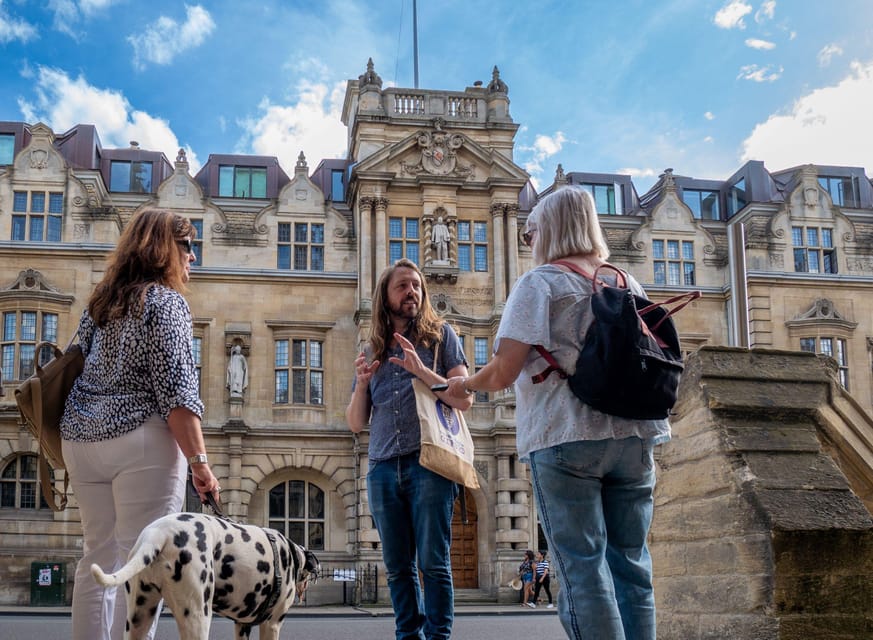
Oxford has a second story. This 1.5-hour Uncomfortable Oxford™ walk uses University of Oxford researcher-led storytelling to connect the city’s streets to power, empire, and today’s debates. You hit the classic landmarks, but the narration keeps shifting the angle, especially around race, class, and gender, and the long-running tension between town and university.
I like two things most. First, you learn how Oxford gained influence locally and globally through its institutions, not just through name-dropping. Second, the best moments are the live, question-driven discussions that make the history feel like it has consequences.
One potential drawback: the experience is very guide-led and can involve lots of standing and listening. If you are sensitive to sound or you prefer lots of hands-on moments, plan for that, and keep your expectations aligned with a walking talk.
In This Review
- Key highlights you should know before you go
- Why this Uncomfortable Oxford™ tour feels different from the usual walk
- Price, time, and value: $29 for 1.5 hours that actually teaches
- Before you arrive: the practical stuff that affects your comfort
- Where you start: Carfax Tower and the Fantastea option
- Stop by stop: what you’ll see and what it means
- Carfax Tower: the city’s hinge point
- University Church of St Mary the Virgin: sacred space with civic power
- Oriel College: seeing how class gets built into the story
- All Souls College and the Rhodes Statue: empire in the public eye
- Bodleian Library area: knowledge as authority
- The Sheldonian Theatre: performance, status, and public reach
- Balliol College: contradictions in a single street view
- Faculty of History: where interpretation gets made
- Bonn Square: tying the themes together
- The discussion style: what people seem to love (and what to watch for)
- Is it worth it for families, ages 12 and up?
- Materials you’ll get after: the reading list follow-up
- Should you book Oxford: The Original Uncomfortable Oxford™ Tour?
- FAQ
- FAQ
- How long is the Oxford Uncomfortable Oxford™ tour?
- Where does the tour start?
- Does the tour enter any university colleges?
- What landmarks are included in the route?
- How much walking is involved and what is the terrain like?
- Is the tour wheelchair accessible?
- What topics does the tour cover?
- Is it suitable for children?
Key highlights you should know before you go
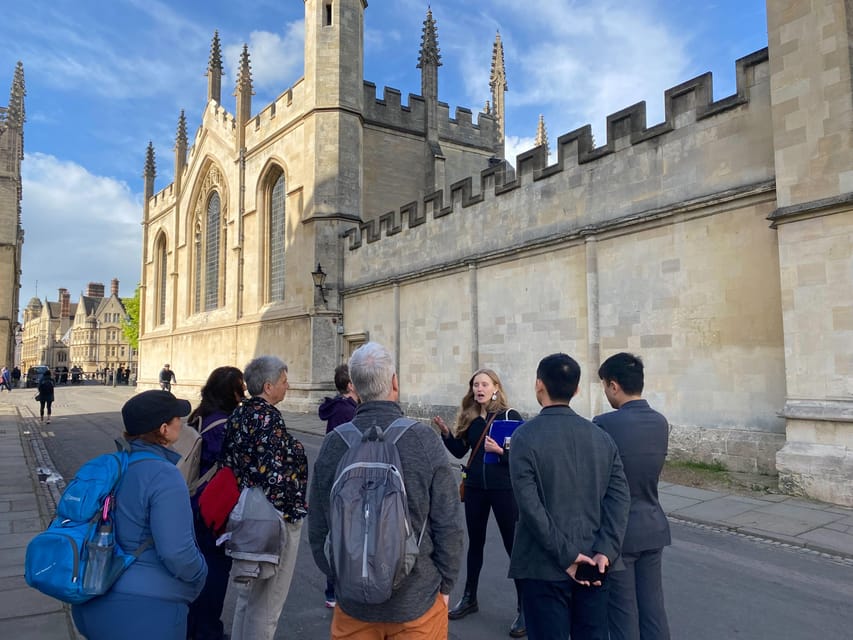
- Oxford researcher-led route with a trained Uncomfortable Oxford™ presenter
- Iconic sights without entering colleges (mostly outside views and short stop talks)
- Themes that connect past to present, including empire, race, class, and gender
- Town and gown tension told as a real social power story, not just a slogan
- University of Oxford landmarks like All Souls, the Bodleian area, and the Sheldonian Theatre
Why this Uncomfortable Oxford™ tour feels different from the usual walk
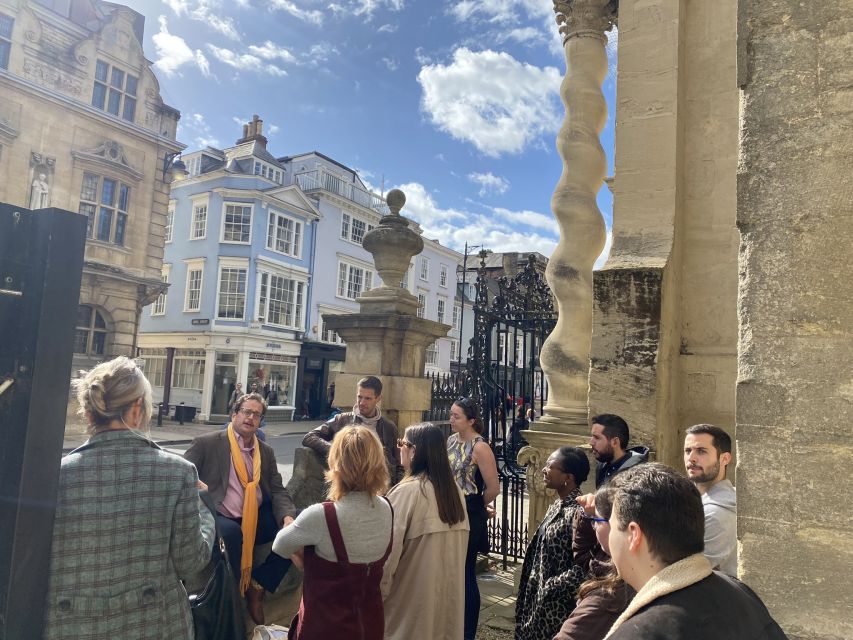
If your idea of an Oxford tour is mostly stone facades, quiet courtyards, and a neat timeline of kings and colleges, this one nudges you sideways. The focus stays in the city centre, but the framing is more argumentative in a good way. It asks, what did Oxford do with its power? Who benefited? Who got excluded? And how do those choices echo in the modern world?
You are also not just getting a lecture. The guide is trained for the Uncomfortable Oxford™ approach, and the route is built around conversations and prompts. One guide you might hear about is Jonathan, who was noted for being patient and knowledgeable and for keeping the tone engaging. That lines up with what the tour is trying to do overall: teach through discussion, not just through a single voice.
It helps that the stops are close together and the duration is tight. At 1.5 hours, you can absorb a lot without feeling dragged through Oxford like a long bus ride on foot.
A few more Oxford days worth comparing
- Oxford: University and City Walking Tour with Alumni Guide
★ 4.7 · 4,429 reviews - Oxford: City and University Tour, including college entry
★ 4.5 · 2,243 reviews - Oxford: Harry Potter Walking Tour Including New College
★ 4.6 · 1,446 reviews
Price, time, and value: $29 for 1.5 hours that actually teaches
At around $29 per person for a 1.5-hour city-centre experience, the value depends on what you want from Oxford.
If you want a quick orientation, you will get that. You will see recognizable Oxford landmarks and get a sense of how the university and city interlock. But the real value is interpretive. You are paying for a guided lens on how Oxford’s institutions grew and how that growth connected to the wider world, including empire.
Also, the tour includes a souvenir sticker and a reading list compiled by University experts after you go. That matters. A good walking tour can be entertaining on the day and then forgettable by evening. This one gives you something to follow up with so the learning does not evaporate.
If you are tight on time but still want more than surface-level sightseeing, this is a strong match.
Before you arrive: the practical stuff that affects your comfort

This is rain or shine, and it is about 2 kilometers of walking. Expect a few street crossings and some cobblestones, which can be slow going if you have slick shoes or you are carrying bags.
Wear comfortable shoes. I’d also suggest a light layer for indoor air conditioning in Oxford buildings you might pass by, then a warmer layer if the wind picks up.
The tour is English only. It is also wheelchair accessible, and the operator says guides are trained to adapt content and itineraries to accommodate participants of different abilities. That is a good sign if you want a tour that will stay workable even when needs change.
Where you start: Carfax Tower and the Fantastea option
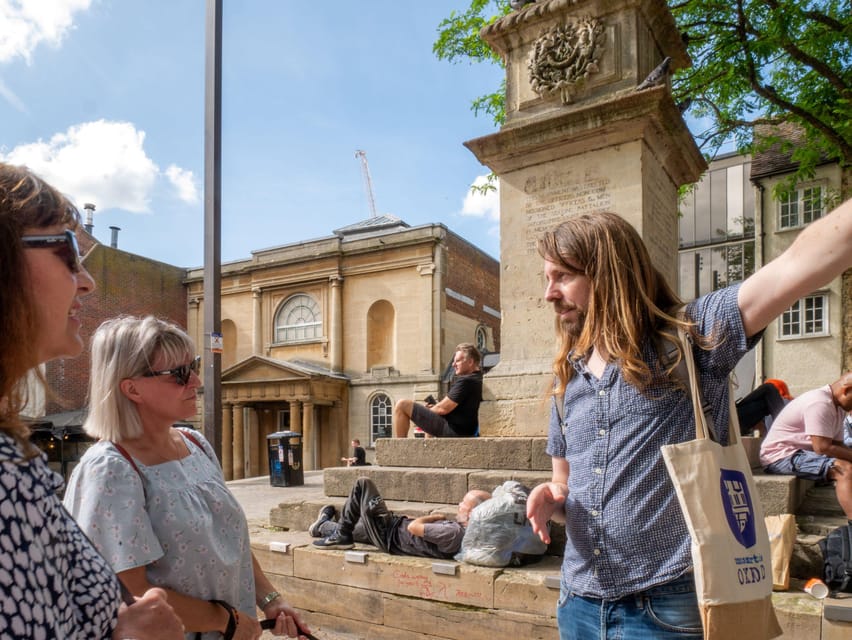
You have two starting choices. You can meet at Carfax Tower, or you can choose an option that begins at Fantastea near Carfax Tower, tied to teas around the world.
If you are the type who likes to warm up with something small before walking, Fantastea can be a pleasant start. If you just want the simplest setup, Carfax Tower is easy to orient to in the centre.
Either way, the tour begins with a short guided intro, around 10 minutes, so you can settle your bearings early.
Same corner of Britain, a different sort of outing:
- Oxford: Guided Sightseeing River Cruise
★ 4.6 · 935 reviews - Oxford: University Walking Tour with Christ Church Visit
★ 4.6 · 820 reviews - Oxford: Harry Potter Insights Divinity School Group Tour
★ 4.6 · 783 reviews - Morse, Lewis and Endeavour Walking Tour of Oxford
★ 4.8 · 710 reviews
Stop by stop: what you’ll see and what it means
Carfax Tower: the city’s hinge point
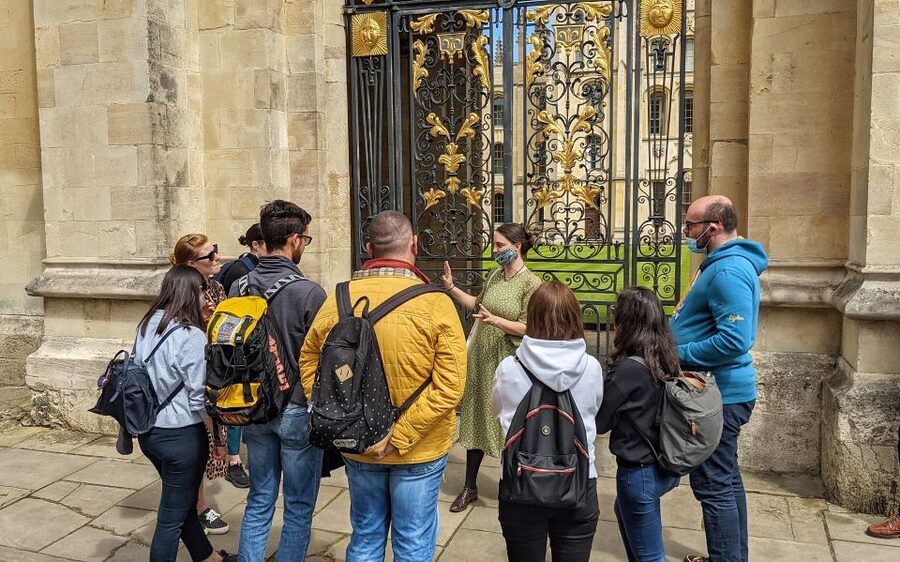
Carfax Tower is one of those places you notice immediately once you are in the thick of Oxford. It also works as a starting point because it pulls you into the city grid fast. A short guide intro here sets the tone: you’re going to be looking at Oxford as a system of influence, not just a collection of buildings.
If you arrive early, take 2 minutes to look around. Notice how the streets funnel into the centre. This is the kind of geometry that helps institutions become powerful, because traffic, attention, and visibility all matter.
University Church of St Mary the Virgin: sacred space with civic power
Next comes the University Church of St Mary the Virgin. This is a quick guided visit, about 5 minutes, which means you should listen for what the guide connects to the wider theme: how religious and university authority blended in earlier centuries.
Even without going deep into architectural details, the church stop is a useful reminder. Institutions did not only expand through paperwork and politics. They also expanded through culture and ceremony.
Oriel College: seeing how class gets built into the story
At Oriel College, you get another brief guided moment. This stop is usually where you start to feel the tour’s “town and gown” theme in your legs. Oriel represents the university as a physical presence in the city centre, and it helps you understand that conflict and cooperation were never abstract.
The guide’s job here is to show you that Oxford’s power was not only global, it was also local. The university shaped daily life around it, including who had access to opportunity.
A small tip: when you hear the guide talk about class and access, look up as well as around. Oxford’s authority is written into the scale, the entrances, and the way people move through the space.
All Souls College and the Rhodes Statue: empire in the public eye
All Souls College is one of the tour’s standout stops, with about 10 minutes of guided time. It is also closely tied to the tour’s willingness to talk about controversy head-on.
One of the highlights listed for the route includes the Rhodes Statue. When you notice it as you pass through the area, listen carefully to how the guide links it to empire and the long tail of institutional decisions. This is exactly the kind of point where Oxford turns uncomfortable in a controlled way, because it asks you to look at a familiar icon and reframe what it represents.
You do not have to be a scholar to follow this. The guide approach is built for real discussion. You’ll likely hear prompts that push you to think about who funds power, who benefits, and how public memory gets managed.
Bodleian Library area: knowledge as authority
The tour spends about 15 minutes at the Bodleian Library. Even if you are not going inside colleges, this stop is still a major Oxford moment because it signals what universities do at their strongest: collect, curate, and control knowledge.
The key is not just that it is a library. It is how libraries work as power engines. If you want to understand how Oxford gained influence globally, this is the kind of institution that turns local prestige into international weight.
Listen for the way the guide connects scholarship to empire. That connection can be uncomfortable, but it is also one of the most important ways to understand Oxford’s growth.
The Sheldonian Theatre: performance, status, and public reach
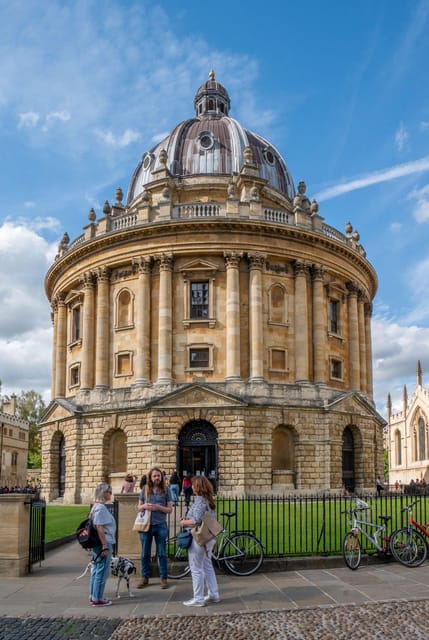
Next up is the Sheldonian Theatre, about 10 minutes. This theatre stop is great for understanding how institutions broadcast themselves. Oxford did not only educate. It performed.
Pay attention to how the guide frames the theatre as a stage for authority. When an institution gives itself a public face, it is easier for it to recruit, persuade, and expand influence. That is part of the “how power works” message that runs through the tour.
Balliol College: contradictions in a single street view
Balliol College gets about 10 minutes as well. Another short stop, but it reinforces a pattern. The guide keeps returning to questions like: Who gets shaped by the university? Who is left out? And how do those choices show up in the city?
Balliol is useful because it’s the kind of place where traditional Oxford imagery can feel smooth on the surface. The tour’s perspective makes you look twice, especially through themes of class and gender.
Faculty of History: where interpretation gets made
The Faculty of History stop is about 10 minutes. This is one of the cleverest moments on the route because it brings you closer to how Oxford produces narratives about the past.
Instead of treating history like a neutral subject, the guide points to the fact that stories are written by institutions and people with priorities. This is where the Uncomfortable Oxford™ method clicks: you’re not just receiving history, you’re learning how history gets interpreted, taught, and sometimes contested.
In a good tour, the guide does not just answer questions. It gives you better questions to ask after you leave.
Bonn Square: tying the themes together
You finish at Bonn Square. This is where the route naturally wraps up, and it’s a smart ending point because the stop supports reflection without dragging you further across town.
If you have time after the tour, this is a good location to continue walking on your own. You’ll likely find you notice more details once the guide has shifted your mental lens.
The discussion style: what people seem to love (and what to watch for)
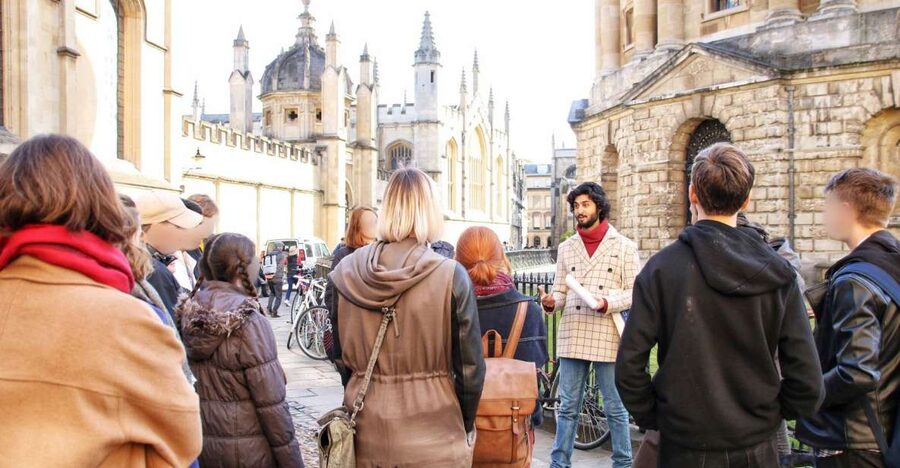
The biggest praised aspect is the way the tour uses an Oxford academic or university-researcher guide who can answer questions in real time. One participant described thoughtful, evidence-based discussion where the guide asked questions and kept engagement high.
That format is a big part of the value. You are not just collecting facts. You are practicing how to think about them.
Still, there are trade-offs. Some guides may feel more scripted, and some groups may end up speaking a lot while others listen. Also, there’s no mention of provided microphones, so if you are at the back of a larger group, hearing may depend on where you stand.
My practical advice: arrive a bit early, pick a spot closer to the guide, and if you care about audio, hold your position. Cobblestones and crowding can make hearing harder fast.
Is it worth it for families, ages 12 and up?
It is advertised as family-friendly for ages 12 and up, and that makes sense. The tour stays in the city centre, the stops are short, and the guide-led discussion can be adjusted based on the group.
That said, the topics include race, class, and gender, plus empire connections. Those are big subjects, but a trained researcher guide is exactly what you want if your goal is age-appropriate framing. If you are bringing teens or older kids who can handle serious themes, this can be a strong educational outing.
If your child is easily overwhelmed by uncomfortable material, you might want to preview the tour themes and decide based on their temperament.
Materials you’ll get after: the reading list follow-up
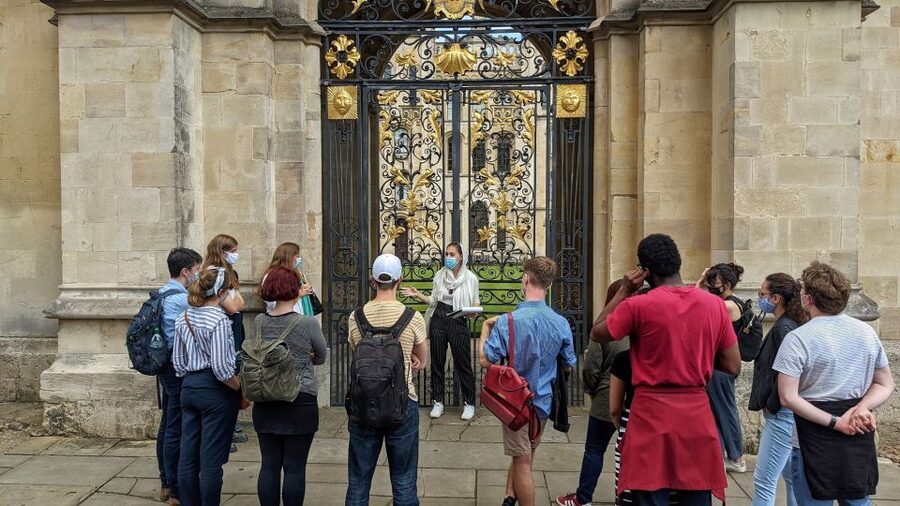
After the tour, you get access to a reading list compiled by University experts. That is the best kind of souvenir because it turns one guided hour into a longer learning arc.
Use it like this: pick one or two items that match your curiosity. If you lean toward architecture and institutions, choose sources that connect buildings and power. If you lean toward social history, choose works that focus on race, class, and gender.
The souvenir sticker is fun, but it’s the reading list that extends the value.
Should you book Oxford: The Original Uncomfortable Oxford™ Tour?
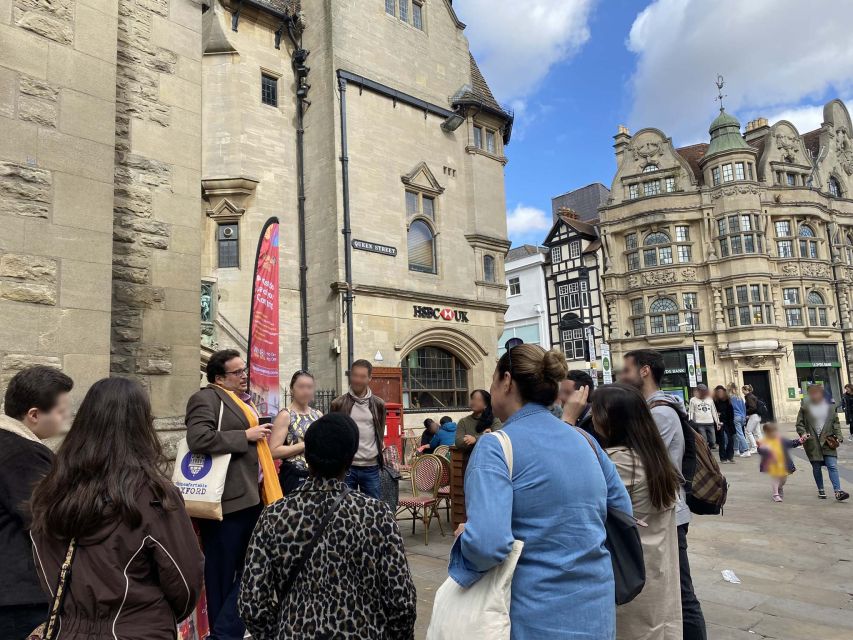
Book this tour if:
- You want Oxford that talks about how power works, not only what looks beautiful.
- You like discussion-based learning led by university researchers.
- You have limited time and want a compact route through major sights without entering colleges.
- You want a follow-up reading list to keep thinking after you leave.
Skip it or choose another option if:
- You prefer hands-on museums or inside visits, because this tour does not take you inside any colleges.
- You are very sensitive to standing time and you dislike fast-paced walking talks.
- You expect an ultra-soft, non-confrontational sightseeing experience. This is built to be honest about uncomfortable parts of history.
FAQ
FAQ
How long is the Oxford Uncomfortable Oxford™ tour?
The tour runs for about 1.5 hours.
Where does the tour start?
You can meet at Carfax Tower, or you can choose a starting option connected with Fantastea, near Carfax Tower.
Does the tour enter any university colleges?
No. The tour does not take you inside any colleges.
What landmarks are included in the route?
The stops include Carfax Tower, the University Church of St Mary the Virgin, Oriel College, All Souls College, the Bodleian Library, the Sheldonian Theatre, Balliol College, the Faculty of History, and Bonn Square. The Rhodes Statue is also highlighted.
How much walking is involved and what is the terrain like?
The tour covers around 2 kilometers of walking. There are some street crossings and cobblestones.
Is the tour wheelchair accessible?
Yes, the tour is wheelchair accessible, and the guides are trained to adapt as needed.
What topics does the tour cover?
It focuses on how the University of Oxford gained power locally and globally, historic tensions between town and the gown, connections to empire, and themes such as race, class, and gender.
Is it suitable for children?
It is advertised as family-friendly for ages 12 and up.
Newly listed near Oxford
- Undiscovered Cotswolds Private Driving Tour★ 5.0 · 5 reviews
- Oxford University: Guided Small Group Walking Tour★ 4.8 · 90 reviews
- Private Downton Abbey Day Tour, including Pub Lunch★ 5.0 · 5 reviews
- Oxford: Town & Gown Walking Tour★ 4.7 · 15 reviews
- Oxford: Tolkien, Lewis and Alice Walking Tour. Small group!★ 5.0 · 7 reviews
- Oxford: University Tour for Prospective Students★ 4.9 · 26 reviews
- Oxford: Sunset Cruise with a Glass of Prosecco★ 4.8 · 6 reviews
- Oxford: City & University Tour with College entry included★ 5.0 · 4 reviews
Oxford Tours, compared.

University and City Walking Tour with Alumni Guide
Read our review →
City and University Tour, including college entry
Read our review →
Harry Potter Walking Tour Including New College
Read our review →
University Walking Tour with Christ Church Visit
Read our review →
Harry Potter Insights Divinity School Group Tour
Read our review →
Morse, Lewis and Endeavour Walking Tour of Oxford
Read our review →
Browse the lists this tour appears in