
Review · WALKING TOURS
Private Southampton Walking Tour
Southampton has stories you can walk through. This private 1.5-hour route starts at the Bargate, then moves through key parts of the town’s past, from medieval defenses to World War II connections, including the Mayflower and Titanic links.
What I like most is the at-your-pace approach, with the guide adjusting the route to your comfort and needs. I also love the range of monuments packed into a short walk, especially the City Walls, Tudor House, multiple church stops, plus the port story tied to the Mayflower and Titanic.
The main thing to consider is simple: you are walking for about 1.5 hours, so wear proper shoes and be ready for rain or shine (unless conditions become dangerous).
In This Review
- Key highlights in plain English
- Starting at the Bargate Lion, and setting your own pace
- City Walls and Tudor House, Southampton’s long view
- Church stops where the town’s personal stories show up
- Mayflower memorial: a port town with consequences
- Titanic-related locations, and why Southampton keeps showing up
- How the 90-minute format keeps it doable
- Guides that tell stories with local energy
- Mobility-friendly and pet-friendly, without the usual tradeoffs
- What you get for $31, and what costs you avoid
- Practical tips for rain or shine, and how to dress
- Where to go next after the walking tour
- Should you book this private Southampton walking tour?
- FAQ
- How long is the Private Southampton Walking Tour?
- Where does the tour meet?
- Is this tour wheelchair accessible?
- Is the tour pet friendly?
- Are there any entry tickets included?
- What will I see during the walk?
- Does the tour run in bad weather, and what is the cancellation window?
Key highlights in plain English
- Private group, small and flexible, with a guide who can answer questions as you go
- Start at the Bargate lion statue, easy to find and the perfect “gateway” to town history
- City Walls, Tudor House, and several churches, all on foot in one compact loop
- Mayflower memorial stop, built into the port story rather than treated like a side note
- Titanic-related locations, focused on Southampton’s role, not just the disaster itself
- Mobility-friendly and pet-friendly, with the pace adjusted for your group
Starting at the Bargate Lion, and setting your own pace
Your tour begins at the Bargate, waiting by the lion statue. That matters more than it sounds, because Southampton’s old center can feel spread out when you arrive on your own. Here, you get a clear meet point and a guide who keeps you moving at the right speed.
This is a private group, so you are not stuck with a one-size-fits-all script. The walking pace is designed around your comfort, and the plan can be amended if you need slower turns, extra breaks, or a different order of sights. If you have special requirements, you are meant to share them in advance so the route works for your day.
Weather is another part of the deal. The tour runs in rain or shine, unless weather becomes dangerous. That is good news for planning, but pack like you live here for the afternoon: bring a rain layer, and do not assume Southampton will wait for clear skies.
Finally, the tour has no “drop-in attraction” pressure. There are no entry tickets involved, so you can spend your time focused on the streets, buildings, memorials, and the story the guide is building in real time.
More walking tours in Southampton:
- Southampton: Secrets of the Titanic Guided Walking Tour
★ 4.8 · 211 reviews - Magical London: Harry Potter Guided Walking Tour
★ 4.7 · 22,044 reviews - London: The Original Jack the Ripper Walking Tour
★ 4.7 · 7,833 reviews
City Walls and Tudor House, Southampton’s long view
One reason this walk works is the way it frames Southampton as a town that keeps changing, then keeps rewriting its own identity. You start from the old core and move through key remnants of the medieval and later eras, including the City Walls. Even if you only see sections rather than a full fortress walk, you get a clear sense of how Southampton protected itself and why the port mattered.
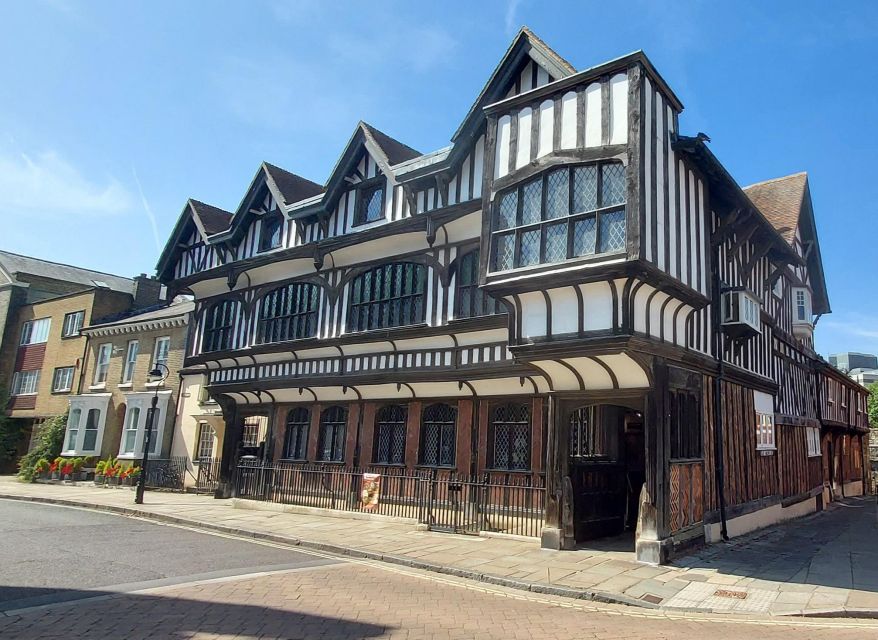
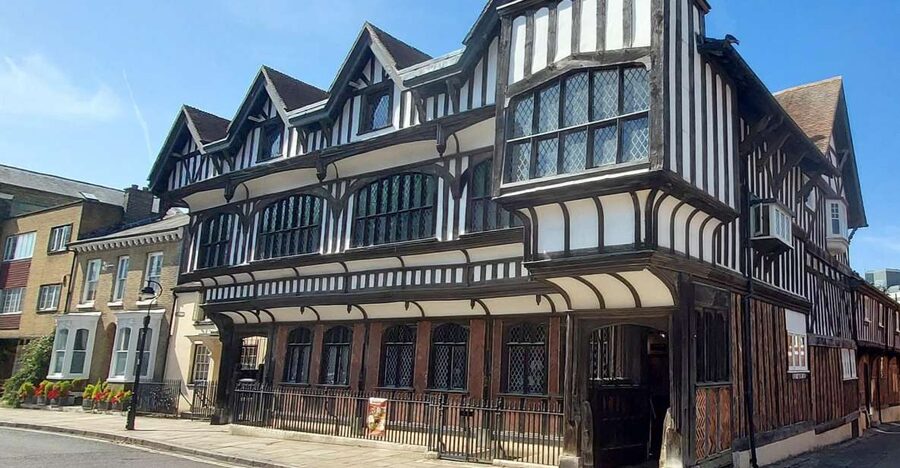
Then comes the Tudor House, a stop that helps you shift from “old town” to “old town with serious personality.” Tudor architecture can look decorative from a distance, but on a street-level walk you start noticing scale, materials, and how buildings relate to the wider town layout. It is the kind of stop that benefits from a guide who can point out why something survived, what it tells you about wealth and trade, and how the port economy shaped daily life.
I also like that the tour does not treat these buildings like isolated photos. The guide builds a timeline that links architecture to the town’s role as a gateway for people, goods, and risk. That is how Southampton stops feeling like a quick stop on a map and starts feeling like a place with cause and effect.
If you are bringing kids, this section tends to land well because walls and historic buildings are easy to picture and hard to forget. One guest specifically called out the fit for both kids and adults, and that matches the pacing here: short stops, lots of context, and frequent chances to ask questions.
Church stops where the town’s personal stories show up
As you move through the historic center, the tour includes different churches. Church stops on walking tours can sometimes feel like background scenery, but here they are used as waypoints in Southampton’s deeper story. In a town connected to migration, trade, and conflict, religious buildings often reflect community priorities, local wealth, and changes in power.
One standout detail from the experience is that you might even get a chance to enter a church. A past participant described getting extra access because it is not always open to the public. If that happens for your group, it can turn a “look from the street” moment into something more meaningful, because you get to see the interior context your brain expects but usually cannot confirm from outside.
Even if you only view from the exterior, the guide’s job is to connect each stop to the bigger arc of the town, especially the Middle Ages through the Second World War. You learn how Southampton’s role as a port shaped local life, including who benefited, who paid the price, and how ordinary people lived alongside big historical events.
This is also one of the better sections for questions. If you care about social history rather than ship history, tell the guide. Multiple guides on this tour have been praised for storytelling and for making smart choices about what to emphasize, and that flexibility is part of why the itinerary feels personal.
Mayflower memorial: a port town with consequences
The Mayflower memorial is one of the emotional center points for many people visiting Southampton, and this tour handles it in a practical way. Instead of rushing through a famous name, the guide ties the memorial to Southampton’s identity as a launching point. The focus is on the port, the ships, and the people who left, plus what that meant for the town that remained.
What I appreciate is that this tour treats Southampton as more than a backdrop for famous voyages. Southampton’s port history is the engine behind the stories you are hearing, whether you are thinking about settlers, merchants, or travelers who passed through. If you want your visit to feel grounded, this stop gives you a strong anchor.
And because it is private, you can lean in based on interest. If you are more into genealogy, ask about movement of people and why ports functioned like nerve centers. If you are into maritime history, ask how shipbuilding, boarding, and logistics connect to what you see around you today.
A few more Southampton days worth comparing
- Southampton Port: London via Salisbury, Stonehenge & Windsor
★ 4.5 · 298 reviews - Southampton: Cruise Transfer to London via Stonehenge
★ 4.5 · 103 reviews - From Southampton: Stonehenge & Salisbury Private Day Trip
★ 4.9 · 14 reviews
Titanic-related locations, and why Southampton keeps showing up
No trip to Southampton is really complete without the Titanic story, and this tour builds it into a broader understanding of the town’s maritime role. You will visit locations connected to Titanic history, with the emphasis on Southampton as a key part of the ship’s world.
The trick with Titanic history is that it can become all disaster, all tragedy, all the time. Here, the guide connects the Titanic to Southampton’s long-standing position as a port, meaning you get a more complete picture of why the town fits into that story at all. That makes the sites feel less like checkboxes and more like evidence.
If you like “why this happened here” history, you will probably enjoy this section. One guest described the guide as telling the story with energy, making it feel like time travel in tone, even though the facts remain grounded. Another person highlighted the guide’s ability to help them piece together a timeline for the last 2,000 years of Southampton, and that kind of storytelling is what keeps Titanic from feeling like a standalone chapter.
Also, the tour spans a huge range, from medieval to World War II. That context matters. You start to see how one century’s ambitions become another century’s risks, and how Southampton’s identity as a port keeps reappearing in the town’s architecture and memorials.
How the 90-minute format keeps it doable
This tour lasts about 1.5 hours, and that time box is part of its value. You get meaningful coverage without turning the day into a full guided marathon. People who want a first look at Southampton’s historical center often find this length ideal because you leave with bearings and context, not just a pile of facts.
The pacing is also a key strength. Several past participants specifically praised that the walk felt well paced, comfortable, and flat. That matters in a city where a “short walk” can still turn into uneven streets and long detours when you are on your own.
Because it is private, the guide can keep your group moving while still making room for questions. That is especially useful for parents, because kids often lose interest when stops stretch too long. Short explanations, quick questions, and frequent sight changes help everyone stay engaged.
If you only have a small window in Southampton, this is a smart use of time. It is also a good option if you want to pair it with other activities later, because you will know what to aim for next.
Guides that tell stories with local energy
The tour lives or dies on the guide, and this one has a strong track record. A clear pattern shows up in the names guests recalled: Michelle, James, and Lillian (also spelled Lily in at least one review). People praised their enthusiasm and their ability to connect facts to scenes on the street.
James, in particular, was described as enthusiastic and passionate, with storytelling that brought the past to life. Another person mentioned a guide who studied history at Winchester for a Master’s, with encyclopedic detail about old Southampton. Those kinds of backgrounds tend to create two things you can feel during the walk: strong timeline structure and smart choices about what deserves emphasis.
I also like that the guides handle different learning styles. Some people want big picture context, others want details about monuments. The tour is built for that flexibility, since you can tell the guide what matters to you and the itinerary can adjust to comfort.
And yes, the guide keeps things entertaining. Guests mentioned humor and an easy-to-follow way of explaining complicated town history, which is exactly what you want when the subject spans centuries.
Mobility-friendly and pet-friendly, without the usual tradeoffs
The tour is explicitly described as mobility friendly and pet friendly, and that is more than a marketing line. Because it is a walking route built for a 1.5-hour window, your guide can adjust the order, slow down at transitions, and build in pauses without the group falling behind.
For wheelchair accessibility, it matters that the tour is designed as a route you can do within the city’s walkable areas rather than an “only the fit can reach” scavenger hunt. If your group includes someone with mobility needs, this is the kind of tour where pre-communicating requirements can really pay off.
For pet owners, the same idea applies. A private format tends to make it easier for the guide to work around a dog’s needs and your comfort. If you are traveling with a pet and want an experience that still feels historical, this tour checks that box.
What you get for $31, and what costs you avoid
At $31 per person for a 1.5-hour private walking tour, value comes from three places.
First, it is private. You are paying for a guide working specifically for your group, not for a crowded bus-style experience. Second, there are no entries involved, meaning you are not hit with ticket fees mid-walk. Third, the guide provides extra tips for what to see and where to eat and drink on your own after the tour, which can help you use the rest of your day more efficiently.
You are also buying focused time. Southampton has lots to see, and without a plan, it is easy to wander at random. This tour gives you a structure that covers key monuments and the town’s major historical themes in one compact loop.
What is not included is also clear: hotel pickup or drop-off, and food or drinks. In practice, that means you should plan to start from central Southampton and use the walking tour as the story engine, then eat afterward at your own pace.
Practical tips for rain or shine, and how to dress
Since the tour runs in weather, you should dress for walking outdoors. Wear shoes with grip, because old streets can be uneven. If rain is on the radar, bring a light rain jacket and a bag you can keep dry.
Timing matters less than readiness. The group covers about 90 minutes on foot, so plan to arrive with energy, not right after a long travel scramble. If you know you will need a break, tell the guide early so they can adjust the flow without making anyone feel rushed.
One more small tip: bring curiosity. Southampton rewards questions. If you care about the port, ask. If you care about medieval defenses, ask. The best tours feel like conversation with a strong brain behind it, and that is what this format is designed to deliver.
Where to go next after the walking tour
By the end, you typically want two things: nearby ideas and clarity on what to do later. This tour includes tips for places to visit on your own, along with recommendations for food and drink. Even without specific names here, you can expect the guide to point you toward sensible next stops based on what you found interesting during the walk.
A helpful way to use those tips is to choose one “history follow-up” and one “town living” option. For history, build on the monuments you saw during the walk. For town living, look for places the guide suggests where locals actually hang out after work or on weekends.
If you are visiting for a short trip, this tour acts like the compass. You leave knowing which parts of Southampton connect most strongly to the stories you just learned, and which ones are better saved for another day.
Should you book this private Southampton walking tour?
I’d book this if you want a structured, story-driven way to understand Southampton in a short time. The private format, the ability to adjust pace, and the clear coverage of City Walls, Tudor House, churches, the Mayflower memorial, and Titanic-related sites make it an efficient plan for first-time visitors.
I’d also lean toward booking if you care about local explanation from real people. Guides like Michelle and James come through in the feedback for enthusiasm and strong storytelling, and the way the tour ties centuries together makes it feel more useful than a simple list of sights.
The only reason not to book is if 90 minutes of walking is genuinely hard for your group. If that is the case, talk to the provider about your needs, but if you cannot walk that distance comfortably, you may want a different style of tour.
If your goal is to leave Southampton feeling like you understand the town’s port-shaped identity, this one is a solid choice.
FAQ
How long is the Private Southampton Walking Tour?
The tour lasts about 1.5 hours.
Where does the tour meet?
Meet the guide by the lion statue at the Bargate.
Is this tour wheelchair accessible?
Yes. The tour is listed as wheelchair accessible.
Is the tour pet friendly?
Yes, it is described as pet friendly.
Are there any entry tickets included?
No entries are involved in this tour.
What will I see during the walk?
The route includes major Southampton monuments and sites such as the City Walls, a famous Tudor House, churches, the Mayflower memorial, and locations connected to Titanic history.
Does the tour run in bad weather, and what is the cancellation window?
It runs rain or shine unless the weather is dangerous. You can cancel up to 24 hours in advance for a full refund.
Newly listed near Southampton
- Southampton: Transport to London with 3 Sightseeing Stops★ 5.0 · 10 reviews
- From Southampton: Stonehenge and Bath Guided Day Trip★ 5.0 · 6 reviews
- From Southampton: Stonehenge & Salisbury Private Day Trip★ 4.9 · 14 reviews
- Southampton: Cruise Transfer to London via Stonehenge★ 4.5 · 103 reviews
- Southampton: Secrets of the Titanic Guided Walking Tour★ 4.8 · 211 reviews
- Southampton Port: London via Salisbury, Stonehenge & Windsor★ 4.5 · 298 reviews
Walking Tours, compared.

Magical London: Harry Potter Guided Walking Tour
Read our review →

University and City Walking Tour with Alumni Guide
Read our review →
Harry Potter Movies Walking Tour (Kids Go Free)
Read our review →
The Great British Rock and Roll Music Walking Tour
Read our review →
Jack the Ripper Walking Tour – Ripper Vision Tours
Read our review →
Browse the lists this tour appears in