
Review · BATH TOURS
Shepton Mallet Prison: Guided Tour
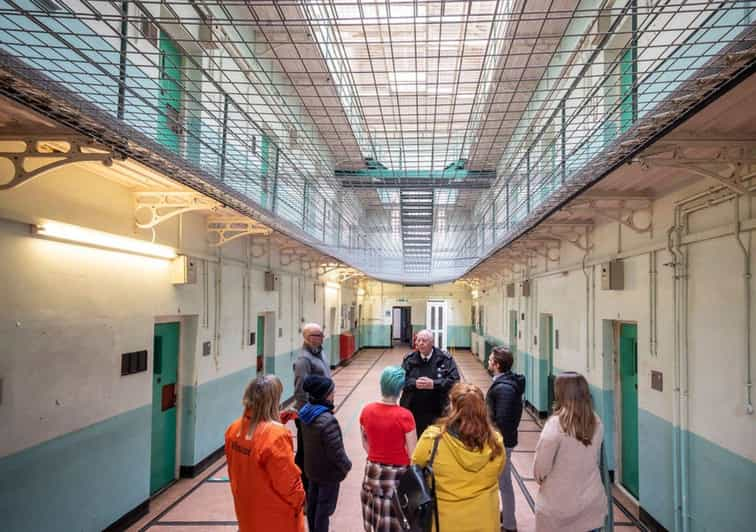
Steel doors and real stories, in Somerset. This guided tour at Shepton Mallet Prison is a no-nonsense look at confinement, built around two Victorian wings and the places where discipline and punishment played out day after day. I particularly like how the guide turns the building into a story, and how the Hard Labour Yard section makes the routine feel painfully real. One consideration: it is a harrowing topic, and 1.5 hours moves at a steady pace, so you may want extra time for slower self-exploring after the guided part.
The tour also includes a self-guided option, so you are not forced to rush through everything the moment your guide finishes. If you have a favorite guide day, Jason and Esther are names that come up often for clear storytelling and strong character work, while Cameron is noted for friendly, high-energy explaining. A small heads-up: finding the visitor centre entrance can be fiddly if you do not go far enough into the site, so plan a minute to orient yourself before the tour starts.
In This Review
- Key Highlights You Shouldn’t Miss
- Entering Shepton Mallet: Where the Tour Starts and How to Prepare
- Two Victorian Wings: B Wing vs. C Wing
- B Wing, the biggest and the most crowded
- C Wing, built in 1848 and shaped by wartime secrets
- Officers’ Landing and Steel Doors: Seeing 400 Years of Movement
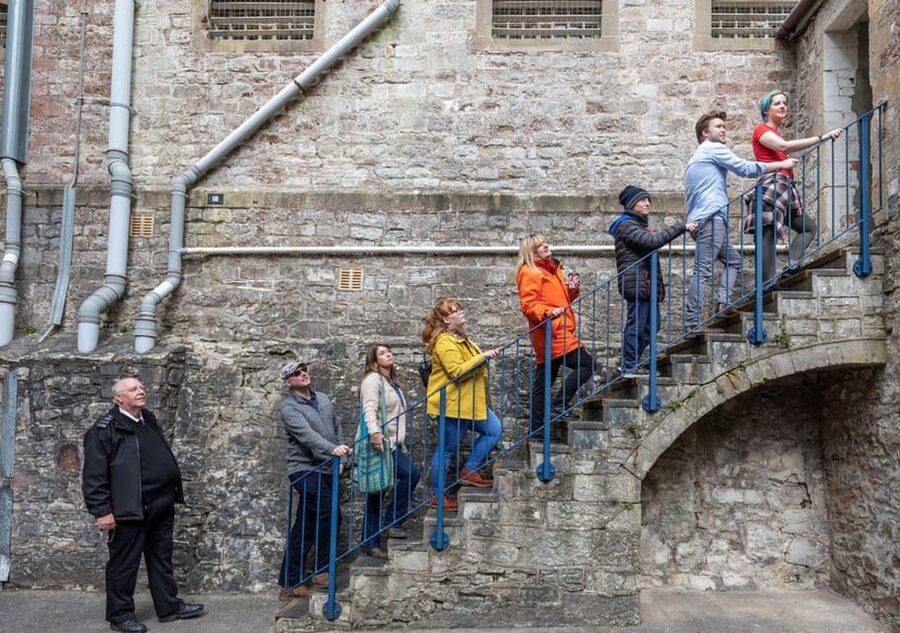
- Hard Labour Yard: The Point of the Tread Wheel Building
- The Gate Lodge and Governor’s Office: Old Entrances, New Reveals
- Exercise Yard and Governor’s House: Where Daily Life Looked Ordinary
- The Condemned Cell to the Execution Room Route
- What the Included Self-Guided Time Really Helps You Do
- Price and Value: Is $33 Worth It?
- Timing, Scheduling, and How to Plan Your Visit
- Who This Tour Is Best For (and Who Might Want a Different Style)
- Should You Book the Shepton Mallet Prison Guided Tour?
- FAQ
- How long is the Shepton Mallet Prison guided tour?
- Where do I meet for the tour?
- What’s included with the guided tour ticket?
- What days and times do the guided tours run?
- Is the tour available in English?
- Does the ticket include food or coffee?
- How much does it cost?
- Is cancellation free?
- Is there a self-guided component?
Key Highlights You Shouldn’t Miss
- Two Victorian wings with very different jobs: B Wing for men, C Wing built for women and children
- Hard Labour Yard and the Tread Wheel building, where physical effort was part of the punishment
- Officers’ landing and steel doors that help you picture daily movement and lockdown
- Gate Lodge and Governor’s Office area, including an original cell you may need to crawl into
- Execution room walkthrough, covering the condemned cell route and the stories of 25 executions on site
Entering Shepton Mallet: Where the Tour Starts and How to Prepare
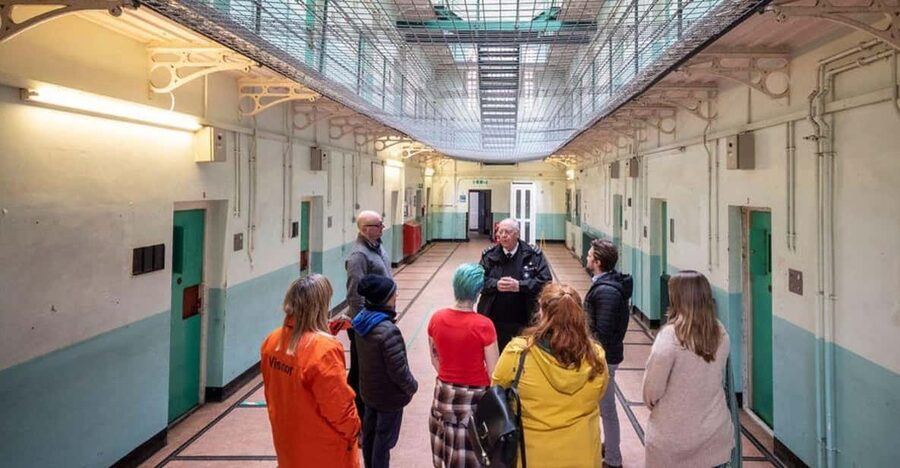
Shepton Mallet Prison sits in South West England, and the visit begins at the visitor centre on Frithfield Lane, BA4 5FQ. I like that the meeting point is clear, because you are walking into a site where small orientation details matter. Before you join the group, give yourself a couple of minutes to locate the correct entrance and get your bearings. A sign that points you in the right direction can help a lot, and on busy days people can miss the visitor centre just because they are used to finding things fast.
This is an English-language, live guided tour that runs for about 1.5 hours. Plan to go in with the mindset of seeing a working prison environment, not a recreated museum set. The best way to enjoy it is to let the guide’s explanations do the heavy lifting. You are there to understand what the place was built to do, and the guide explains how that purpose showed up in everyday spaces.
It also helps to be emotionally ready. Even when the tour is factual and well guided, it deals with punishment, execution, and the human cost of the system. If you are sensitive to difficult topics, I suggest you pace yourself, and consider stepping out briefly when you need a breather.
A few more Bath days worth comparing
- Bath: City Walking Tour with Optional Roman Baths Entry
★ 4.7 · 1,401 reviews - Bath: Guided Walking Tour
★ 4.9 · 1,198 reviews - Bath: Guided Ghost Tour
★ 4.8 · 1,036 reviews
Two Victorian Wings: B Wing vs. C Wing
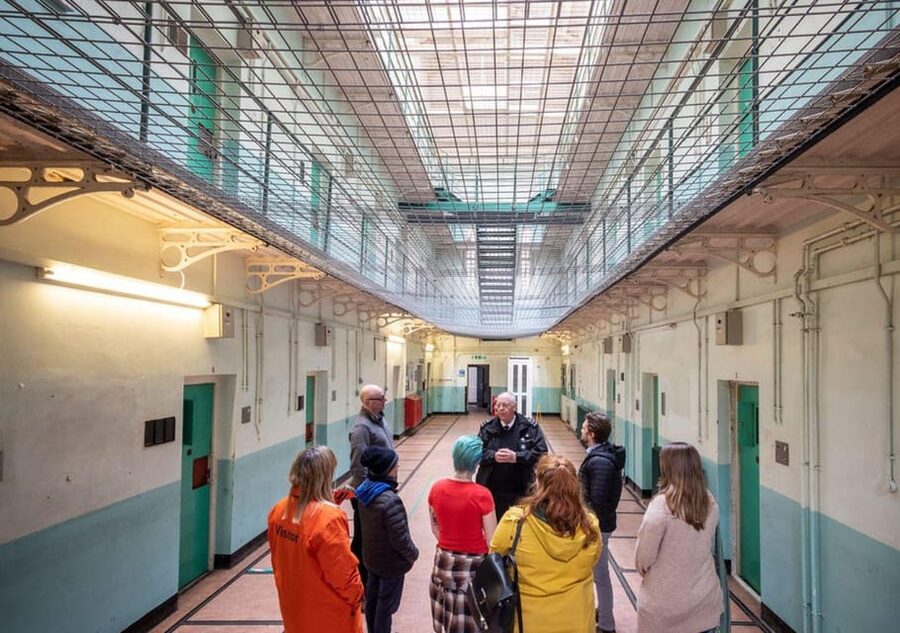
The heart of the guided tour is a walk through two traditional Victorian prison wings, and the contrast between them is a big part of why this visit works.
B Wing, the biggest and the most crowded
B Wing is the largest wing. It had a capacity of 94 prisoners as of 2001, but the real story is that overcrowding happened long before that. Standing in or near spaces connected to B Wing, you can feel how a facility designed for numbers ends up straining under real life. The guide’s explanations connect the architecture to the pressure points: how people were held, how movement worked, and how the prison handled too many bodies in too little space.
This wing matters because it shows how punishment often grew out of conditions, not just rules. When a prison is overcrowded, discipline becomes more intense and daily life becomes more restricted. The result is a place where the building is basically part of the system of control.
C Wing, built in 1848 and shaped by wartime secrets
C Wing was purpose built in 1848 to hold women and children into the early 1900s. That already sets a different context from B Wing. Then the tour adds another layer: during World War II, C Wing played an important top secret role.
I like that the tour does not treat the wings as static rooms. You get a sense that the prison evolved. Even if the core purpose stayed the same, the people held there, the pressures they faced, and the broader use of the site changed over time. That evolution is part of why a guided tour feels worth it, because you need the connective tissue to understand what you are seeing.
Same corner of Britain, a different sort of outing:
- Bath: The Jane Austen Centre Ticket
★ 4.4 · 678 reviews - Bath: Sightseeing Boat Cruise with Prosecco
★ 4.6 · 608 reviews - From Bath: Stonehenge & the Cotswolds Day Tour with Entry
★ 4.8 · 543 reviews - Bath: Tootbus Bath Discovery Hop-On Hop-Off Tour
★ 4.5 · 430 reviews
Officers’ Landing and Steel Doors: Seeing 400 Years of Movement
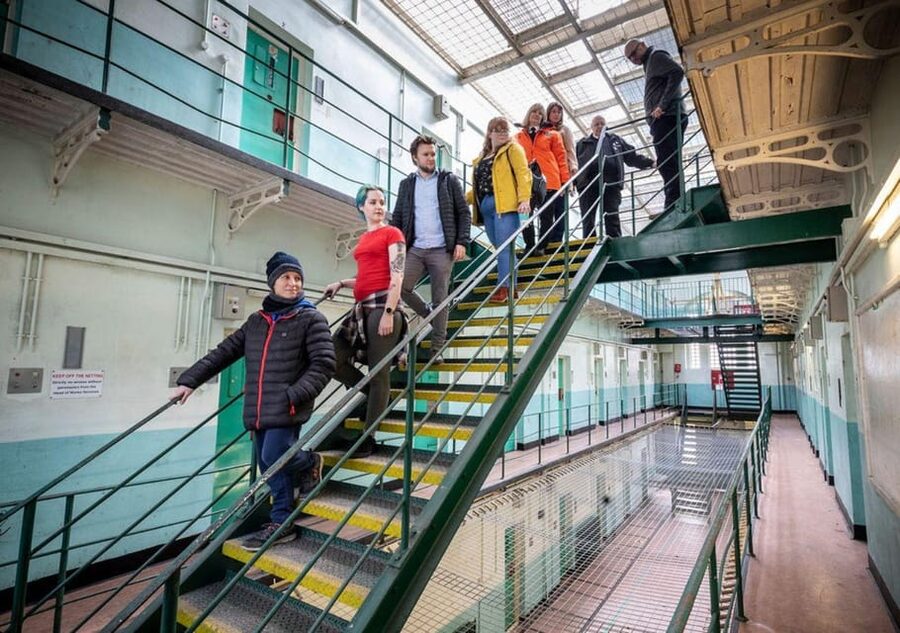
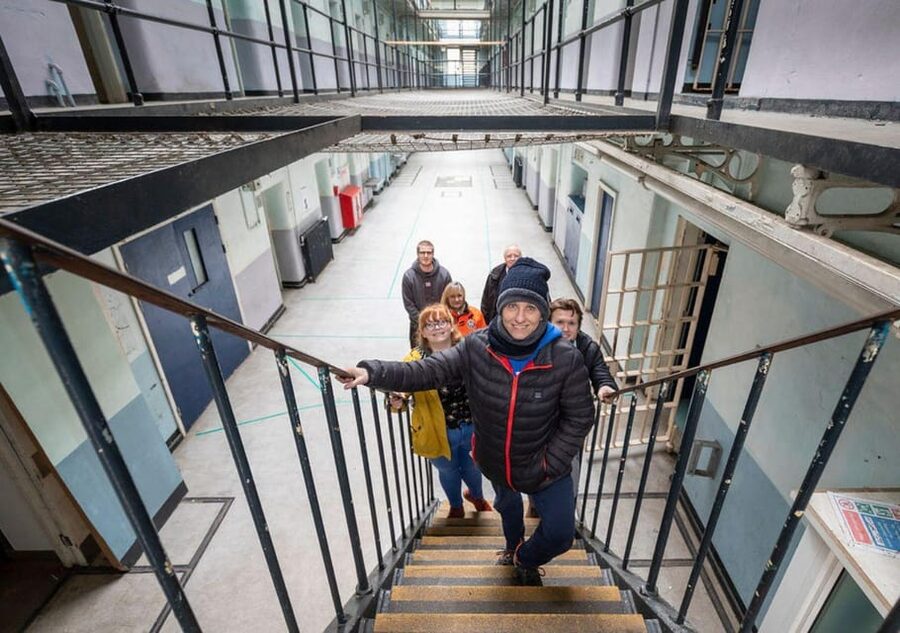
Next, you wander the landing as officers did for about 400 years. That detail sounds like trivia until you take a look at how the space is designed and how doors, corridors, and landing areas guide movement. The guide helps you picture the difference between being a visitor and being someone locked behind steel doors.
This segment is one of the strongest “this is real” moments of the tour. The experience is not about trying to imagine what the place might have looked like. Instead, you are being asked to look at how confinement works as a physical environment. When you hear how the landing was used and why it mattered, the layout clicks into something understandable.
A good guide also makes you notice the small things, like where people would stand, where officers likely watched, and how sound or sightlines would play a role. You do not need theatrics. The prison geometry does the work.
Hard Labour Yard: The Point of the Tread Wheel Building
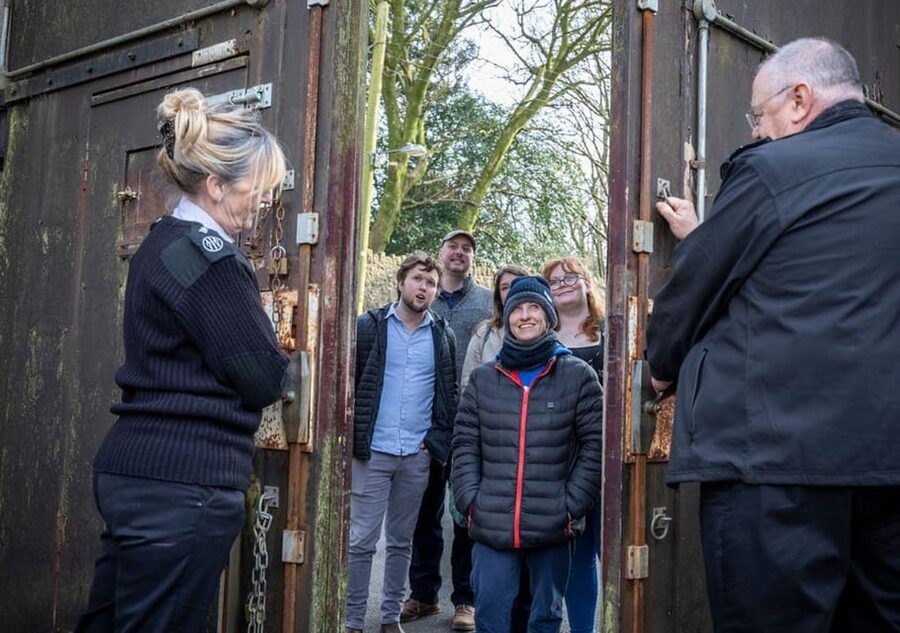
One of the most memorable stops comes in the Hard Labour Yard. This is where you learn about hard, often pointless forms of labour used in the 1800s to prevent idleness. It sounds simple, but the guide explains the logic: when someone is caged, boredom and routine are both threats to control. Hard labour was the answer, and the yard layout is part of the message.
From here, you can also see the Tread Wheel building, often described as one of the most physically demanding Victorian hard labour options for prisoners. You do not have to be especially athletic to understand what that meant. The strength comes from how the guide frames it: not as a dramatic punishment scene, but as sustained physical strain tied to a system.
I like this section because it gives meaning to what you are looking at. You start to see how labour was used as discipline and how the prison tried to convert time into control. If you are the type of visitor who likes history that connects directly to daily reality, this stop will land well.
The Gate Lodge and Governor’s Office: Old Entrances, New Reveals
After the yard, the tour shifts into areas around the Gate Lodge and Governor’s Office. This is where the prison’s oldest structure and longest-used entrance come into focus.
From the 1600s until the 1990s, this side of the prison was the main entrance. That means you are looking at spaces that served as the prison’s front door across centuries. The tour highlights how the area developed over time, and it adds a nice twist: an example of an original cell has been uncovered and can be explored.
There is a practical consideration here. Exploring this kind of uncovered cell area can mean getting on your hands and knees. If you have mobility concerns or you simply do not want to crouch in tight spaces, this portion may not be for you. The good news is that you can usually choose how much time you spend in small areas without missing the overall story.
Still, I think it is worth it because this is the kind of detail that makes the visit feel less scripted. It reminds you that prisons are not just about the big rooms. They are also about the small spaces where people experienced confinement up close.
Exercise Yard and Governor’s House: Where Daily Life Looked Ordinary
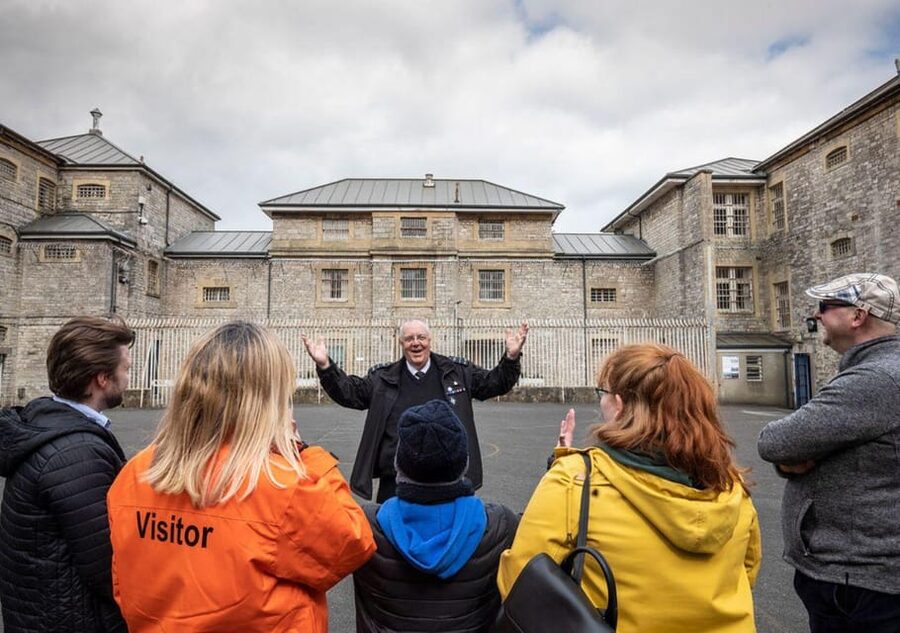
Next up is the large exercise yard, overlooked by three wings, plus the old Governor’s House area. This is a vital stop because it helps you understand how the prison broke time into different kinds of control. Even exercise can function as a managed space. The guide helps you connect the yard’s position to how the prison kept people visible and contained.
I like that the tour does not only focus on the most extreme moments like execution. It also explains the day-to-day rhythm. When you see the yard and understand the nearby wing layout, you can better imagine what prisoners could and could not do. It gives your brain something concrete to hold onto: movement patterns, line of sight, and the physical boundaries of the prison.
If you are short on time, the yard section is still worth it because it provides a “pause” in the intensity while still staying true to what life was like behind bars.
The Condemned Cell to the Execution Room Route
The final major segment of the guided tour focuses on the execution room and the path a condemned man took from the final cell days to where sentences were carried out. The condemned man’s cell is described as the place where the prisoner would spend his last days prior to execution. That detail matters, because it frames the execution not as a random event, but as the final stage of a process.
The guide then follows the footsteps of many men who made their way to the execution room. According to the information shared on the tour, 25 men were executed within the grounds between 1889 and 1945. Most of the executions took place within this room and were often under the supervision of Albert Pierrepoint.
One of the most important parts of this stop is that the guide does not present it as simple fact only. You also learn about the crimes and some of the controversies surrounding convictions. That balance is key. Execution spaces are often presented in a clean, moral arc. Here, you get the uncomfortable sense that legal outcomes can be contested, and the prison system was part of that reality.
You can also visit two related sites: the final resting place of seven of the executed men, and the site of two military firing squad executions. This adds weight, because it turns the visit into a complete sense of place, from last days to burial.
What the Included Self-Guided Time Really Helps You Do
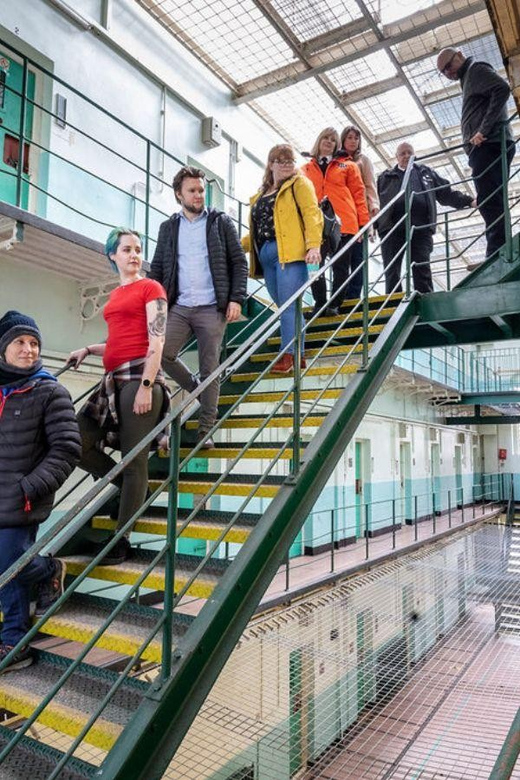
Your ticket includes entry to the guided portion plus a self-guided tour that lets you explore at your leisure. I like this structure because the guided tour is intense. It gives you the main story. The self-guided time then lets you go back to what grabbed you, rather than trying to capture everything in a single rushed pass.
In practice, self-guided time works best when you pick a focus. For example, you might spend extra time on the Victorian wing areas, return to the execution area to reread signage, or simply wander the rooms you felt you understood least. The tour is only 1.5 hours guided, so self-guided exploration is where you can slow down.
Also, since you are at a working visitor site, you can take breaks when you need them. There is an on-site cafe serving barista-style coffee, hot drinks, and snacks, and there is a gift shop on site as well. Food and shopping are not part of the tour price, but they can help you recover after the heavier sections.
Price and Value: Is $33 Worth It?
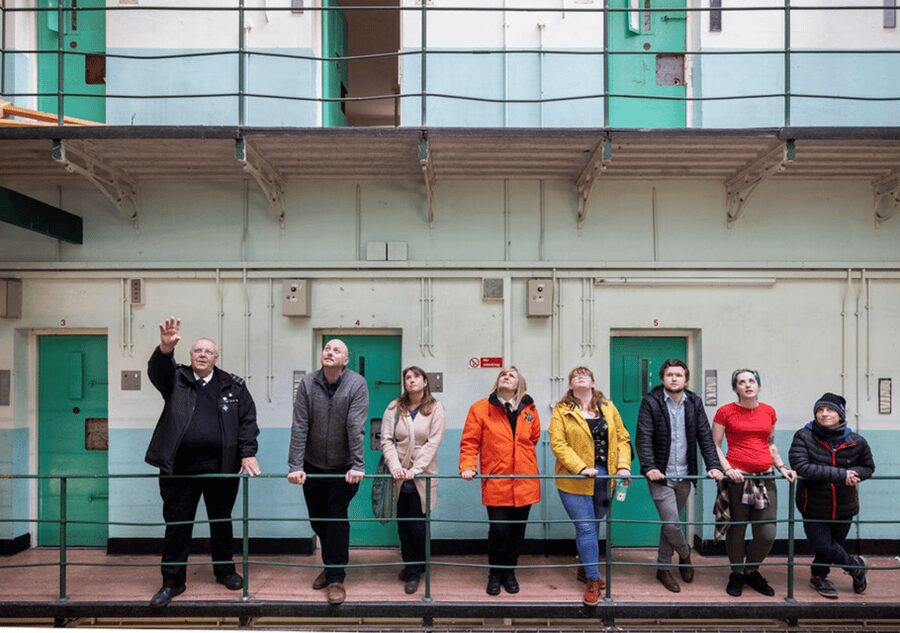
At about $33 per person, this tour is not free, and it is not the cheapest museum-style option either. So the real question is value.
In my view, the value comes from two things. First, you get a live guide who explains what life felt like for prisoners, officers, and visitors. Second, the visit includes access to a real Victorian prison, not just a themed walkthrough. The guide role matters here because prisons are complex. It is easy to walk through spaces and miss how the system worked.
Add the self-guided component and you get a built-in second pass, even if you only use it to return to one or two areas. If you are the type who likes to take notes, ask questions, and stay longer with the parts that hit hardest, this is a solid use of money for a focused 1.5-hour visit.
If you are looking for light entertainment or something strictly family-friendly in tone, this is probably not the right fit. But if you want an honest look at how confinement functioned, a guided tour is often the difference between seeing rooms and understanding them.
Timing, Scheduling, and How to Plan Your Visit
Guided tours are popular, so it is smart to plan ahead and reserve a spot. The guided tour times listed are:
- 2pm Monday to Friday
- 11am and 2pm on the weekend
- 11am and 2pm during school holidays
That schedule matters because you may want to pair it with other site exploring before or after the tour. The tour itself is about 1.5 hours, and the self-guided time is your buffer for absorbing the details.
I also suggest arriving early enough to handle basic orientation at the visitor centre. One practical tip from real visitor experience is that it can be easy to not go far enough through the gate and miss the visitor centre area, especially when the site is busy. A quick arrival cushion prevents stress.
Who This Tour Is Best For (and Who Might Want a Different Style)
This guided tour fits best if you want a story-driven, no-holds-barred experience where the guide explains how the prison worked. You will likely enjoy it if you care about Victorian prison systems, how punishment and labour were implemented, and how the space connects to real outcomes like executions and condemned cells.
It can also be a good choice for visitors who like strong guide performance. Guides such as Jason, Esther, and Cameron are all cited for making the tour memorable through clear explanations and compelling storytelling. If you love when a guide brings the role to life, this is a tour where that style helps.
Who might want to skip it or choose a different format? If you know you will struggle with heavy topics, execution history, or learning details about controversial convictions, you may prefer a lighter museum experience or a shorter, less focused option (if one is available elsewhere).
Should You Book the Shepton Mallet Prison Guided Tour?
Yes, I think you should book if you want a real prison visit where a guide connects buildings to what life felt like. The combination of the two Victorian wings, the Hard Labour Yard, and the walk through the condemned cell to the execution room makes it more than a casual look at old walls. Add the included self-guided time and the on-site cafe and gift shop, and you can turn a single tour booking into a full, memorable half to full afternoon on site.
Book it especially if you are the type who learns best from a guide-led story, not just reading signs. And if you do book, give yourself a little time at the visitor centre so you start the tour calm, not rushed.
FAQ
How long is the Shepton Mallet Prison guided tour?
The guided tour lasts about 1.5 hours.
Where do I meet for the tour?
You start at the Shepton Mallet Prison visitor centre on Frithfield Lane, Shepton Mallet, Somerset, BA4 5FQ.
What’s included with the guided tour ticket?
You get entry to the guided tour at The World’s Oldest Prison, access to a real Victorian prison, and a self-guided tour included.
What days and times do the guided tours run?
Guided tours run at 2pm Monday to Friday, and at 11am and 2pm on the weekend and during school holidays.
Is the tour available in English?
Yes, the live guide provides the tour in English.
Does the ticket include food or coffee?
No. The on-site cafe is available, but cafe items are not included in the tour.
How much does it cost?
The price is listed as $33 per person.
Is cancellation free?
Yes, you can cancel up to 24 hours in advance for a full refund.
Is there a self-guided component?
Yes. A self-guided tour is included so you can explore at your leisure after (or alongside) the guided portion.
Newly listed near Bath
- Stonehenge & More: Secret England Tour for 2-8 guests★ 5.0 · 3 reviews
- Shepton Mallet Prison: Self-Guided Tour★ 4.3 · 7 reviews
- Shepton Mallet Prison Guided Ghost Tour★ 5.0 · 6 reviews
- London: Stonehenge, Glastonbury & Avebury Small Group Tour★ 4.6 · 90 reviews
- Bath: Local Pubs & Historic Sights Walking Tour (3h)★ 4.9 · 29 reviews
- From Glastonbury: The Spirit of Stonehenge and Avebury★ 5.0 · 7 reviews
- Glastonbury: Guided Tour of Avalon with Celtic Shaman★ 4.8 · 10 reviews
- Glastonbury Day Tour – ‘The Quest’ – Magdalene, King Arthur★ 4.4 · 17 reviews
Bath Tours, compared.
City Walking Tour with Optional Roman Baths Entry
Read our review →




Stonehenge & the Cotswolds Day Tour with Entry
Read our review →
Browse the lists this tour appears in