
Review · MUSEUMS
Shrewsbury Prison Guided Tour and Museum Access
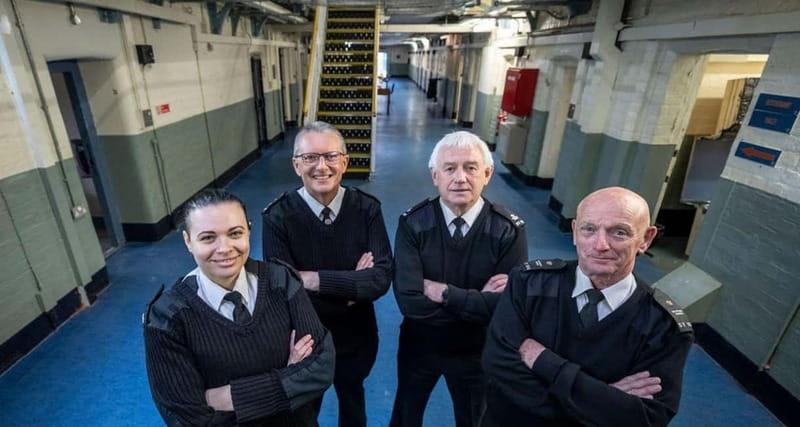
If prison walls could talk, Shrewsbury would. This guided tour turns a former jail into a clear, human story of punishment from the Georgian era to modern day. You’ll see the Victorian wings, the officer-only areas, and the places tied to famous figures like Albert Pierrepoint.
I love that the tour is led by a prison officer with the kind of detail you can actually picture, and the guide keeps the mood engaging even when the topics get grim. I also like that your ticket includes self-guided time plus museum access, so you can slow down after the tour and linger where you’re most curious.
One thing to consider is that you should expect a lot of standing and walking inside stone buildings and corridors, so wear supportive shoes. Based on what I’ve seen in feedback, some people wish the 1.5 hours had room to breathe more slowly.
In This Review
- Quick hits you will care about
- Where Shrewsbury Prison education feels real, not staged
- The gates, the visitor center, and what to do right away
- Victorian wings, A Wing and C Wing, and why the numbers hit
- A Wing: built for 350 men, used far beyond that
- C Wing: 22 cells, women prisoners until 1921
- The landing and Reception, where processing becomes routine
- Reception and the B.O.S.S. chair
- Exercise yards: daily life, netting, and the small details with big meaning
- Healthcare, medications, and addiction programs behind the scenes
- Visits: the only meeting space and the highest level of scrutiny
- Executioner’s bedroom and the execution room, with Pierrepoint and Riley in focus
- The executioner’s bedroom
- The condemned man’s cell
- The execution room and the last execution
- Museum access and self-guided time: how to get more out of your ticket
- Price and timing: does $33 feel worth it
- The practical stuff: comfort, pacing, and who should go
- Should you book Shrewsbury Prison now or skip it?
- FAQ
- How long is the guided tour?
- Is self-guided access included with the ticket?
- Does the ticket include the museum?
- Is there an onsite restaurant during the visit?
- Where do I meet for the guided tour?
- What language is the live guide?
- Is the experience wheelchair accessible?
- Can I cancel for a full refund?
Quick hits you will care about
- Prison officer-led tour with practical detail, plus humor that helps you stay with the story
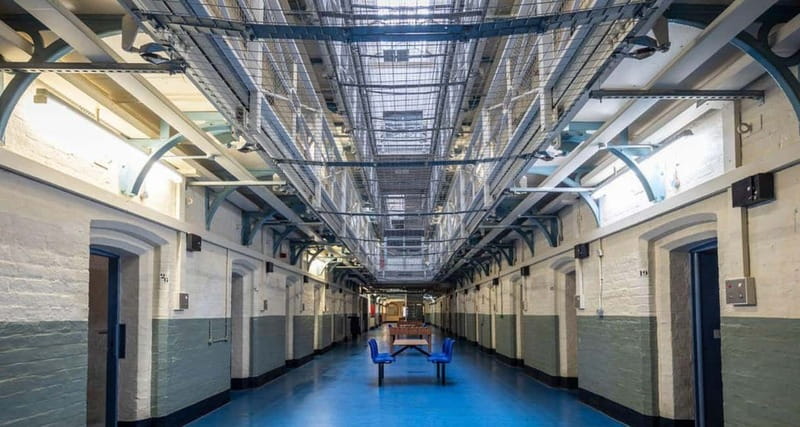
- Two Victorian wings to understand overcrowding and gender separation (A Wing and C Wing)
- Hands-on-style realism through key checkpoints like Reception and the B.O.S.S. chair
- Exercise yards with real rules and myths to think about, including the netting question
- Execution-focused rooms tied to names like Albert Pierrepoint and George Riley
- Museum + self-guided access so the guided part is only the start
Where Shrewsbury Prison education feels real, not staged
Shrewsbury Prison works because it is not just a set of rooms. It is a working layout of control, routine, and fear. You walk through the same kinds of spaces that shaped daily life, and that makes the story land fast.
The guided portion lasts about 1.5 hours, but the value comes from what you can do after. Your ticket includes a self-guided tour before or after the officer-led walk, plus access to the Shrewsbury Prison Museum. That means you get both structure and freedom, which is the best combo for places like this.
The tone is also important. This is not a scare-fest. The best tours keep the focus on how the system functioned, from the Georgian era through modern times, and the prison officer guides here are built for exactly that.
More museum visits in Britain:
- London: Tower of London and Crown Jewels Exhibition Ticket
★ 4.6 · 28,769 reviews - Liverpool: Liverpool Football Club Museum and Stadium Tour
★ 4.8 · 10,764 reviews - London: Chelsea Football Club Stadium and Museum Tour
★ 4.8 · 4,576 reviews
The gates, the visitor center, and what to do right away
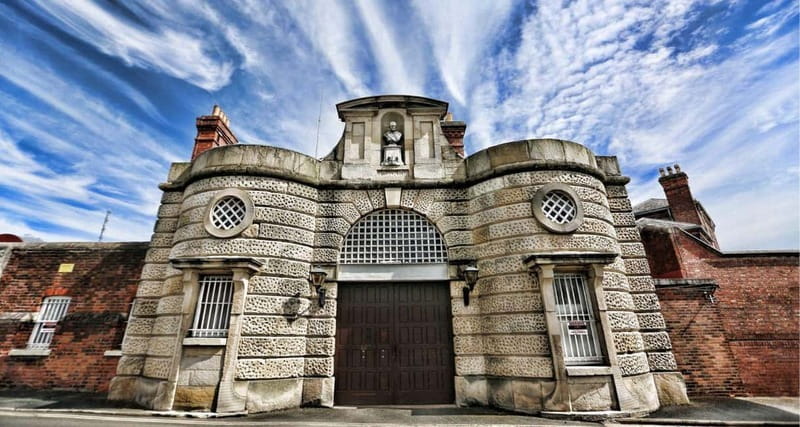
Your visit starts at the giant metal gates at the prison. Once you enter, look for the Welcome to Shrewsbury Prison sign on the left of the main entrance. Follow the signage to the visitor center, where a team member will point you to the start of your guided tour.
Why this matters: if you arrive late, you can lose the rhythm of the walk. And with a site like this, the first steps set your expectations for what you will see inside. You do not want your head to be catching up while your feet are already tired.
Also, plan to arrive with time to settle in. Many of the stops are close together, so you will be moving through corridors and stairs. When you’re calm at the start, the rest of the tour feels easier to follow.
Victorian wings, A Wing and C Wing, and why the numbers hit

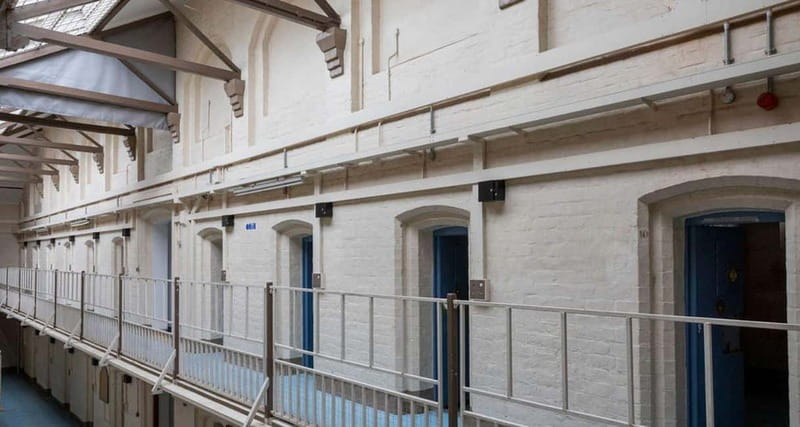
A big part of the experience is understanding the scale of confinement. You’ll explore two traditional Victorian prison wings that show how punishment was designed into architecture.
A Wing: built for 350 men, used far beyond that
In A Wing, there are 172 cells built to house 350 men. That mismatch is not just a statistic. It’s the point. It tells you that the system was built for control, not comfort, and that overcrowding wasn’t a rare accident. It was part of the structure.
As you stand in the corridor and look into cells, you can start to connect daily routine to space. You begin to see why silence, angles, and steel doors matter so much in a prison setting.
A few more Britain days worth comparing
- Magical London: Harry Potter Guided Walking Tour
★ 4.7 · 22,044 reviews - Liverpool: City & Beatles Tour with Live Guide & Live Music
★ 4.7 · 5,944 reviews - London: Emirates Stadium Entry Ticket and Audio Guide
★ 4.7 · 5,513 reviews - Oxford: University and City Walking Tour with Alumni Guide
★ 4.7 · 4,429 reviews
C Wing: 22 cells, women prisoners until 1921
Then comes C Wing, with 22 cells originally designed to house female prisoners until 1921. This gives you a different perspective on how punishment was organized by gender and policy.
The contrast between A Wing and C Wing helps you understand the prison as a system, not just a collection of stories. You’re seeing how the building reflected who the system expected to lock away, and how long those assumptions lasted.
The landing and Reception, where processing becomes routine

After the wings, you move into the spaces where the prison’s day-to-day machine turns.
You’ll get to wander the landing as officers did for 200 years, which is a startling way to frame time. It’s easy to think of old prisons as fixed in history, but standing on a landing like that makes it feel like a long, continuous workflow.
Reception and the B.O.S.S. chair
Reception is where prisoners entering or leaving the prison were processed. Here, you’ll see the B.O.S.S. chair, short for Body Orifice Security Scanner.
Even if you only take in a quick glance, this stop helps you grasp how “security” evolved from physical barriers to more specific procedures. The prison is still about preventing movement, but the tools reflect the era’s thinking.
Exercise yards: daily life, netting, and the small details with big meaning
Two exercise yards come next, each hemmed in by foreboding high prison walls. This is one of the best parts of the tour for understanding routine. Exercise yards are where people had time, but not freedom.
The guide also covers details that make you question what you might assume about prison life. For example, you’ll learn why netting was placed over the main exercise yard. You’ll also hear the question people always ask: did prisoners walk in a clockwise direction? The point isn’t the trivia itself. It’s the idea that even movement could be governed by rules.
The drawback of this section, if you’re sensitive to heavy topics, is that it shows how carefully even “fresh air” could be managed. The walls and the constraints turn ordinary outdoor time into something controlled and monitored.
Still, it’s worth it. This part makes the prison feel operational, not theatrical.
Healthcare, medications, and addiction programs behind the scenes

Next up is healthcare, one of the stops that keeps the tour from becoming only about punishment.
You’ll see where prisoners queued for their medication and learn where drug and alcohol addiction programs were administered. This is a reminder that the prison system did not only imprison people. It also treated people, managed harm, and handled behavior through both control and intervention.
From a value standpoint, I like this segment because it broadens the story. You get a fuller picture of how institutions worked, including the uncomfortable truth that medical needs could be folded into the same walls as discipline.
Visits: the only meeting space and the highest level of scrutiny
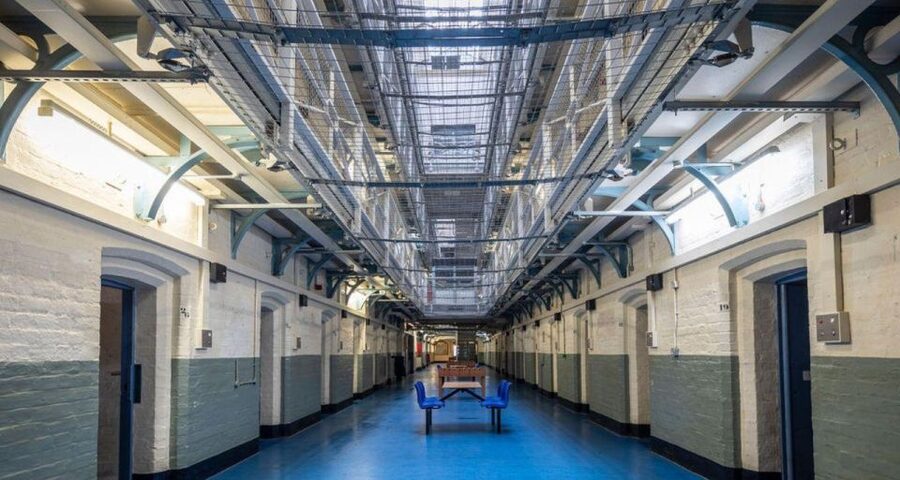
Then you’ll step into the visits area, described as the only place within the prison walls where prisoners can meet with people from outside the jail.
This stop matters because it highlights what contact looked like under surveillance. You’ll learn about the number of visits a prisoner was entitled to, how long visits lasted, and why this area had the highest level of security and scrutiny.
In practical terms, this is where you start seeing the emotional rules of the prison system. Visits were allowed, but access was limited, timed, and controlled. That helps you understand the prison as a world of permissions, not just punishments.
Executioner’s bedroom and the execution room, with Pierrepoint and Riley in focus

If the tour has a climax, it’s this section. It’s also the one where you should slow down and let the facts settle.
The executioner’s bedroom
You’ll visit the Executioner’s bedroom, a room where the executioner could spend the night before a condemned man was sent through the drop. The tour connects this to Albert Pierrepoint, who is said to have stayed in this very room.
This is one of the reasons the site feels haunting in an intellectual way, not just scary. It forces you to think about how routine the system was for people carrying out executions, and how the building supported that process.
The condemned man’s cell
You’ll also view where the condemned man had his cell, the place where he would have spent his last days before being hanged. This part is heavy, and the guide’s tone matters. The strongest tours here keep the focus on what the system did, not on sensational details.
The execution room and the last execution
Then comes the Execution Room, described as one of the darkest places in the prison due to its previous usage. You’ll hear that eight men lost their lives in this room after committing horrendous crimes.
The guide also covers George Riley, described as the last man executed at Shrewsbury Prison in 1961. You’ll learn about how executions happened, why public executions were outlawed, and why the death penalty was removed altogether in 1965. The story also explains what made Albert Pierrepoint the world’s most well-known executioner.
This is not just history trivia. It’s a moral timeline. You see how punishment shifted, and you understand that change did not happen overnight. It came through years of debate, policy changes, and growing public rejection of public death.
Museum access and self-guided time: how to get more out of your ticket
Your ticket does not end when the guided tour finishes. You get access to the Shrewsbury Prison Museum, which displays artifacts hidden within the prison walls from past inmates.
That museum access is a major value add because it gives you objects to attach to the rooms you saw. Buildings explain structure. Artifacts explain lives, even when details are hard to imagine.
And you have self-guided tour time before or after your guided walk. Use that wisely. After you’ve heard the story, you will notice more the second time through. You can go back to stops you cared about, and you can take time in the wings and corridors without feeling rushed.
If you only do the guided portion, you will still get a lot. But the included extra time is what helps you turn a tour into a memory you can talk about.
Price and timing: does $33 feel worth it
At $33 per person for a roughly 1.5-hour guided tour plus self-guided access and museum entry, the value is strong for a few reasons.
First, you are paying for interpretation, not just entry. A live guide led by a prison officer adds context that you would not get if you walked around alone. The reviews also highlight this, with guides such as Alex, Dan, Michelle, Malcolm, Sarah, and Graham repeatedly praised for engaging delivery and strong storytelling.
Second, the museum and self-guided time mean you can spend more time on site without paying extra. That matters because prison sites can feel compressed in a short visit. Here, your ticket gives you an option to slow down.
Third, the walk is long enough to be meaningful, but short enough to be manageable. Some people do say they wanted it to last longer, and that they felt the guide was slightly rushed in trying to cover everything. Still, the time generally flies, and many people found 90 minutes about right once you’re inside.
So, is $33 fair? For what you get, yes. It’s more like a guided education experience with add-on access, not a quick attraction.
The practical stuff: comfort, pacing, and who should go
This tour has a standing and walking component. Reviews mention it can be quite cold behind thick stone walls, even on warmer days. Bring warm layers, and wear shoes that work well for floors that are not designed for tourists in soft footwear.
Pacing is another practical consideration. Most feedback says the time went fast, helped by humor and active audience engagement. A few people felt the guide could have slowed down or that some stories were packed in too quickly. That doesn’t ruin the experience, but it’s good to know what to expect if you like long pauses and lots of questions.
Who will enjoy this most?
- You like history that is factual and place-based.
- You want a guided explanation, not just plaques.
- Your group includes teenagers or adults who enjoy strong storytelling, and you’re okay with serious topics.
- You prefer structured time, with a chance to go back independently after.
This is also a good stop as part of a wider UK trip where you want one intense day activity. It’s not just sightseeing. It’s an education tour in a real setting.
Should you book Shrewsbury Prison now or skip it?
Book it if you want more than a walk-through. The combination of prison officer leadership, Victorian wing access, and execution-room history gives you a clear, guided understanding of how a prison worked across eras. Add in the museum artifacts and the built-in self-guided time, and you get real value for your money.
Skip it only if you know you will struggle with uncomfortable subjects like imprisonment and executions, or if you need a lot of seating and slow pacing. Also, if you hate standing for long periods, plan to dress for comfort and take your time during the self-guided part.
For most people, this is a strong booking. You’ll leave with a sharper sense of how punishment was designed, enforced, and changed over time, all within walls that still show the system’s logic.
FAQ
How long is the guided tour?
The guided tour runs for about 1.5 hours.
Is self-guided access included with the ticket?
Yes. Your ticket includes access for a self-guided tour of Shrewsbury Prison, either before or after your guided tour.
Does the ticket include the museum?
Yes. Ticket access includes the Shrewsbury Prison Museum, which displays artifacts hidden within the prison walls from past inmates.
Is there an onsite restaurant during the visit?
Yes. There is an onsite restaurant offering hot and cold food and drinks, plus homemade cakes and bakes.
Where do I meet for the guided tour?
After entering through the giant metal gates, look for the Welcome to Shrewsbury Prison sign on the left of the main entrance. Follow the signage to the visitor center, where staff will show you where the guided tour begins.
What language is the live guide?
The live tour guide speaks English.
Is the experience wheelchair accessible?
Yes, the tour is listed as wheelchair accessible.
Can I cancel for a full refund?
Yes. Free cancellation is available up to 24 hours in advance for a full refund.
Newly listed near Britain
- Yorkshire Wildlife Park: Entry Ticket★ 4.5 · 161 reviews
- Dunstable: Whipsnade Zoo Full-Day Entrance Ticket★ 4.6 · 153 reviews
- Royal Horticultural Society: Harlow Carr Garden Ticket★ 4.7 · 14 reviews
- From Edinburgh: 5 Day Best of Northern England Tour★ 5.0 · 5 reviews
- Yorkshire: All Creatures Great and Small Mini-Coach Tour★ 4.8 · 25 reviews
- York: Wizard Walk of York Tour – Magic, Comedy & Family Fun★ 4.8 · 57 reviews
- York: Private Horse-Drawn Carriage Ride and Afternoon Tea★ 5.0 · 3 reviews
- York’s Snickelways Story Walking Tour★ 4.9 · 169 reviews
Museums, compared.

Tower of London and Crown Jewels Exhibition Ticket
Read our review →
Liverpool Football Club Museum and Stadium Tour
Read our review →
Chelsea Football Club Stadium and Museum Tour
Read our review →


British Museum Guided Tour with Entrance Tickets
Read our review →Browse the lists this tour appears in