
Review · HISTORICAL TOURS
St Andrews: Town, Golf, and Old Course History Tour
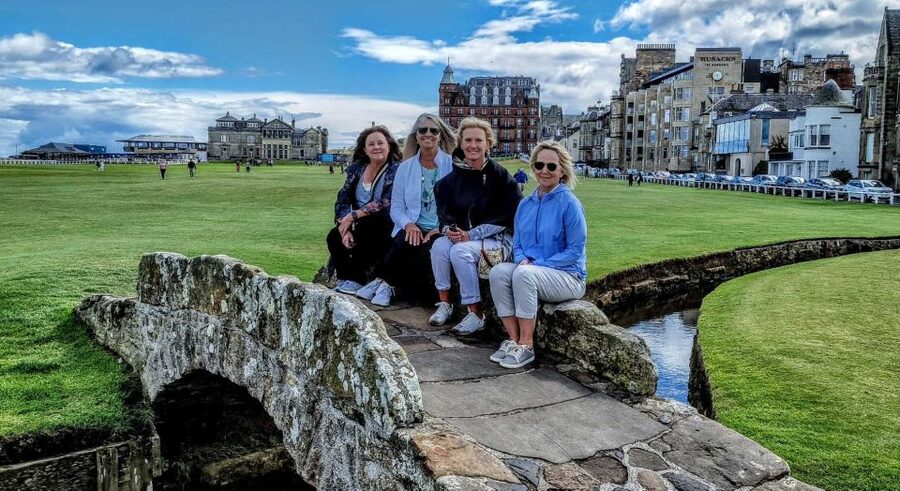
Golf history starts right in St Andrews. I like how this tour links the University and Cathedral ruins to how golf grew in town, and I also love the Swilkan Bridge photo stop at the end. One thing to consider is that it is a lot of walking, and the guide needs clear, fluent English, so speaking slowly or translating does not work.
You’ll meet your guide outside T-Squared Social on North Street, then head straight into the story. In the hands of guides such as Richard, the pace tends to stay energetic, and the route is built for both golfers and non-golfers who still want the meaning behind the landmarks.
In This Review
- Key Highlights You Should Not Miss
- Entering The Story: Why This St Andrews Golf History Tour Works
- Meeting Point on North Street and the Start That Actually Matters
- St Salvator’s College, the Old University World, and Why It’s Part of Golf
- Cathedral Ruins and the Golf Graves You Can’t Ignore
- Bishop’s Palace Ruins: Catholic Power in Stone
- Walking the Scores: University Buildings, Victorian Charm, and Royal Footprints
- Heading Toward the Old Course: Open Championship Roots and Links Logic
- Old Course Stops on the 18th and 1st: What You Actually See
- Castle Pass-By Views and the Photo Moment You’ll Want to Plan For
- Swilkan Bridge Photos: Your Finish Line and a Great Place to Reflect
- Price and Pacing: What $27 Buys You, and What It Doesn’t
- Who This Tour Suits Best in St Andrews
- Should You Book This St Andrews Golf History Tour?
- FAQ
- How long is the St Andrews Town, Golf, and Old Course History Tour?
- What does the tour cost?
- Where do I meet the guide?
- What language is the tour conducted in?
- Where does the tour finish?
- Is there time for photos on Swilkan Bridge?
- Is the tour suitable for people with mobility impairments or wheelchair users?
- Can I bring luggage or use a luggage drop?
- Do I need to watch for golf balls during the tour?
- What should I bring for the walk?
Key Highlights You Should Not Miss

- St Andrews’ golf story, anchored in real places from the early Open Championship to the Links having 18 holes
- The University route, including St Salvator’s College quadrangle and the chapel area tied to student life
- Cathedral ruins and famed graves, including Old and Young Tom Morris, Allan Robertson, and Jamie Anderson
- Bishop’s Palace ruins, a quick but clear picture of former Catholic power in Scotland
- Old Course walking stops, including time near the 18th green and the 1st tee and fairway
- Swilkan Bridge photos, timed so you get your picture even outside tournament days
Entering The Story: Why This St Andrews Golf History Tour Works
St Andrews can feel like two places at once. You have the town, the student energy, and the coastal views. Then you have golf as a living thread that connects almost everything, from stone ruins to today’s famous tee shots.
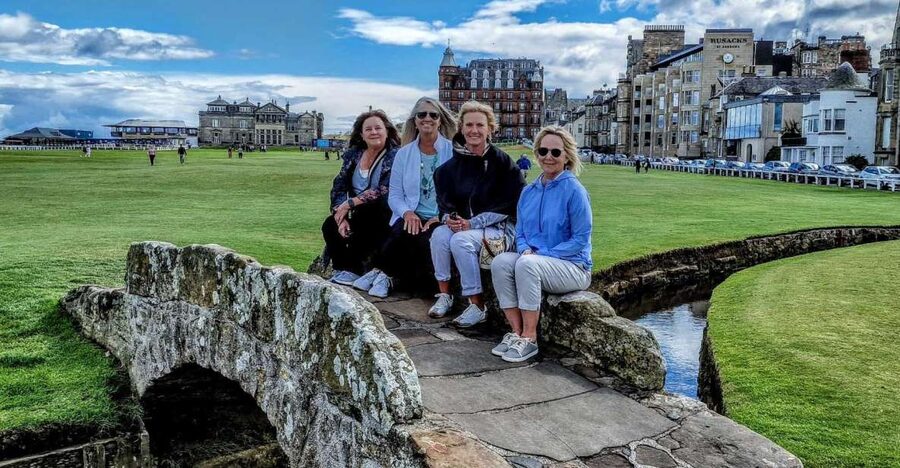
This tour is built around that connection. You’ll walk the main historic spine of the town, hit the Cathedral ruins area with golfing memorials, and end on the Old Course side with a proper photo moment at Swilkan Bridge. It’s designed for golfers who want the deeper context, but it also works for non-golfers because the guide keeps explaining why the golf myths became real local history.
At $27 for 105 minutes, the value is in the format. You’re paying for a historian-style guide experience, not just a sightseeing stroll. And because you’re moving through the key sites on foot, you get context you’d miss if you simply chased photos on your own.
More history walks in St Andrews:
- St Andrews: Golf Origins and Old Course History Tour
★ 4.7 · 322 reviews - London: Historic Pubs of Central London Walking Tour
★ 4.9 · 1,065 reviews - Portsmouth: Historic Dockyard Ultimate Explorer Ticket
★ 4.8 · 1,052 reviews
Meeting Point on North Street and the Start That Actually Matters
You meet outside T-Squared Social, 117 North St, St Andrews KY16 9AD, at your assigned time. The tour runs on schedule. If you’re late even by a minute, you won’t join, and you’ll have missed it.
That strict timing is not meant to be harsh, it’s meant to keep the pacing and the route flow. This matters here because the tour is compact, and you’re covering a lot of ground in a short window.
So do this before you go:
- Plan to arrive early, and give yourself a buffer for finding the exact entrance.
- Wear your comfortable shoes immediately, not after you meet your guide.
- If English is not your strongest skill, this one may be stressful, because fluent English is required.
St Salvator’s College, the Old University World, and Why It’s Part of Golf
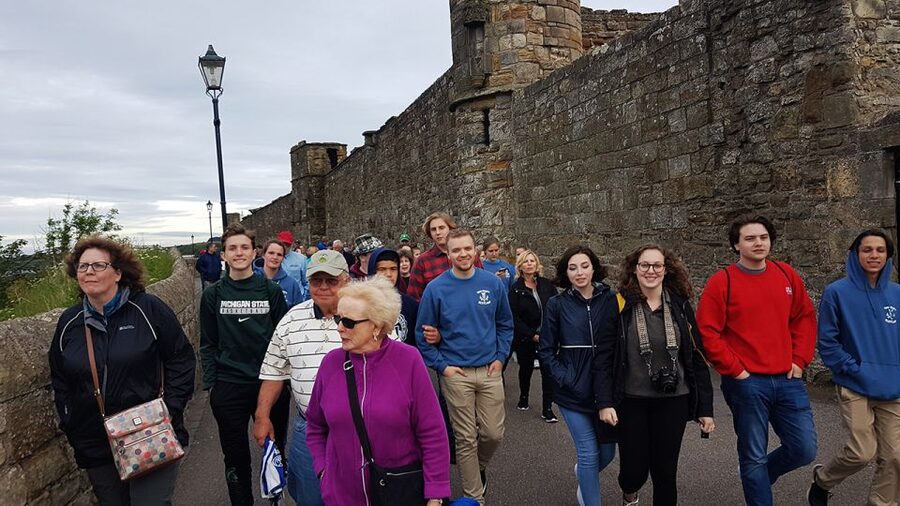
The first big “non-golf” hook is the University of St Andrews. Even if you care only about golf, you’ll probably leave seeing the town differently once you understand how the University shaped local life.
On this tour, you’ll head toward St Salvator’s College, including the quadrangle area. You’ll also pass through the chapel zone as you move through the University side. The guide’s goal here is to connect place to people, not just point at buildings.
It also gives you a nice change of rhythm. After the town walk, the University stops add calm, architecture, and clear historical framing. If you like travel that makes you understand the “why,” you’ll appreciate how the guide threads this in rather than treating it as a separate section.
Cathedral Ruins and the Golf Graves You Can’t Ignore
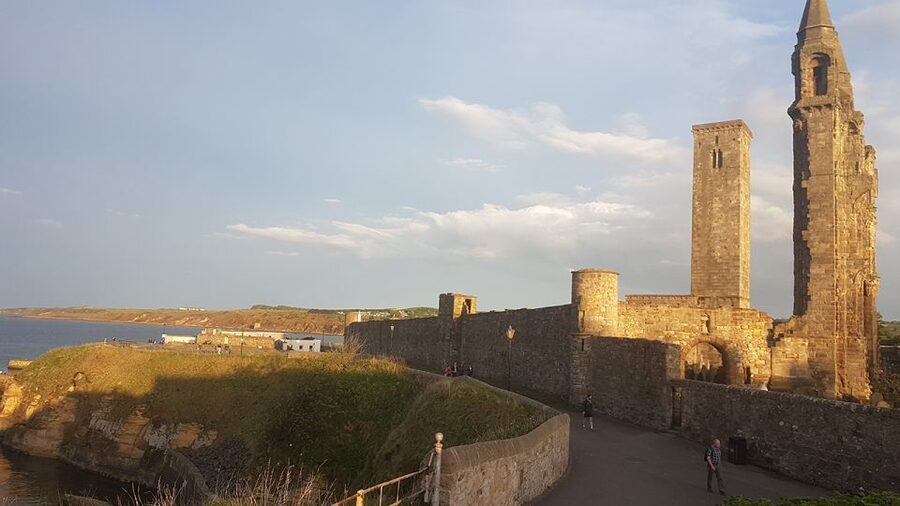
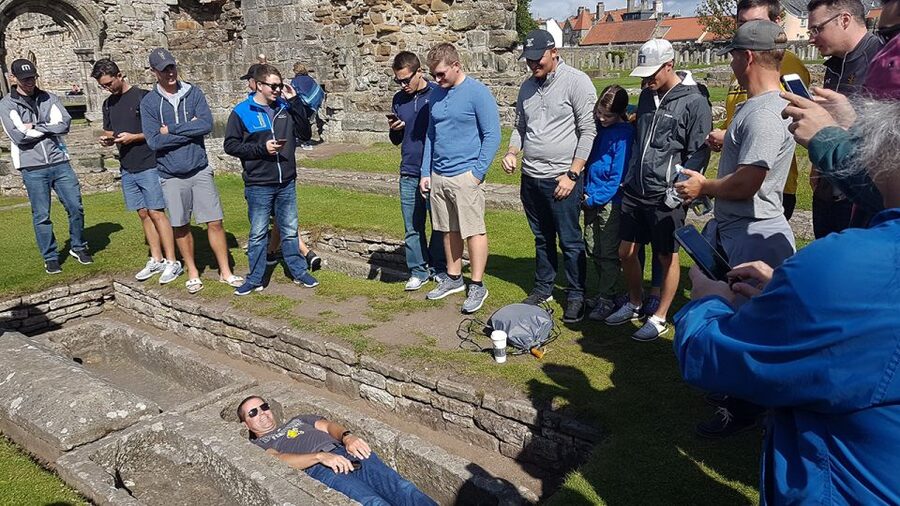
The Cathedral ruins area is the emotional center of the tour. You’ll get to see the ruins and learn how the grounds hold noted graves of golfing pioneers. The tour focuses on the number and the significance of the memorials in this area, including that 124 noted golfers are buried here.
This is one of the stops where the guide’s voice and pacing really matter. If you’re the kind of person who likes to stand still and read everything, you may feel the tour keeps moving. But if you want the stories linked to the names, this is where the tour shines.
You’ll pay respects to golfing legends including Old and Young Tom Morris, Allan Robertson, and Jamie Anderson. Even if you don’t know much golf history now, the guide explains who mattered and why St Andrews became the center of the sport’s early identity.
A few more St Andrews days worth comparing
- St Andrews: Top Sights Guided Walking Tour
★ 4.8 · 331 reviews - Private St Andrews: Home of Golf Old Course Tour
★ 4.9 · 113 reviews - From Edinburgh: St. Andrews Day Trip for Small Groups(1-4)
★ 4.9 · 14 reviews
Bishop’s Palace Ruins: Catholic Power in Stone
Along the way you’ll also see the ruins of the Bishop’s Palace. This is a symbolic stop, but it’s useful because it adds depth to the Cathedral area.
The guide explains it as a prominent sign of former Catholic wealth and power in Scotland. It’s not a long stop, but it helps you understand the layers under St Andrews’ golf story. Golf did not grow in a vacuum. Town history, religion, and education all shaped the environment where sport became tradition.
Walking the Scores: University Buildings, Victorian Charm, and Royal Footprints
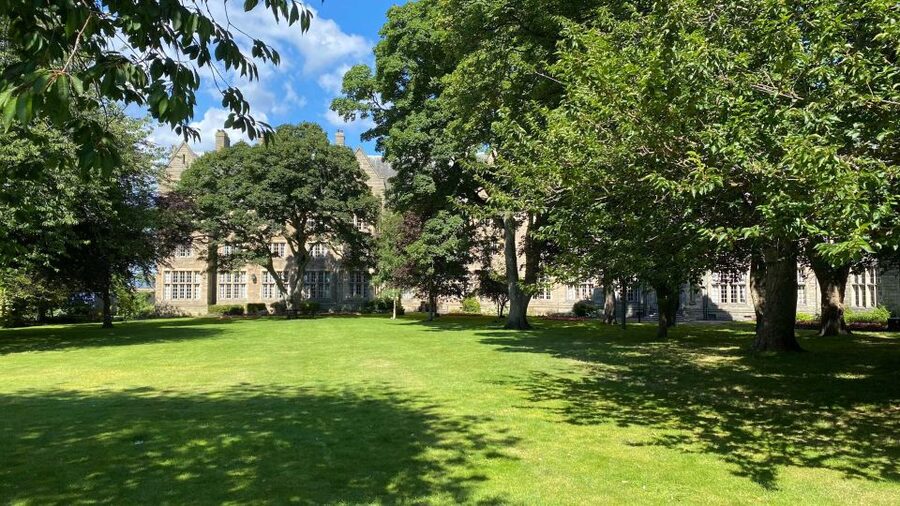
After the Cathedral ruins area, you’ll walk along the Scores, the classic St Andrews promenade that connects the city’s historic pulse. This stretch is a practical gift. You’re not stuck inside only the highlights. You see the architecture around you, including beautiful Victorian buildings tied to the University.
You’ll also hear about campus buildings such as the Principals House, and you’ll learn about the residence where Prince William and Kate spent their first year as students. In addition, the guide ties in pop culture and modern media references, including that The Crown came to town.
That mix is exactly why this tour works for mixed groups. Golf fans get the sport storyline. Non-golfers get the “royal students” angle, the University context, and the plain human interest details that make history feel current.
Heading Toward the Old Course: Open Championship Roots and Links Logic
When you move toward the Old Course, the tour pivots from town history to golf mechanics and tradition. You’ll hear about the early development of the Open Championship and how golf would develop in St Andrews to become known as the Home of Golf.
Then comes a key concept you’re likely to carry home: the Links course layout did not happen by accident. The guide explains how the game’s quirks shaped golf history, including details about why the Links came to have 18 holes.
Even if you have never played golf, this is where the tour stops feeling like trivia and starts feeling like explanation. You begin to understand why St Andrews is different, not just famous.
Old Course Stops on the 18th and 1st: What You Actually See
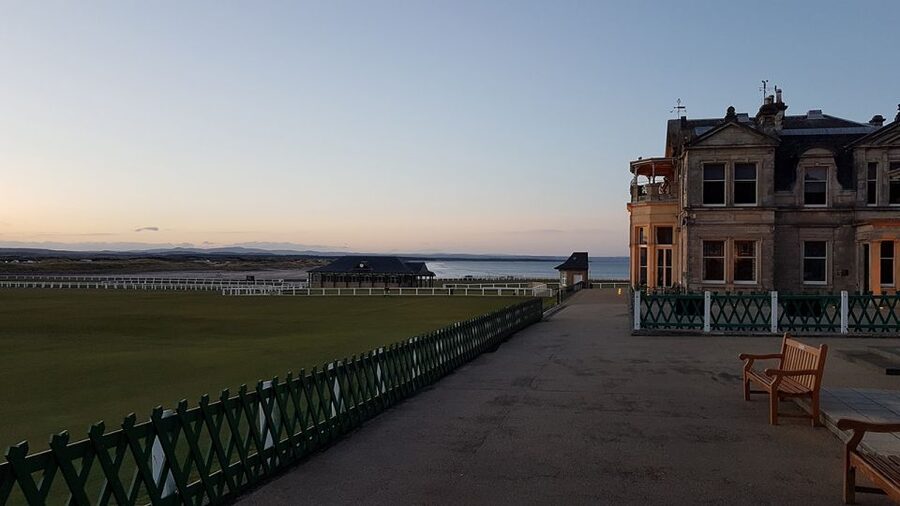
On the Old Course side, you’ll walk by the 18th green and the 1st tee and first fairway. The tour also includes iconic buildings overlooking the course, so you’re not just walking, you’re getting framed views.
There’s one important practical note. You’ll walk by and across the 1st/18th fairway on a golf course. You do this at your own risk, and you must keep an eye out for golf balls during live play.
If you’re traveling with kids, this matters even more, because this is not a “wander at your own pace” kind of moment. You need awareness, especially if players are active nearby.
Also note what the tour does not offer: it is not a slow, sitting-heavy museum visit. One review-based theme you’ll want to respect is that some people wish they had more time in the graveyard or on the course itself. The tour is compact by design, so you get context fast, not a long, lingering look.
Castle Pass-By Views and the Photo Moment You’ll Want to Plan For
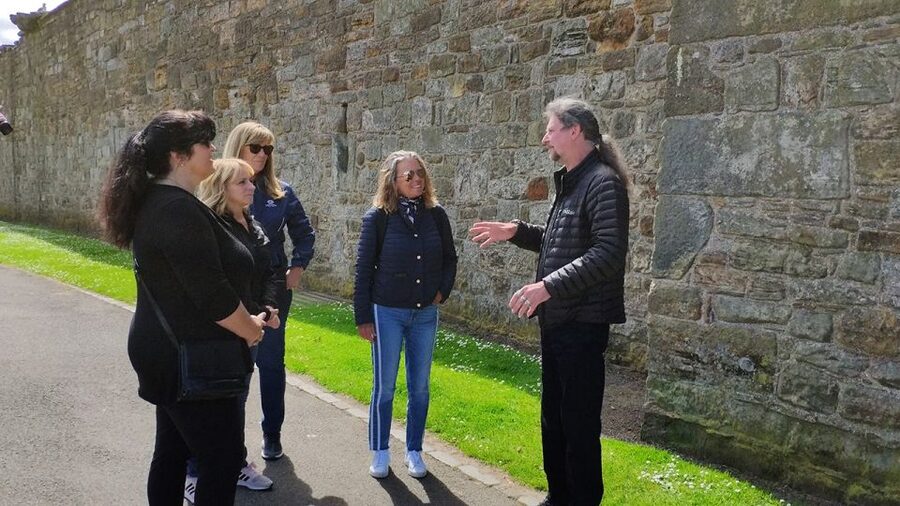
You’ll also pass St Andrews Castle areas on the route. The tour includes a photo stop and scenic views on the way. This is a good break before the Old Course zone because it gives you visual variety, even if you’re focused on golf.
Then the big finale is coming.
Swilkan Bridge Photos: Your Finish Line and a Great Place to Reflect
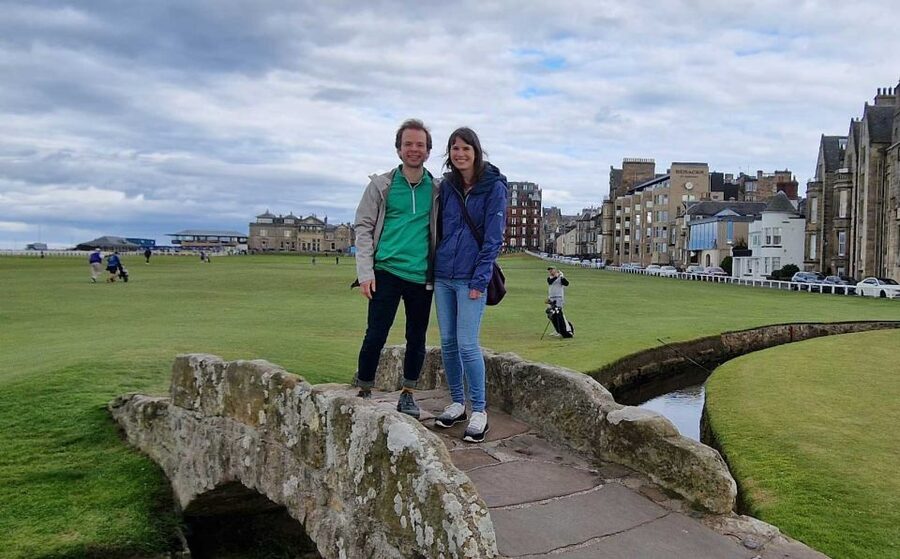
The tour finishes at Swilkan Bridge, where you can have your photo taken. This is one of those moments that feels symbolic even if you’re not a golfer, because the bridge is so strongly tied to the image of St Andrews golf.
Important detail: the tour finish excludes tournament days. So if your travel overlaps with major events, you should double-check timing when you book.
After the tour, you can head to the Jigger Inn or the Old Course Hotel to relax with the kind of views that make it hard to stop thinking about what you just learned. This is also a smart move if the wind is up, because coastal St Andrews can feel brisk even when the sun is out.
And if you care about photos, you’re in the right place. Multiple guide experiences in the material point to guides being strong photographers, so you’re not just taking a random phone selfie at the end.
Price and Pacing: What $27 Buys You, and What It Doesn’t
For $27 per person over 105 minutes, you’re paying for three things:
1) A professional historian guide who connects town, University, and golf into one story
2) Time in the key historic zones without needing to plan a self-guided route
3) A built-in finale at Swilkan Bridge photos
What you are not buying:
- A long, slow tour with tons of free time in each site
- A wheelchair-friendly route
- A way to keep your own pace if you need frequent stops
Also keep in mind the guide experience can vary by speaking speed and group energy. One consideration from the experience details is that some visitors want more time to hear everything clearly, so if you’re sensitive to fast speaking or noisy streets, you might want to bring this expectation into the day.
Finally, the English requirement is real. Fluent English is essential, and speaking slowly or translating does not work. If you’re depending on someone else to interpret, this tour may be a poor fit.
Who This Tour Suits Best in St Andrews
This is a great match if you:
- Love golf history but also want the town and University context
- Prefer walking tours that tell you the story behind the landmarks
- Like a guide who keeps things moving and uses clear explanations
It may not be the right match if you:
- Need step-free access, because it is not suitable for wheelchair users or people with mobility impairments
- Want minimal walking, because it is built around a multi-stop walk
- Are dealing with illness, since it is listed as not suitable for people with a cold
- Rely on slower pacing or heavy translation, because fluent English is required
It’s also not for everyone with “stuff.” There is no luggage drop, and you should not expect a place to stash things like scooters or golf clubs during the tour.
Should You Book This St Andrews Golf History Tour?
Book it if you want the fastest high-value way to understand why St Andrews became the Home of Golf. You’ll get major locations in a short time: the University area, the Cathedral ruins with iconic golf graves, and Old Course stops that put you right where the sport’s story made itself real.
Skip it if you know you want long pauses, quiet graveyard time, or extra time on the course itself. This tour is designed for a focused arc and a guided narrative, not for lingering at every stop.
If you’re aiming to hit St Andrews highlights in one compact block, this is one of the smarter ways to do it, especially for mixed groups where golfers and non-golfers both want something meaningful.
FAQ
How long is the St Andrews Town, Golf, and Old Course History Tour?
The tour lasts 105 minutes.
What does the tour cost?
It costs $27 per person.
Where do I meet the guide?
Meet your guide outside T-Squared Social, 117 North St, St Andrews, KY16 9AD.
What language is the tour conducted in?
The tour is in English, and fluent English is essential.
Where does the tour finish?
The tour finishes at Swilkan Bridge, where you can take photos.
Is there time for photos on Swilkan Bridge?
Yes. The tour includes a Swilkan Bridge photo moment (with the note that tournament days are excluded).
Is the tour suitable for people with mobility impairments or wheelchair users?
No. It is listed as not suitable for wheelchair users and people with mobility impairments.
Can I bring luggage or use a luggage drop?
No. There is no luggage drop during the tour.
Do I need to watch for golf balls during the tour?
Yes. You will walk by and across the 1st/18th fairway on a golf course, so you must keep an eye out for golf balls during live play.
What should I bring for the walk?
Bring comfortable shoes and weather-appropriate clothing.
Newly listed near St Andrews
- Guernsey: Half-Day Island Shore Excursion Tour★ 3.8 · 10 reviews
- From Edinburgh: St. Andrews Day Trip for Small Groups(1-4)★ 4.9 · 14 reviews
- From Edinburgh: St. Andrews & Fife Luxury Private Day Tour★ 5.0 · 3 reviews
- Private St Andrews: Home of Golf Old Course Tour★ 4.9 · 113 reviews
- St Andrews: Golf Origins and Old Course History Tour★ 4.7 · 322 reviews
- St Andrews: Top Sights Guided Walking Tour★ 4.8 · 331 reviews
Historical Tours, compared.




Browse the lists this tour appears in