
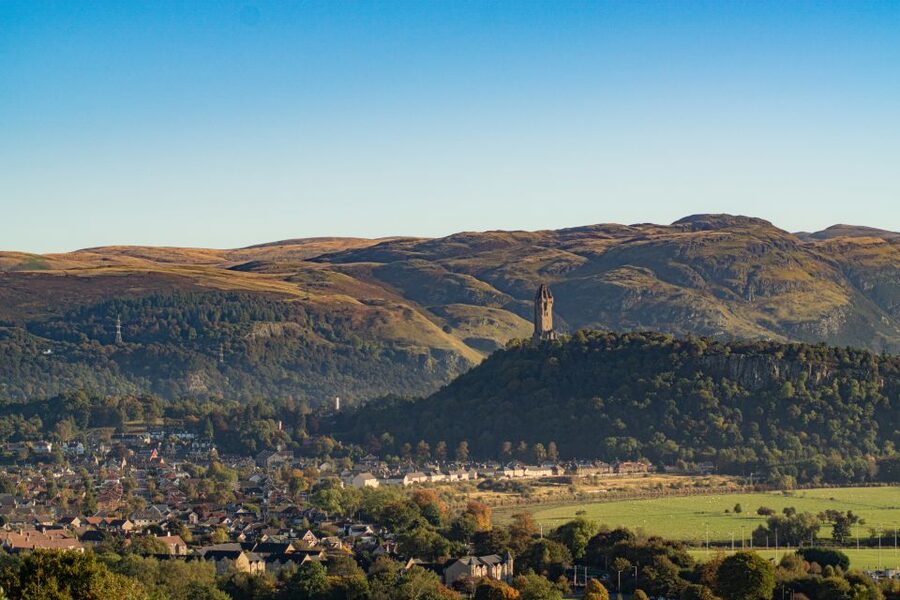
Review · HISTORICAL TOURS
Stirling: Historical Walking Tour in Spanish
Stirling packs a lot into ninety minutes. This Spanish tour takes you along the medieval wall and through the streets where different rulers shaped Scotland, from independence-era conflict to the coronation story at Holy Rude. I love the way the route ties landmarks to real events, and I like that the live Spanish guide brings the walk to life with anecdotes. One thing to consider: if you prefer slower narration, you may find the guide can move along quickly.
If you want a quick sense of why Stirling is called the Door to the Highlands, this is a smart choice. You’ll explore one of Scotland’s most important strongholds, walk King Street while hearing about poets and key buildings, and learn how Stirling mattered in the 14th century wars of independence between Scotland and England. I also love the balance of big political moments with everyday, human details.
The only “watch out” is that it runs in all weather except extreme conditions, and the route is adapted to reduce rain or snow. Since it is a walking tour, comfortable shoes matter even when the streets are short.
In This Review
- Key highlights you should care about
- Stirling in 90 minutes: what this Spanish walk really covers
- Meeting inside Caffe Nero and getting oriented fast
- King Street and the poet-to-politics connections
- The medieval wall route: seeing how Stirling was defended
- Mercat Cross, Tollbooth, and the city’s civic heartbeat
- The highest part of town: old market ground and executions
- Witness the Old Jail: Britain’s worst in the 19th century
- The Pyramid Star and the quieter landmarks that matter
- Holy Rude Church and King James VI’s coronation connection
- Small group size, Spanish pacing, and how to get the most out of it
- Value check: is $24 worth 1.5 hours with a live Spanish guide?
- Who should book this tour (and who should skip it)
- Should you book this Stirling Historical Walking Tour in Spanish?
- FAQ
- How long is the Stirling historical walking tour?
- What does the tour cost?
- What language is the tour guide speaking?
- Where do I meet the tour?
- Is the tour wheelchair accessible?
- What should I know about weather?
Key highlights you should care about

- Medieval wall walk that shows how Stirling was fortified through the ages
- Wars of independence context in the 14th century, where Stirling mattered to Scotland and England
- The Old Jail stop linked to Britain’s worst prison of the 19th century
- Church of the Holy Rude and the coronation connection to King James VI
- A small group of up to 10 so Spanish questions and pace feel manageable
Stirling in 90 minutes: what this Spanish walk really covers

This tour is short by design, 1.5 hours, and you’re moving through the historic core on foot. The goal is not to “tick off everything in Stirling.” It’s to help you understand how power worked here, from defense and battles to punishment and ceremony.
You start with the idea that whoever controlled Stirling controlled Scotland. Then the guide connects that to physical places you can still see: walls, civic markers, prison buildings, and the church where a major royal moment took place. You finish with a clearer picture of Stirling’s role, not just a list of monuments.
Because the group is limited to 10 participants and the format is a live guide, you’ll likely feel more like you’re walking with a local teacher than being rushed through a script. That small-group size is one of the best reasons to pick this option if you want history that explains itself.
More walking tours in Stirling:
- Stirling: Daily Guided Walking Tour with a Local Guide
★ 4.7 · 108 reviews - Stirling: Private Old Town & Castle Walking Tour
★ 4.9 · 17 reviews - Magical London: Harry Potter Guided Walking Tour
★ 4.7 · 22,044 reviews
Meeting inside Caffe Nero and getting oriented fast
Your meeting point is inside the coffee shop Caffe Nero. Staff will be there to check you in, so plan to arrive at least 15 minutes early. This matters because the tour starts with orientation, not waiting around.
Once you get going, the guide’s job is to give you bearings fast. You’ll begin in central Stirling and gradually climb toward the older, higher parts of town. Even if you’ve never been here before, you should start to recognize how the city is laid out once you hit King Street and the medieval wall area.
Practical tip: if your Spanish is “good enough, but not perfect,” don’t worry. The best part of this tour is that place-based explanations help you follow even when a few details escape you. And since it is a live guide, you can pick up meaning through pace, tone, and repetition.
King Street and the poet-to-politics connections
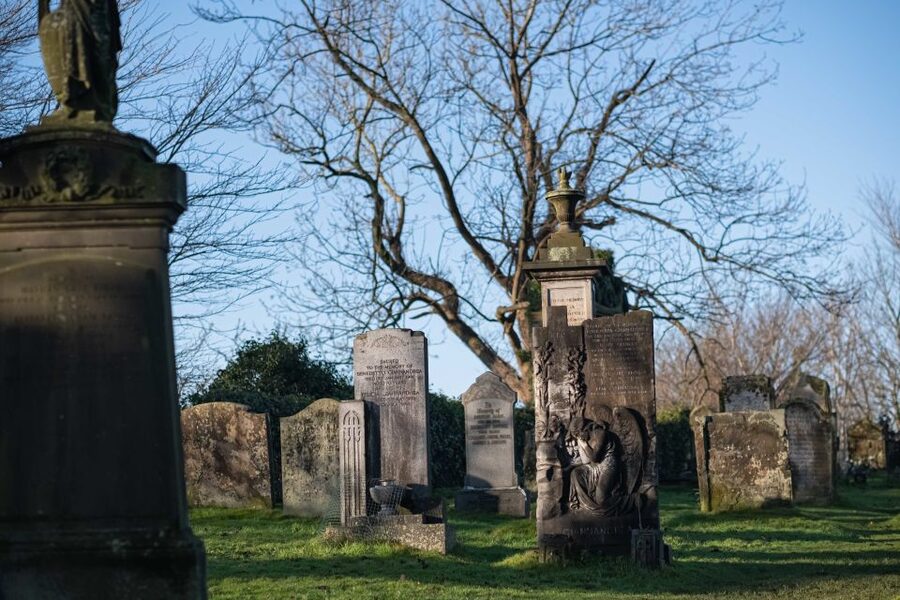
One of the first streets you walk is King Street, and it’s more than a name on a map. You’ll hear about famous poets connected to the city and about the buildings that made King Street important. The guide uses these cultural references as a bridge to the deeper story of Stirling’s power.
This is where the tour becomes enjoyable even if you are not a hard-core medieval-history person. Poetry and civic buildings sound different from wars and jails, but they all point to one thing: Stirling was a place where public life mattered, and where ruling forces shaped daily space.
Expect to pause occasionally, enough to take photos and absorb what the guide is pointing out. If you like your history grounded in street-level reality, this stretch is the right kind of storytelling.
The medieval wall route: seeing how Stirling was defended

Scotland had 11 fortified cities at different points in history, and Stirling was one of them. On this tour, you walk along the medieval wall, and the experience is meant to make those fortifications feel real rather than abstract.
You’re exploring what made Stirling a major stronghold, including the idea that control of this area influenced Scotland’s fate. The wall segment helps you understand why a city like this mattered strategically, because you can literally see how built space supports defense.
One small drawback of any walking-wall tour is that weather changes how fast you’ll want to move. The tour runs in all weather except extreme conditions, and the route is adapted to minimize exposure to rain or snow. So if you’re the type who hates being cold and wet, bring a light rain layer, just in case.
More history walks in Stirling:
- London: Historic Pubs of Central London Walking Tour
★ 4.9 · 1,065 reviews - Portsmouth: Historic Dockyard Ultimate Explorer Ticket
★ 4.8 · 1,052 reviews - York: Witches and History Old Town Walking Tour
★ 4.7 · 928 reviews - London: Soho Music and Historic Pubs Walking Tour
★ 4.9 · 836 reviews
Mercat Cross, Tollbooth, and the city’s civic heartbeat

As you continue through the historic center, you’ll come across civic and public-history markers, including Mercat Cross and the Tollbooth. These are the kinds of locations where a town shows its rules and routines in stone and architecture.
On this tour, these stops are not treated as trivia. They’re used to explain how authority worked in Stirling, from official announcements to the everyday presence of law and governance. This makes the walk feel cohesive, even when the topics shift from politics to punishment to ceremony.
You’ll also encounter other named stops as the route goes along, including the John Cowane Hospital and the Old Cemetery. Even if you can’t spend long at each place, you’ll understand their relevance as part of the same story: a city that carried weight in Scotland’s national events and in its local community life.
The highest part of town: old market ground and executions
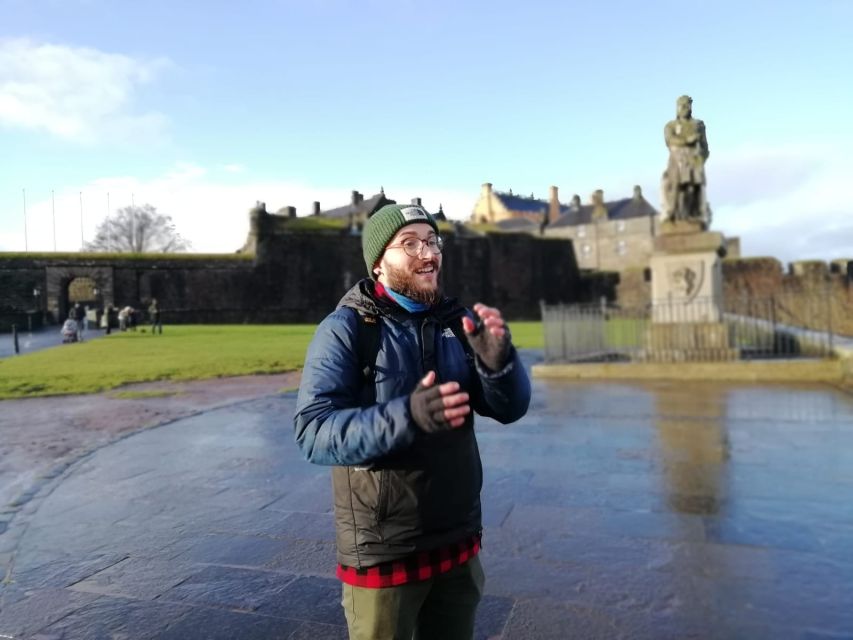
The tour climbs to the highest part of the city, where the old medieval market was located. This is the kind of stop that changes how you look at a place, because you realize that public life and public punishment shared the same civic geography.
The guide also points out the location where public executions were held. Hearing that in context, while you’re standing in the area tied to that reality, can be unsettling. It’s also what makes the tour more than a pleasant stroll.
If you prefer tours that stay strictly upbeat, this is the section where the mood turns darker. But it’s also where you learn something important about how historical power looked on the street level.
Witness the Old Jail: Britain’s worst in the 19th century

The Old Jail stop is one of the most memorable parts of the tour. Stirling, in the 19th century, owned Britain’s worst jail, described as wet and nasty, packed with prisoners.
The guide explains that prisoners included men, women, and children, spanning minor offenders through adults. It also covers the variety of cases, including murderers, people awaiting trial, and debtors. That range helps you see the jail as a system, not just a single crime story.
From a value perspective, this stop is worth the price on its own. Jails are hard to understand through photos or museum captions, but on a walking tour you can connect the building to the lived reality the guide describes. You leave with a clearer sense of what “justice” meant back then, especially in terms of who got caught in the machine.
If you’re sensitive to heavy topics, consider that this portion goes there directly. It is still historical and factual, but it can feel intense for some people.
The Pyramid Star and the quieter landmarks that matter
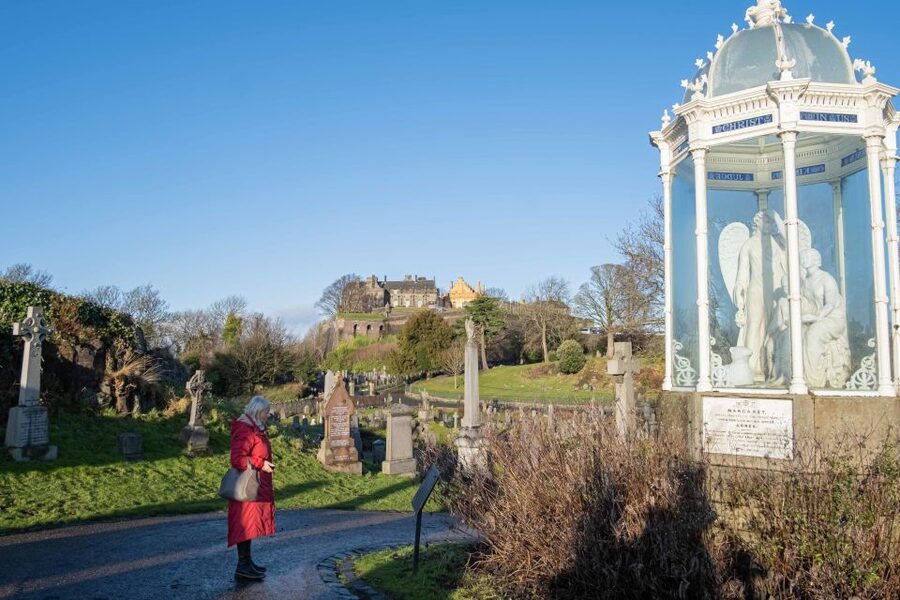
Along the route you’ll also encounter Pyramid Star. The name suggests a specific landmark, and the tour uses it as part of the overall walk through Stirling’s layers.
I appreciate stops like this because they remind you that historic cities are not just castles and churches. They’re also filled with smaller features that help stitch together the route. Even when you can’t linger, these landmarks keep you oriented and help the guide connect what comes before and after.
Holy Rude Church and King James VI’s coronation connection
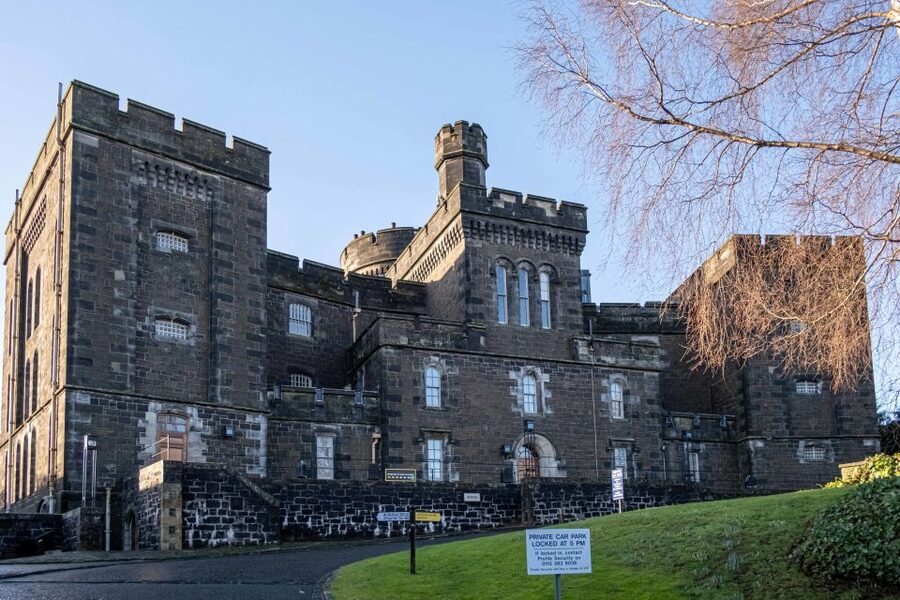
The final major highlight is the Church of the Holy Rude. This church hosted the coronation of King James VI, the son of Mary Stuart. The tour also emphasizes that this church, alongside Westminster Abbey, is the only church still in use in Great Britain to have seen such events.
That detail matters, because it puts Stirling into a larger national story. You’re not only looking at a beautiful church, you’re understanding why it’s rare in terms of royal ceremonial history.
If you like church visits that feel connected to real moments rather than general architecture, you’ll likely enjoy this stop. The guide connects the political history of Scotland and the personal story of the royal line to a place you can still visit.
Even in a short 1.5-hour tour, Holy Rude gives you a satisfying end point because it’s both specific and powerful. The walk closes on a moment of legitimacy and power, after you’ve already seen defense, punishment, and civic life.
Small group size, Spanish pacing, and how to get the most out of it
This tour is designed for a small group, limited to 10 participants. That size helps for one simple reason: the guide can keep the pace comfortable and still include everyone. It also makes it easier to ask questions if something doesn’t make sense in Spanish.
About Spanish pacing, one practical note from real experience: some visitors have felt the guide speaks quickly. If Spanish is not your strongest language, you can still follow, but consider arriving ready to listen closely. Bring a notepad for key names like King James VI and Mary Stuart, so you can remember the timeline after the walk.
The tour runs in all weather except extreme conditions, and the route is adjusted to reduce time in rain or snow. That means you should dress for street walking. Layers are your friend, especially if Stirling feels chilly when clouds roll in.
Value check: is $24 worth 1.5 hours with a live Spanish guide?
At $24 per person for a 1.5-hour live guided walk, the value is solid, especially because it’s a small group capped at 10. You’re paying for guided context, not just access to outdoor sights.
What makes this a good deal is the mix of high-impact topics in one compact route: a major stronghold setting, the medieval wall, wars of independence connections, the Old Jail story tied to Britain’s worst prison claim, and the coronation link at Holy Rude. That density is where your time gets used well.
You should also factor in what is not included: there is no hotel pickup or audio guide. In plain terms, you’re doing a straightforward meet-and-walk experience. If you’re comfortable getting yourself to the meeting point, you’ll get good value because the tour time stays focused on history.
Who should book this tour (and who should skip it)
This is a great pick if you want Scottish history in a compact format. It suits you if you like walking tours that explain why places matter, and if you enjoy a mix of themes, from wars and fortifications to incarceration and coronations.
It may not be ideal if you dislike tours with darker topics. The Old Jail section covers harsh details about prisoners and conditions, and it’s not softened.
It also fits you well if you’re traveling with basic Spanish understanding and want a live guide rather than relying on an audio device. The language is Spanish, and the guide’s explanations should help you learn through the setting.
Should you book this Stirling Historical Walking Tour in Spanish?
Yes, if you want a tight, well-paced way to understand Stirling’s role in Scotland. For $24, you get a live Spanish guide, a small group experience, and a route that connects medieval walls, civic landmarks, and the Holy Rude coronation story into one clear narrative.
Book it if you’re the type who likes walking and learning in real-world locations, not only reading plaques. Consider skipping it if you want a purely upbeat tour or if you strongly prefer very slow, carefully paced narration in Spanish.
If you’re deciding between “just wandering” and a guided route, this one is the better choice because it turns street corners into meaning, fast.
FAQ
How long is the Stirling historical walking tour?
The tour lasts 1.5 hours.
What does the tour cost?
The price is $24 per person.
What language is the tour guide speaking?
The live tour guide speaks Spanish.
Where do I meet the tour?
Meet inside the coffee shop Caffe Nero. Staff will be there to check you in.
Is the tour wheelchair accessible?
Yes, the tour is wheelchair accessible.
What should I know about weather?
The tour takes place in all weather except extreme conditions, and the route is adapted to minimize exposure to rain or snow.
Newly listed near Stirling
- Loch Lomond & Trossachs National Park Drive Tour with an App★ 3.8 · 3 reviews
- Loch Katrine – National Park Autumn/Winter Wonderland Cruise★ 5.0 · 3 reviews
- Greenock: Loch Lomond, Trossachs & Stirling Castle Tour★ 5.0 · 3 reviews
- Glasgow Shore Excursion: – Loch Lomond – Stirling Castle★ 4.4 · 6 reviews
- Edinburgh: Loch Lomond Family Adventure Day Tour★ 4.7 · 3 reviews
- Stirling: Private Old Town & Castle Walking Tour★ 4.9 · 17 reviews
- From Edinburgh: Braveheart and Stirlingshire Day Trip★ 5.0 · 8 reviews
- Stirling: Daily Guided Walking Tour with a Local Guide★ 4.7 · 108 reviews
Historical Tours, compared.




Browse the lists this tour appears in