
Review · MUSEUMS
Warwick: British Motor Museum Entry Ticket
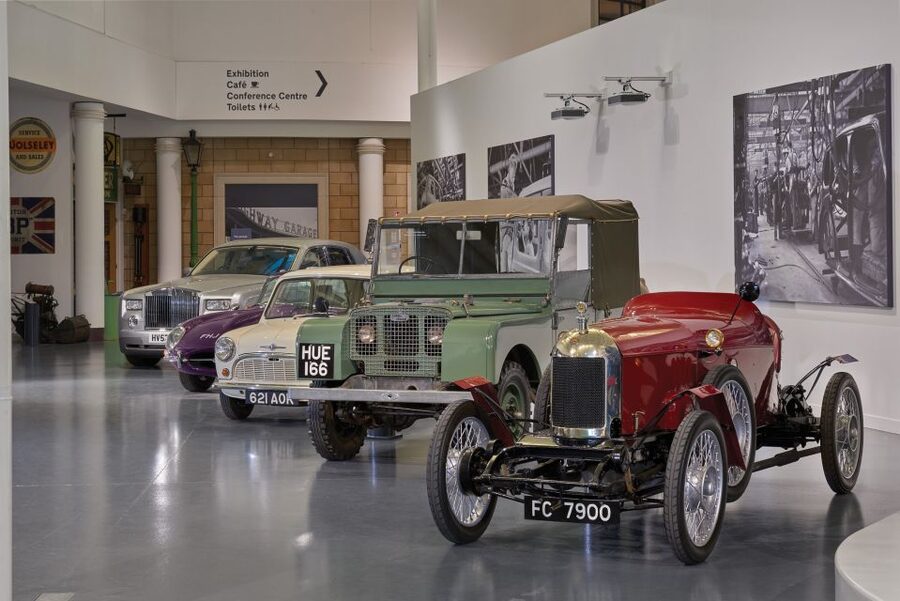
Cars tell better stories than you expect. At Warwick’s British Motor Museum, you can walk the Time Road and Under The Skin exhibits and see how motoring shaped everyday life through the decades, complete with period sound and memorable milestones like the arrival of double yellow lines. It is an easy day out that feels more like a guided journey than a stuffy car showroom.
I love two things most. First, the sheer scale, with over 400 cars dating back to the 1890s, including prototypes and the oddball machines you only get in a museum collection like this. Second, the human touch, because the museum runs on enthusiastic staff and volunteers, and I found the best kind of context comes from people like Trevor, who made the story click with real detail and brand-specific stories.
One consideration: the museum is in large rooms, and if you’re relying on audio during a talk, it can be harder to hear depending on where you stand. I’d plan to read the exhibit labels as you go, and if you need sound clarity, get close to the speaker or take the next few minutes to reset your position.
In This Review
- Key highlights worth knowing
- Your Warwick Ticket: What $24 Really Buys
- Over 400 Historic British Cars, and a Collection Built for Real Looking
- Time Road: A Walk Through Motoring and Family Life
- Making British Cars: Industry Power, Not Just Model Names
- Under The Skin: Hands-On How Cars Work
- Collections Centre: Seeing Conservation Up Close
- Getting the Most From Talks and Volunteer Guides
- Where to Refuel: Café Breaks, Shop Stops, and Play Area Time
- How Long Should You Spend in Warwick?
- Accessibility and Mobility: Easy Layout, Smart Movement
- Price and Value: Why This Ticket Feels Fair
- Who This Warwick Museum Is Best For
- Should You Book This British Motor Museum Entry Ticket?
Key highlights worth knowing

- Over 400 historic British cars spanning from the 1890s to near today
- Time Road for family life, motoring changes, and even period music
- Collections Centre behind the scenes showing how vehicles are conserved
- Under The Skin hands-on exhibits explaining how cars work
- Making British Cars connecting cars to industry and where it is heading
- Volunteer energy with guides happy to answer your questions, like Trevor
Your Warwick Ticket: What $24 Really Buys

This is a 1-day entry ticket to one of the best-focused car museums in the UK, with a price of about $24 per person. For that money, you are not just buying access to displays, you are paying for a well-built “story route” through motoring history that works for both car people and normal humans who just want a fun, meaningful day.
You also get practical perks that make the day smoother. Free parking is included, there’s an onsite café for hot and cold meals and snacks, and there’s a play area plus family activities included with admission. If you are traveling with kids, or you simply want somewhere easy to pause without hopping in and out of your car, these small add-ons matter.
The museum is wheelchair accessible, with easy movement around the displays. One guest even called out that mobility scooters work well on the site, so you should feel less stress about whether you can handle the building layout.
More museum visits in Britain:
- London: Tower of London and Crown Jewels Exhibition Ticket
★ 4.6 · 28,769 reviews - Liverpool: Liverpool Football Club Museum and Stadium Tour
★ 4.8 · 10,764 reviews - London: Chelsea Football Club Stadium and Museum Tour
★ 4.8 · 4,576 reviews
Over 400 Historic British Cars, and a Collection Built for Real Looking
The biggest headline is the scale: more than 400 cars in the collection, dating back to the 1890s. That is a lot of machines, and the good news is that the museum does not treat it like a warehouse. The cars are set up so you can actually walk, compare, and read what changed over time.
You will likely spot a mix that covers the full story arc. Early motoring is represented, and then you move through classic eras where the design language starts to become recognizable. Even if you do not know car models by name, you will be able to tell which parts changed first: the proportions, the driver position, the engineering approach, and even the way people expected to use cars day to day.
One reason this museum is so fun is that it is not only about famous names. You can also find prototypes and one-off machines that never became mass-market cars. That gives you the feeling of standing in a workshop of ideas, not just a hall of trophies.
Time Road: A Walk Through Motoring and Family Life
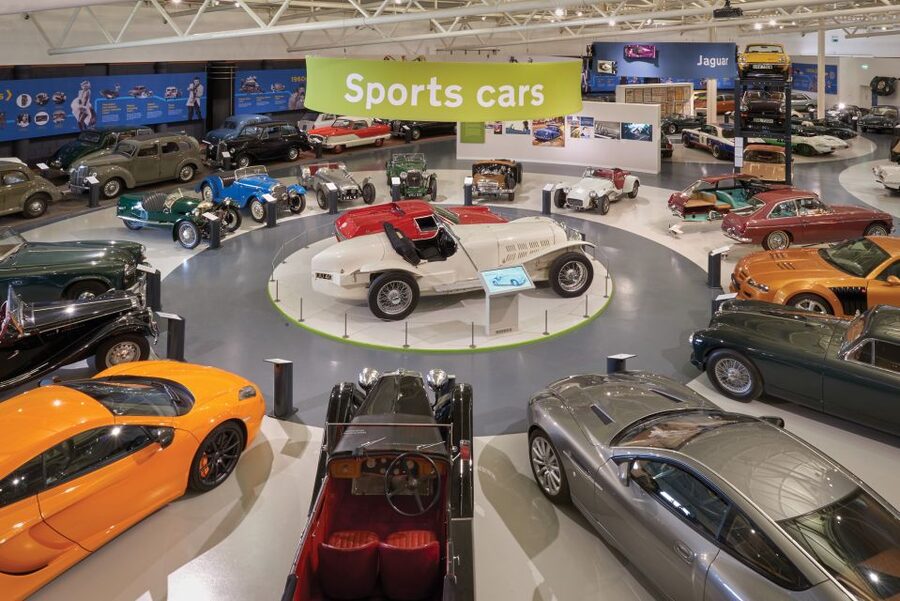
If I had to pick one area to start with, it would be the Time Road. This is where the museum turns cars into daily-life stories. As you move through different decades, you get period music and changing scenes that connect motoring to what families were doing and how streets and habits evolved.
A detail that really works is the way the exhibit anchors change in real-world moments. Double yellow lines might sound like a simple road marking, but in the museum’s context it shows how expectations around parking and traffic behavior changed as car ownership became more common.
What I like here is the balance. You get nostalgia without it becoming pure sentiment. You also get the sense that “car history” is really “society history,” because streets, rules, jobs, and routines all shifted as more vehicles took over the roads.
For kids, Time Road tends to be the quickest path to engagement. The museum leans into the idea that families notice changes in daily life, not only the engineering specs. Even if you think your teenager will be bored, the time-based format often keeps them moving and curious.
Making British Cars: Industry Power, Not Just Model Names
Next, follow the Making British Cars route. This part is about impact: how the motor industry influenced work, manufacturing, and consumer life, and how it is heading into the future. The museum is clearly trying to answer a question most people never stop to ask: why cars became such a huge part of British identity.
This section is valuable if you want context. Looking at a car is fun, but knowing why that car existed makes the whole experience click. The exhibit helps you see that design and technology are tied to factories, supply chains, and what the public wanted at the time.
If you come in expecting a strictly technical museum, you might still enjoy this section because it gives the numbers meaning. If you come in not caring about cars, you might still leave with an understanding of why certain brands rose, adapted, or disappeared. Either way, it makes the day feel bigger than just a collection.
A few more Britain days worth comparing
- London: The London Eye Entry Ticket
★ 4.6 · 35,875 reviews - London: Tower Bridge Entry Ticket
★ 4.7 · 15,560 reviews - London: Westminster Abbey Entrance Ticket
★ 4.6 · 11,254 reviews - London: St Paul’s Cathedral Entry Ticket
★ 4.7 · 9,813 reviews
Under The Skin: Hands-On How Cars Work
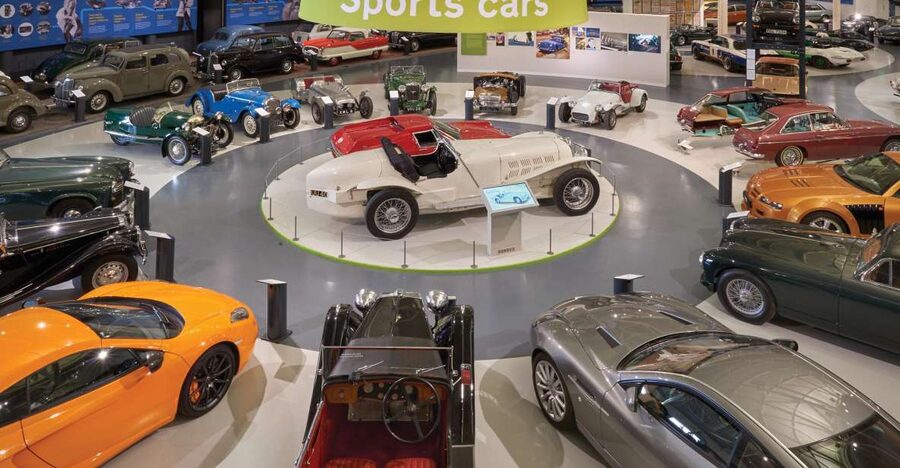
Now for the part that turns the day from watching into doing: Under The Skin. This exhibit focuses on how cars work, using interactive displays that help you compare improvements over time.
One of the areas you can experience involves suspension evolution. The museum guides you through how ride and handling changed as engineering got better, which is a great way to understand why modern cars feel different even when they look familiar.
Another standout is the interactive look at steering systems, including a comparison between rack-and-pinion steering and power steering. If you have ever wondered why cars feel lighter to drive now, this is the kind of explanation that makes it obvious. You might not leave with a mechanic’s degree, but you will leave with better intuition.
This section also helps you connect history to everyday driving. Cars from decades ago can feel mysterious when you only see their exterior. Here, the interior and mechanisms make them understandable, so the old designs stop being odd artifacts and start being solutions to specific problems.
Collections Centre: Seeing Conservation Up Close
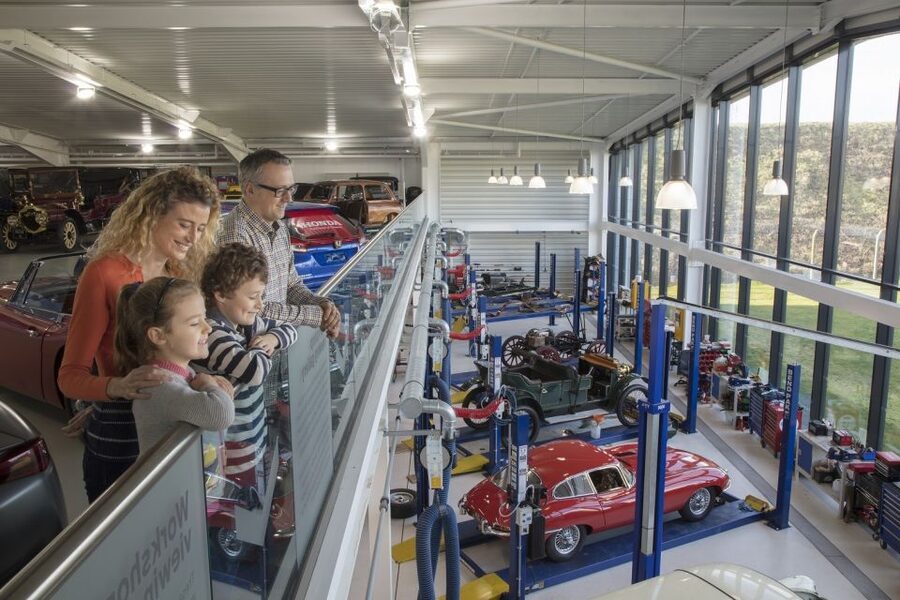
One of the most impressive parts of the museum is the Collections Centre, where you can see behind the scenes about how vehicles are conserved. This is the part many museums skip, because it is not flashy. Here, it is treated as essential.
Why this matters: cars are not just objects. They are complex machines made of materials that age in specific ways. Preserving them takes careful handling, controlled environments, and regular maintenance, especially if you want future generations to keep seeing these cars in good condition.
You will get a sense of the care and planning that goes into long-term conservation. Even if you are not a conservation nerd, it gives the whole visit a different tone. You are not just looking at artifacts, you are witnessing what it takes to keep them alive.
This is also where volunteers and staff tend to shine. If you ask questions, you often get thoughtful answers, and those conversations make the museum feel like an active place rather than a static one.
Getting the Most From Talks and Volunteer Guides
The British Motor Museum leans hard into people, and the guided talks can add real value. Guides are enthusiastic volunteers, and they tend to bring a personal connection to the cars, collections, or brands they work with.
A good example from a guide named Trevor: the history of cars felt more grounded and specific when he shared context. That is the big difference between reading labels and hearing how someone explains what you are looking at.
There is also a practical tip here. One guest noted that the acoustics in a large room can make amplified sound harder to catch. So I would not plan to rely on audio alone. If you want to catch every detail, position yourself so you can both hear and read, then move along as soon as you feel yourself missing parts.
Also, if you travel with mixed interests, volunteer-led sections help. Car enthusiasts tend to get the detailed brand and engineering stories, while non-enthusiasts often latch onto the societal links and family-life angle. That crossover is a big reason the museum works as a group.
Where to Refuel: Café Breaks, Shop Stops, and Play Area Time
You will need a break, and the museum supports that with an onsite café that serves hot and cold meals and snacks. It is a smart setup because you can recharge without losing your rhythm and without leaving the museum grounds.
If you have kids, the onsite play area and family activities included with admission are worth noting. You can keep the whole group together instead of splitting your day into “adults car route” and “kids need energy release.”
There is also a museum shop and toilets available on site, which helps keep the visit smooth. On a long car-themed day, those are not minor details. They prevent the classic problem of everyone getting cranky right before the good exhibits.
How Long Should You Spend in Warwick?
This is a day-trip museum, but it is not a 45-minute thing. Based on how long people tend to move through, I’d plan a range.
Some visitors get through in about 2.5 hours, especially if they focus on the main exhibits and keep a steady pace. Others spend 4 to 5 hours, especially if they slow down to read, talk to volunteers, and circle back for extra details.
Your best plan: start with Time Road early, because it sets the tone for the whole day. Then go into the hands-on areas like Under The Skin while the exhibits feel fresh. Finish with the more reflective sections like the Collections Centre so the conservation story lands when you are fully in the museum mindset.
Accessibility and Mobility: Easy Layout, Smart Movement
Wheelchair accessibility is explicitly supported, and many parts of the experience are easy to navigate. That includes lifts and smooth movement around displays, which matters if you are using a wheelchair, walker, or mobility scooter.
One review even highlighted that a mobility scooter is manageable across the site, which is reassuring. I would still give yourself a little extra time and take turns at slower exhibits, especially if you need to pause for photos or reading.
The museum also has an onsite play area and family-friendly design elements, which can make the whole experience feel calmer for families who need frequent micro-breaks.
Price and Value: Why This Ticket Feels Fair
At around $24 per person, this entry ticket feels like solid value if you want more than a quick photo stop. You are getting hours of content, a large collection spanning from the 1890s to later decades, and interactive exhibits that actually teach you something.
Value also comes from flexibility. Even without assuming you will rush, the museum is structured in a way that lets you choose your pace. If you love cars, you can spend longer reading and comparing. If you are more casual, you can still follow the story route and come away with context.
One small caution on value: the museum may not match everyone’s memory of past on-site activities. A guest specifically said that the 4×4 track is gone and that karting is not available. So if you are planning around specific add-ons, I suggest you check what is currently operating once you have your date, then build your day around the core exhibits.
Who This Warwick Museum Is Best For
This museum works for more people than you might expect.
Car lovers will enjoy the big collection, including rare and one-off machines and brand-focused displays. They also tend to appreciate the behind-the-scenes conservation angle, because it connects the cars to the work required to keep them preserved.
Families often do best here because the museum includes family activities and a play area, and Time Road is designed to connect motoring changes to family life. Even kids who struggle with traditional museums can find hooks through period scenes, music, and hands-on exhibits.
If you are not a car person, you can still have a great visit. The museum’s real strength is that it explains how cars affected everyday society, streets, and daily decisions. That turns the day into a history experience you can actually relate to.
And if you are traveling with someone who loves classic cars but you are more interested in people stories, you will still find common ground here. The museum is good at translating engineering into understandable change.
Should You Book This British Motor Museum Entry Ticket?
Book it if you want a high-quality car museum that feels like a story, not a catalogue. The mix of 400+ cars, Time Road, hands-on mechanics in Under The Skin, and the behind-the-scenes Collections Centre gives you multiple entry points into the same theme.
Pass or at least double-check your expectations if you are mainly chasing a specific outdoor activity like karting or a track experience, since those options are not currently available according to one guest. Also, if you know you struggle with hearing in large rooms, plan to rely on the signage and move closer during any talks.
If you want an easy, meaningful day in Warwickshire that works for mixed ages and mixed interests, this ticket is an excellent choice.
Newly listed near Britain
- Yorkshire Wildlife Park: Entry Ticket★ 4.5 · 161 reviews
- Dunstable: Whipsnade Zoo Full-Day Entrance Ticket★ 4.6 · 153 reviews
- Royal Horticultural Society: Harlow Carr Garden Ticket★ 4.7 · 14 reviews
- From Edinburgh: 5 Day Best of Northern England Tour★ 5.0 · 5 reviews
- Yorkshire: All Creatures Great and Small Mini-Coach Tour★ 4.8 · 25 reviews
- York: Wizard Walk of York Tour – Magic, Comedy & Family Fun★ 4.8 · 57 reviews
- York: Private Horse-Drawn Carriage Ride and Afternoon Tea★ 5.0 · 3 reviews
- York’s Snickelways Story Walking Tour★ 4.9 · 169 reviews
Museums, compared.

Tower of London and Crown Jewels Exhibition Ticket
Read our review →
Liverpool Football Club Museum and Stadium Tour
Read our review →
Chelsea Football Club Stadium and Museum Tour
Read our review →



British Museum Guided Tour with Entrance Tickets
Read our review →Browse the lists this tour appears in