
Review · WORKSHOPS
Woolf & Dickens: London Literary Tour & Writing Workshop
Bring a notebook, not just sightseeing. This is a London literary tour and writing workshop that uses real places, big authors, and short prompts to get you writing on the spot, starting with a Woolf-inspired look from Waterloo Bridge and moving through Somerset House and historic church interiors.
I really like the way the session stays active. You are not just listening to stories, you are doing small writing experiments, from ekphrasis to fact-lists, with readings woven in. I also like how Joseph sets the tone, creating a welcoming, safe learning space where the prompts leave room for your own style, whether you write casually or want to sharpen your craft.
One consideration: this is a writing workshop first, sightseeing second. If you want long stretches of pure strolling and photos, the structure may feel a bit intense, and you will want to come ready to write, with a pen and water.
In This Review
- Key Points You’ll Actually Use
- Woolf Meets Dickens, but the Method Is What Counts
- Where You Start at Waterloo Bridge (And Why It Matters)
- Somerset House: A Mindful Writing Experiment That Gets You Off Autopilot
- Aldwych Timeline Echoes Eliot’s Time (Without Making It Feel Like a Lecture)
- St Mary Le Strand: Ekphrasis in a Place That Makes You Look Closer
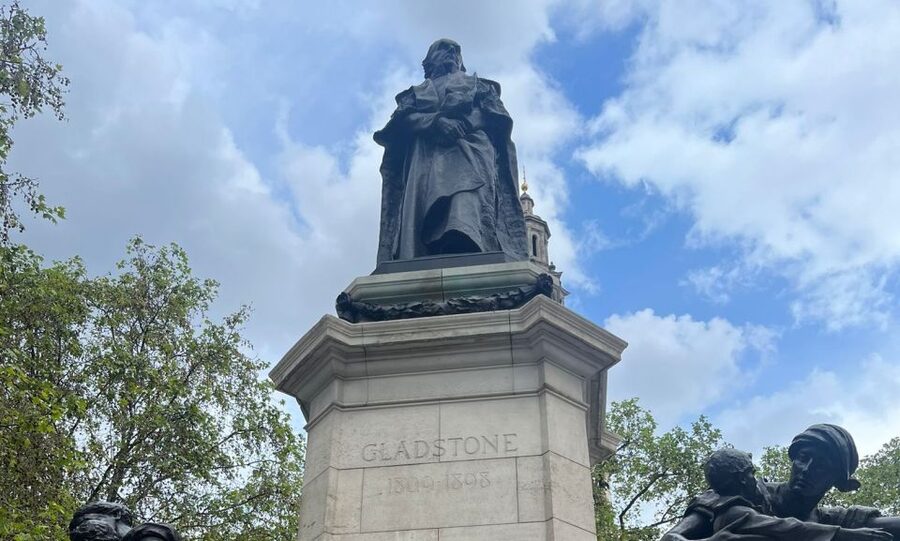
- Gladstone Statue: Politics, Truth, and the Facts You Choose
- Doctor Johnson’s House: Dictionaries and Identity in Plain Language
- What You Get for $101 and Why It Can Be Good Value
- How the 1.5-Hour Format Actually Feels
- Who This Tour Is Perfect For (And Who Might Skip It)
- Practical Tips Before You Go
- Should You Book Woolf & Dickens: London Literary Tour & Writing Workshop?
Key Points You’ll Actually Use
- Waterloo Bridge Woolf prompt turns a famous view into a short biographical sketch in your own voice
- Somerset House mindful writing gives you a simple way to slow down and observe before you write
- St Mary Le Strand and Eliot’s time pairs church interior details with a writing exercise inspired by the room
- Aldwych timeline on the walls anchors the theme of time, memory, and history as you move through London
- Gladstone statue politics and truth nudges you to notice how perspective changes what counts as a fact
- Doctor Johnson’s dictionary reading connects language, religion, politics, art, and identity into one working set of prompts
Woolf Meets Dickens, but the Method Is What Counts
This tour is designed for one thing: turning London into a writing studio you can carry in your pocket. The format is part guided walk, part literary reading, and part workshop. You’ll use what you see, what you hear, and even what you think you already know, then turn it into a short piece of writing.
The best part is that it is not only for experienced writers. The prompts are built to work at different levels, so beginners can try without fear, and experienced writers can use the same exercises as craft practice. That matters because the difference between a fun writing class and a frustrating one is often not the prompt. It is the tone of the room.
And the tone here is very intentionally kind and inclusive. In a review of the experience, Joseph was praised for creating a welcoming and safe place to learn, using relevant readings, asking thoughtful questions, and giving prompts that let you make them your own. That kind of facilitation is what keeps a workshop from becoming awkward.
A few more London days worth comparing
- London: East End Street Art Tour and Spray Painting Workshop
★ 4.8 · 297 reviews - London: Half-Day Street Art Tour and Workshop
★ 4.9 · 172 reviews - London: Pizza Making Cookery Class
★ 4.9 · 18 reviews
Where You Start at Waterloo Bridge (And Why It Matters)
You meet at the north end of Waterloo Bridge, at a slope on the right that goes behind Somerset House. It is a very practical meeting spot because you can orient fast, and you are already near one of London’s best “look and reflect” vantage points.
The tour begins with the feeling of moving water and heavy city history under your gaze, then guides you toward Virginia Woolf’s way of blending past and present. That is not just a literary reference. It is a prompt style: you learn to write as if time is layered, not lined up.
This first moment matters for the rest of the tour because it sets the rules of engagement. You are not collecting facts. You are noticing details, letting them trigger associations, and then choosing a shape for your writing.
Somerset House: A Mindful Writing Experiment That Gets You Off Autopilot
Somerset House is where the workshop shifts gears from literary place to attention practice. You will do a mindful writing experiment, designed to slow you down just enough to catch specifics you would miss in normal sightseeing.
The value here is simple: most people write better when they stop rushing. Even if you are not aiming to publish anything, sharper observation makes everything else easier, from vivid descriptions to more honest voice.
You do not need fancy tools or a particular literary background. The goal is to help you notice the space and translate it into language. You might find that this part helps even if you are stuck in writer mode, because it gives you a structured way to start, not a vague command like write something good.
Aldwych Timeline Echoes Eliot’s Time (Without Making It Feel Like a Lecture)
A major theme of this tour is time, and it shows up in a physical way. The reflections linked to T.S. Eliot are echoed by a timeline on the walls at Aldwych. So instead of talking about time as an idea, you see it as something London literally displays and remembers.
This stop is useful because it trains a writing habit: mapping what time does to meaning. When time moves forward, your memory changes, your interpretation shifts, and your idea of truth often needs updating.
If you tend to write chronologically, this is a good counterweight. You are pushed to think about layers, repeats, returns, and how the present keeps rewriting the past.
Same corner of Britain, a different sort of outing:
- London: The London Eye Entry Ticket
★ 4.6 · 35,875 reviews - London: Tower of London and Crown Jewels Exhibition Ticket
★ 4.6 · 28,769 reviews - From London: Harry Potter Warner Bros Studio Tour
★ 4.7 · 26,588 reviews - Magical London: Harry Potter Guided Walking Tour
★ 4.7 · 22,044 reviews
St Mary Le Strand: Ekphrasis in a Place That Makes You Look Closer
Then you head into the church of St Mary Le Strand, where you respond to T.S. Eliot’s study of time. The tone here is slower and more focused, which fits the setting. This is also where you practice ekphrasis, a writing exercise inspired by the church’s grand interior.
Ekphrasis can sound intimidating, but on a tour like this it becomes practical. You are taking what you see, processing it, then expressing it with language that does not just describe, but interprets. In a space like St Mary Le Strand, the interior details give you built-in material: light, form, scale, and the emotional feel of the room.
A drawback to keep in mind: the church setting is quieter and more reflective, and you will likely want to keep your voice and movement calm. If you are coming with a very fast, photo-first mindset, you might feel pulled back into a slower pace. Still, that is exactly why it works for writing.
Gladstone Statue: Politics, Truth, and the Facts You Choose
Next comes a statue of Gladstone, and the prompt turns sharp. You consider how politics, truth, and history change with your perspective, then you write a list of facts blending your personal history with what surrounds you.
This is a clever exercise because it forces you to notice what “facts” actually mean in real life. Two people can stand in the same place and tell different truth stories. The workshop’s angle is that history is not just what happened. It is also what you notice, what you remember, and what you decide counts as evidence.
For your writing, the outcome is often helpful even beyond the workshop. You start to realize that facts are not neutral. They are chosen, shaped, and framed. That is exactly the kind of thinking that improves persuasive writing, personal essays, and even fiction.
If your style is more narrative than argumentative, this can still work. Think of the “facts list” as character-building. What you include is personality.
Doctor Johnson’s House: Dictionaries and Identity in Plain Language
At Doctor Johnson’s house, the tour connects literature to everyday identity through language itself. You read from his delightful dictionary and consider how the structures around us, including religion, politics, art, and language, help make who we are.
This stop feels like the workshop’s grounding point. Earlier prompts focus on perception and time. Here the emphasis shifts to how words organize thought. Johnson’s dictionary is not only a museum object in this context. It is a reminder that language systems influence how we see.
So if you have ever felt like you cannot find your voice, this is a good place to reset. The dictionary approach is a gentle reminder that words carry weight, and choosing them carefully is part of writing craft, not extra work.
What You Get for $101 and Why It Can Be Good Value
At about $101 per person for 1.5 hours, you are paying for more than walking between sights. You are paying for a guided writing workshop, including literary readings, structured prompts, and facilitation from a leader who is an award-winning novelist with a PhD in Creative Writing.
What makes the value better than a standard guided walk is that you do not leave empty-handed in the “learning” sense. You practice techniques in real time. You get feedback through prompts and questions, and you get to use the author themes as writing engines instead of trivia.
Also, you do not need entry tickets. That simplifies budgeting and keeps your money aimed at the experience itself.
The only true cost you add is your own time and attention. If you show up with a phone but no pen, you will feel the friction fast. Come prepared and the price starts to look less like a sightseeing fee and more like a creative class in one of the world’s best writing cities.
How the 1.5-Hour Format Actually Feels
This is a compact tour. With only about 90 minutes, the workshop stays punchy. You will have time for a few core exercises, not a marathon of notes.
That is good for most people. Short sessions reduce decision fatigue. You get the benefit of multiple literary prompts without leaving you mentally exhausted.
For you, the trick is to treat each stop as a mini sprint. Try not to perfect a single piece. Instead, aim to finish something small each time, even if it is rough. That is how you build momentum.
Who This Tour Is Perfect For (And Who Might Skip It)
You will probably love this if you:
- enjoy writing and want a structured prompt, not just a blank page
- like literature but also want hands-on practice
- want a different way to experience London beyond photos and museum queues
- are comfortable sharing your writing in a kind, inclusive environment
You might skip it if you:
- want a mostly passive tour
- dislike writing prompts
- prefer long stops for quiet independent exploration
If you fall in the middle, you may still enjoy it. The exercises are designed for multiple levels, and the tone aims to make trying feel safe.
Practical Tips Before You Go
To make the workshop easy, plan for the materials you are told to bring: a pen, water, and internet access, plus a notebook and an umbrella just in case. The notebook matters because these prompts are the kind you want to revise later. Water matters because writing exercises can make you forget to drink. Internet access might be useful for your own note-taking workflow, since the tour expects it.
Also, wear shoes you can walk in. You are moving between points around central London, and you will want your body comfortable so your attention can go to the prompts.
Finally, if you feel nervous about writing, that is normal. The workshop is built so you can start small, and the questions are there to help you find a path.
Should You Book Woolf & Dickens: London Literary Tour & Writing Workshop?
I think this is a smart booking if you want literature to turn into action. The strongest reason to choose it is the combination of real places and structured writing experiments with Joseph leading you in a welcoming atmosphere. You get Woolf through Waterloo Bridge, Eliot through time themes and St Mary Le Strand, plus Johnson and language practice, all in a tight 1.5 hours.
Book it if you are ready to write a few short pieces, even if they are not perfect. Skip it if your main goal is just sightseeing and you do not want workshop structure.
If you are on the fence, ask yourself one question: do you enjoy turning what you see into words? If yes, this tour is built for you.
Newly listed near London
- London: Private Electric Kart Tour of Iconic Landmarks★ 5.0 · 5 reviews
- London: Private Couples Photography Session with Landmarks★ 5.0 · 16 reviews
- London: Private City Kickstart Walking Tour★ 4.3 · 8 reviews
- London: Private City Tour★ 5.0 · 4 reviews
- London: Instagram Photos Black Cab Tour with Hotel Pick Up★ 5.0 · 7 reviews
- London: Private Christmas Lights and Markets Walking Tour★ 4.5 · 4 reviews
- London: Private 3-Hour Sherlock Locations Tour by Black Taxi★ 5.0 · 3 reviews
- London: Private Beatles Taxi Tour★ 4.9 · 24 reviews
Workshops, compared.

Chocolate Bar Making Workshop at York Cocoa Works
Read our review →
East End Street Art Tour and Spray Painting Workshop
Read our review →





Lake District: First Class Steam Railway Trip and Breakfast
Read our review →Browse the lists this tour appears in