
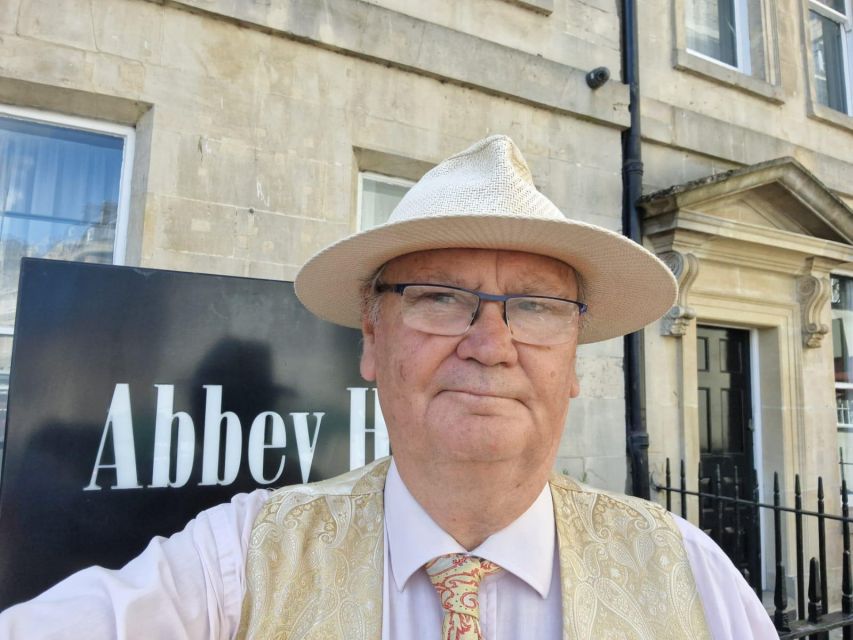
Review · WALKING TOURS
Bath: Guided Walking Tour
Two hours, and Bath starts talking back. With Paul Elliott guiding, you get a tight route that makes sense of the city’s layers, from medieval traces to the Georgian plan. You’ll be walking between landmarks you’ve probably seen in photos, but with the story stitched in so it clicks fast.
I especially like the way Paul ties the sights to specific moments and people, so Bath does not feel like a random collection of buildings. Two standouts for me are the Georgian “set piece” streets around Queen Square and The Circus, and the photo-friendly sweep through the Royal Crescent area.
One drawback to weigh: this is built as an easy 2-hour stroll with lots of stops, not a ticketed inside-tour. So if you want Roman Baths or museum interiors, you’ll need to plan those separately, and you should also note it is not suitable for pushchairs or wheelchair users.
In This Review
- Quick hits before you set off
- Start at The Abbey Hotel North Parade, then let Paul Elliott set the tone
- Sally Lunn’s and Abbey Green, where Bath feels lived-in
- Roman Baths explained from the outside, plus Prince Bladud’s origin story
- East Gate to Pulteney Bridge: a photo route with real purpose
- Bath Abbey and earlier churches: one site, many chapters
- Climbing into the Georgian sector: John Wood and Ralph Allen in real streets
- Royal Crescent: the masterpiece moment you finish thinking about
- Royal Victoria Park to Theatre Royal, then Bath Thermae for a smart finish
- Price and value: $26 for a guided route that saves you time
- Who this tour fits best, and who should choose something else
- Should you book Bath: Guided Walking Tour with Paul Elliott?
- FAQ
- Where does the tour start?
- How long is the Bath guided walking tour?
- Where does the tour finish?
- Is admission included for attractions like the Roman Baths?
- Who is the guide?
- What languages are available?
- Is the tour suitable for pushchairs, strollers, or wheelchairs?
Quick hits before you set off
- Meet Paul Elliott at The Abbey Hotel North Parade, then get your bearings right away
- Sally Lunn’s and Abbey Green bring daily Bath life into the story, not just monuments
- Roman Baths context without admissions helps you understand what you’ll see later
- City-wall viewpoints and the Georgian plan connect John Wood and Ralph Allen to what you walk
- Royal Crescent, The Circus, and Queen Square in one smooth historical narrative
- Theatre Royal and Bath Thermae give you a satisfying ending with great moments to photograph
Start at The Abbey Hotel North Parade, then let Paul Elliott set the tone
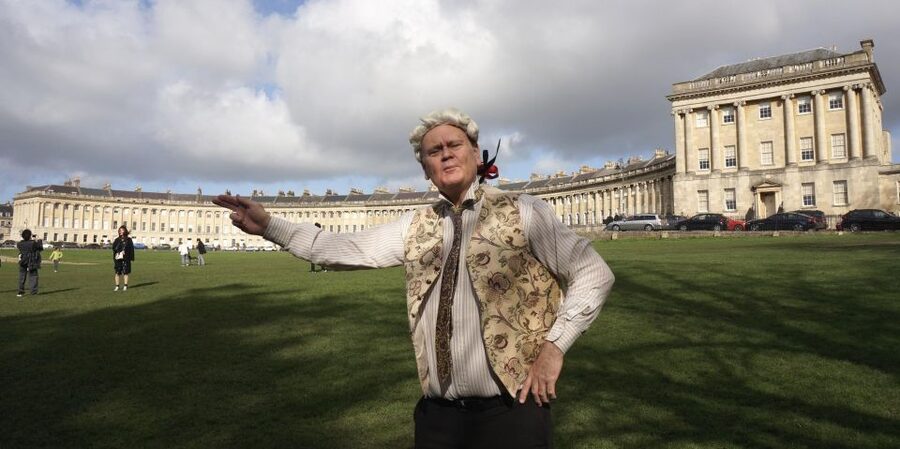
You start at BA1 1LF, at The Abbey Hotel North Parade, and you meet Paul Elliott for a quick hello before you begin walking. This early moment matters more than it sounds. In a city like Bath, if you show up without a guide, you often stare at beautiful facades but miss why they are arranged the way they are.
I like that Paul keeps the pace realistic for a true 2-hour tour. You are not stuck in long gaps. You move, stop, and get the “why” behind each location so your photos make more sense later.
One more practical note up front: this tour is clearly designed for people who can comfortably walk and handle curb cuts and stairs. It is not set up for baby strollers, and it is not suitable for wheelchair users.
More Walking Tours in Bath
- Bath: City Walking Tour with Optional Roman Baths Entry
★ 4.7 · 1,401 reviews - Bath: Guided Walking Tour
★ 4.9 · 1,198 reviews - Bath: Bridgerton Filming Locations Walking Tour with Music
★ 4.7 · 416 reviews
Sally Lunn’s and Abbey Green, where Bath feels lived-in
The first stop style is classic Bath: a mix of old streets and human-scale places. You visit Sally Lunn’s, described as Bath’s oldest house, and you also pause at Abbey Green, including the old London Plane tree and the site of the old monastery.
I like these stops because they switch your brain away from grand buildings and toward how people actually moved through Bath over time. Even without going inside, you can tell when a place has been part of daily life for centuries. That’s the kind of detail that makes a walking tour more than sightseeing.
If you are the kind of person who likes your history grounded in locations, not just dates, this is a smart start. You’re getting an atmosphere you can carry with you for the rest of the walk.
Roman Baths explained from the outside, plus Prince Bladud’s origin story
Next comes an important efficiency move: you get an explanation of the Roman Baths, but you do not visit them on this tour. That means you’ll learn the founding story of the site during the era of Prince Bladud, and you’ll understand why Bath’s thermal waters mattered long before the Georgian era.
You might think skipping the inside visit would be a letdown. For many people, it isn’t. The explanation helps you connect the legend and the layout to what you’ll see if you decide to purchase tickets later. It also keeps the schedule tight, which is exactly what you want for a first pass through Bath.
Practical tip for your day: if you plan to visit the Roman Baths after this, use what you learned on the walk to choose what to focus on. You’ll recognize the story beats faster once you’re inside.
East Gate to Pulteney Bridge: a photo route with real purpose
You then learn about the original East Gate of the city leading down toward the river Avon, and you see the route’s modern “headline” moment with Pulteney Bridge.
This is one of those stretches where the guide’s job is to prevent you from treating it like a postcard only. The walking logic matters. The East Gate connection tells you why the river corridor became important, and Pulteney Bridge gives you a strong sense of Bath’s engineering flair.
I also find this section helps you understand how Bath’s topography shapes the city. You’re moving through a space where the city’s height and waterways tell the story together. You get better photos because you know what you’re aiming at and why the view exists.
Same corner of Britain, a different sort of outing:
- Bath: Guided Ghost Tour
★ 4.8 · 1,036 reviews - Bath: The Jane Austen Centre Ticket
★ 4.4 · 678 reviews - Bath: Sightseeing Boat Cruise with Prosecco
★ 4.6 · 608 reviews - From Bath: Stonehenge & the Cotswolds Day Tour with Entry
★ 4.8 · 543 reviews
Bath Abbey and earlier churches: one site, many chapters
A major block of the tour focuses on Bath Abbey and previous churches on the same site. You get a full explanation, not just a quick mention. This is exactly the kind of stop that works best with a guide, because the meaning of a place is often in the layers.
You’ll be looking at one focal point while listening to the idea that different eras claimed the space and left their fingerprints. Even if you do not step inside for admissions, you still come away with a clearer mental map of what you’re seeing and how the site evolved.
If you are a first-timer to Bath, this stop is valuable because it anchors your understanding. When you later see Georgian streets and planned squares, you can connect the planning to a city that had already been shaped by earlier centuries.
Climbing into the Georgian sector: John Wood and Ralph Allen in real streets
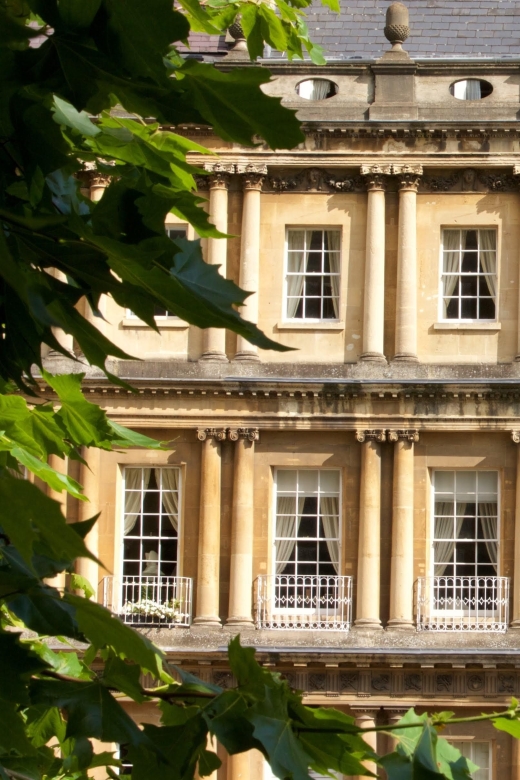
Then you walk through alleyways heading up toward the top wall of the city to arrive at the real Georgian sector, the area dreamed out by John Wood using Ralph Allen’s stone.
This part is the heart of the tour for most people, and for good reason. Georgian Bath is not just pretty architecture. It is an intentional design language. When the guide links John Wood’s vision and Ralph Allen’s stone to the streets you’re standing on, the city feels engineered for walking and looking.
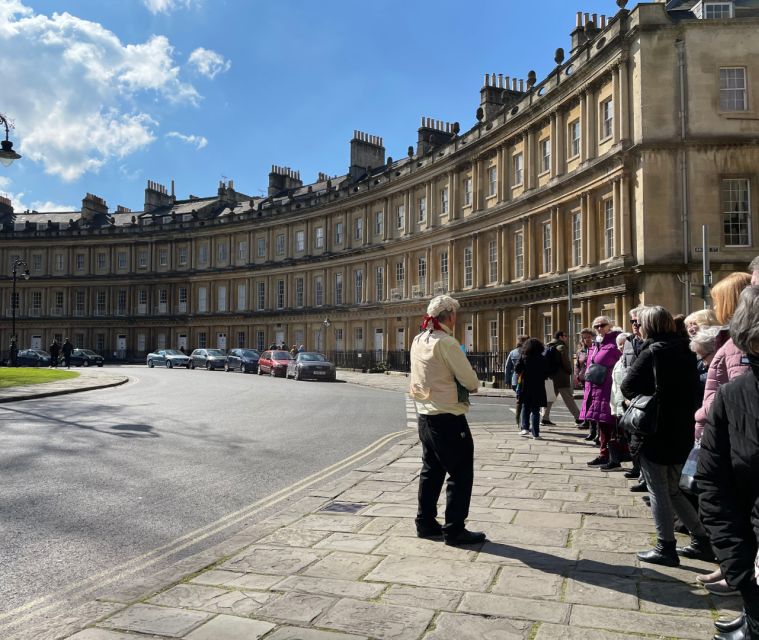
You’ll see Queen Square, pass by the Jane Austen Centre, and continue on toward the Assembly rooms and The Circus. Each stop is placed like a clue.
- Queen Square gives you a sense of order and civic design.
- The Circus shows you the theatrical side of Georgian planning, where geometry becomes personality.
- The Assembly rooms help you understand that these buildings were social machinery as much as they were architecture.
A small drawback: because you are moving uphill into the top-wall area, comfortable shoes matter. This is labeled as an easy stroll overall, but Bath has its own idea of gentle. You should still plan for some uphill segments and close-to-the-wall turns.
Royal Crescent: the masterpiece moment you finish thinking about
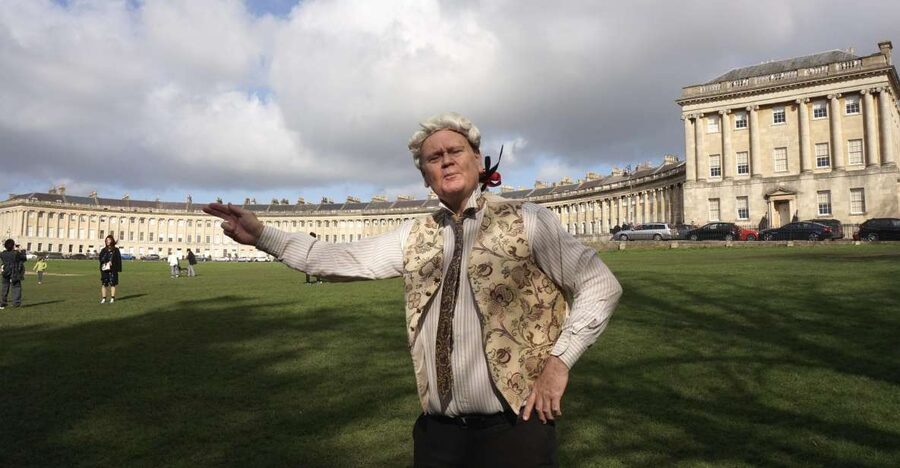
The walk continues onward to the Royal Crescent itself, described as the masterpiece of the city on this route. You don’t just see it. You are guided through it in sequence with the other Georgian anchors, so the Royal Crescent lands with context.
I like the way this works: you’re not isolating the Royal Crescent as a single icon. You experience it as the culmination of the Georgian planning ideas you learned moments earlier. When you photograph it, you can frame it with the knowledge of what the city was trying to do at the time.
If you love architecture and want a quick “where to look” route in a short window, this stop is a big reason to choose the tour.
Royal Victoria Park to Theatre Royal, then Bath Thermae for a smart finish
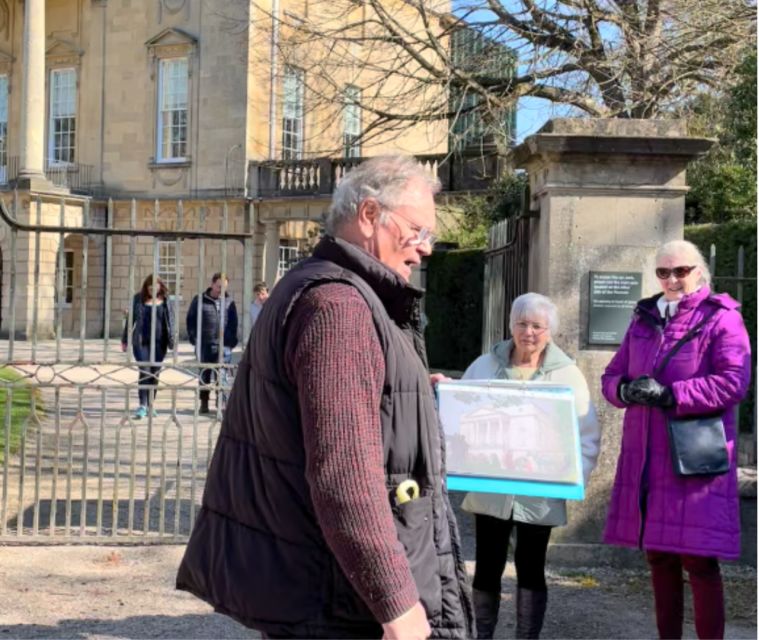
After the Georgian highlight section, you stroll downhill through The Royal Victoria Park en route to the Theatre Royal. This shift from architecture toward open space is good. It gives your legs a breather and gives you a different kind of Bath scenery.
Then you reach the Theatre Royal. Even if your interest is purely photo-based, this stop adds variety. The tour ends with a final stop at Bath Thermae, the new bathing facility in the city.
Finishing here is practical. Bath Thermae is a logical “bookend” to the Roman Baths idea you heard earlier. You get the story of thermal water across eras, and then you end the walk where modern Bath people go for baths.
You’ll likely leave with lots of photo opportunities, but also with the satisfaction that the tour did more than tick boxes. It shaped the day into a narrative arc.
Price and value: $26 for a guided route that saves you time
At about $26 per person for a 2-hour guided walking tour, the value comes from concentration. You’re paying for a guide to connect the dots between multiple major landmarks, including Queen Square, The Circus, the Royal Crescent, and a Roman Baths explanation. In a short time frame, that guidance can be the difference between wandering and understanding.
Two key value notes to keep your expectations aligned:
- No admission costs are included, and you do not visit the Roman Baths on this tour.
- It’s designed for a fast orientation through the city’s core, not a deep ticket-based day.
So if your goal is to see a lot in minimal time, this is priced like an efficient orientation. If your goal is to spend most of your time inside museums and attractions, you’ll want to add those separately.
Who this tour fits best, and who should choose something else
This tour fits best if you:
- are visiting Bath for the first time and want a guided route that makes the city’s layout click
- like hearing the why behind famous landmarks, especially Georgian Bath planning
- want a manageable walk that still includes major sights in about two hours
It is not suitable for pushchairs, strollers, and wheelchair users, and it is not listed for children under 5 or babies under 1. So if your group includes anyone needing mobility support beyond walking, you’ll need a different plan.
One more consideration, based on the provided review record: most feedback is strongly positive about Paul Elliott and the quality of the history and tips. Still, one negative account described an unpleasant interaction during the tour. You cannot predict how every moment will go, but if you are sensitive to how a guide handles individual situations, it’s smart to communicate needs ahead of time and keep an eye on how things are going at the start.
Should you book Bath: Guided Walking Tour with Paul Elliott?
If you want a compact Bath experience that connects Roman roots to Georgian planning, I think this is a solid booking. The route hits the big names, and the guide’s job is not just to point, it’s to explain why those places matter. The pace is built for a comfortable 2-hour stroll with many stops, and you end in a logical place for a modern Bath finale.
Book it if you are thinking, I want to see the highlights and understand them quickly. Consider skipping or adding extras if your priority is inside admissions, because Roman Baths and similar venues are not included on this walk.
FAQ
Where does the tour start?
The tour starts at The Abbey Hotel North Parade, BA1 1LF.
How long is the Bath guided walking tour?
It runs for 2 hours.
Where does the tour finish?
The tour finishes at Hot Bath St, Bath BA1 1SJ.
Is admission included for attractions like the Roman Baths?
No. The tour does not include admission costs, and any places you want to enter must be visited separately.
Who is the guide?
The guide listed is Paul Elliott.
What languages are available?
The tour guide provides it in English.
Is the tour suitable for pushchairs, strollers, or wheelchairs?
No. It is not suitable for baby strollers or pushchairs, and it is not suitable for wheelchair users. Pets are not allowed, with assistance dogs allowed.
Newly listed near Bath
- London: Stonehenge, Glastonbury & Avebury Small Group Tour★ 4.6 · 90 reviews
- Bath: Local Pubs & Historic Sights Walking Tour (3h)★ 4.9 · 29 reviews
- From Glastonbury: The Spirit of Stonehenge and Avebury★ 5.0 · 7 reviews
- Glastonbury: Guided Tour of Avalon with Celtic Shaman★ 4.8 · 10 reviews
- Glastonbury Day Tour – ‘The Quest’ – Magdalene, King Arthur★ 4.4 · 17 reviews
- Full-Day Stonehenge and Bath Tour★ 4.4 · 39 reviews
- From Glastonbury: 2-Day Tintagel, Boscastle & Dartmoor Tour★ 5.0 · 4 reviews
- From Bath: Salisbury and the Jurassic Coast Small Group Tour★ 5.0 · 4 reviews
Walking Tours, compared.

Magical London: Harry Potter Guided Walking Tour
Read our review →
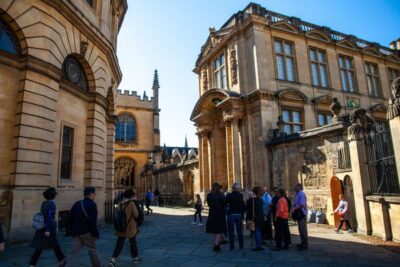
University and City Walking Tour with Alumni Guide
Read our review →
Harry Potter Movies Walking Tour (Kids Go Free)
Read our review →
The Great British Rock and Roll Music Walking Tour
Read our review →
Jack the Ripper Walking Tour – Ripper Vision Tours
Read our review →
Browse the lists this tour appears in