
Review · SELF-GUIDED TOURS
London: Self-Guided Notting Hill Walking Tour with an APP
Notting Hill, without the tour hassle. I like that this self-guided walk uses the Trippy Tour Guide app, so you can follow directions and hear stories as you go. I also like the mix of famous movie moments, including the iconic blue door and recognizable bookshop scenery, plus calmer residential streets and mews that feel like the real neighborhood.
The main thing to plan for is tech. You need a strong internet connection to download/install the tour using Wi-Fi first, and the narration is app-delivered, so it is not a hands-off experience. One heads-up from real-world use is that the AI voice in at least one non-English track can occasionally shift languages when it spots an English word.
In This Review
- Key things I’d prioritize on this Notting Hill app walk
- How the Trippy Tour Guide app keeps your Notting Hill walk on track
- Route overview: from Notting Hill Gate to Westbourne Park Station
- Cinematic photo stops: blue door, bookshop scenes, and Electric Cinema
- Portobello Road: the market-energy moment in the middle
- Pembridge Crescent to Elgin Crescent: the residential look that sells Notting Hill
- Lansdowne Crescent arches and Ormrod Court: small streets, big payoff
- St Luke’s Mews and Powis Mews: the movie-adjacent lanes
- Finishing touch: Westbourne Park Station and what to do next
- Price and value: is $14 for 2 hours a good deal?
- Who this self-guided Notting Hill walk is best for
- Should you book this Notting Hill app walking tour?
- FAQ
- Do I need an app to do this tour?
- Where does the tour start and where does it end?
- How long is the walking tour?
- What do I need to bring?
- Do I need internet to start the tour?
- Are entry fees included?
- What languages are available for the audio?
- Can I cancel if my plans change?
Key things I’d prioritize on this Notting Hill app walk
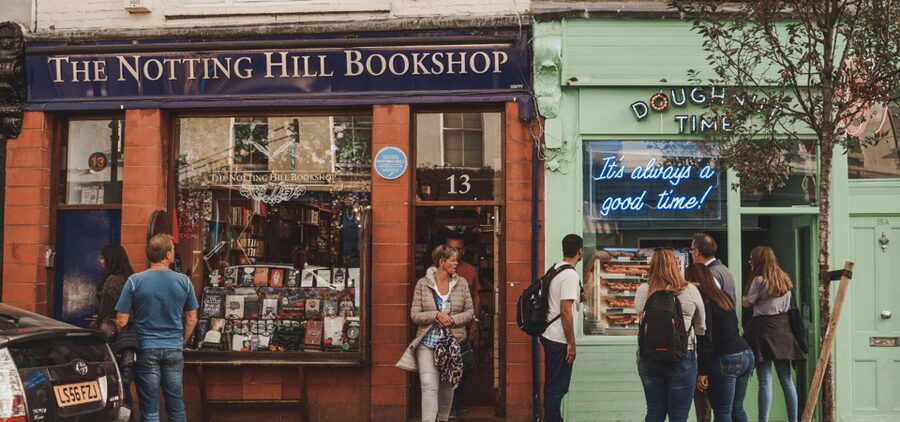
- Movie-photo targets: the blue door and bookshop cues that most visitors are chasing
- Over 20 narration points in about 2 hours, timed for walking rather than lingering
- Real directions to crescents, terraces, and mews that most people would never find on their own
- App controls that fit your pace: start, stop, replay, or rewind the audio
- Electric Cinema + Portobello Road context so you see the area’s entertainment and street-life side
- Six language options (English, Spanish, German, French, Italian, Chinese) through the same app
How the Trippy Tour Guide app keeps your Notting Hill walk on track
This tour is built around your smartphone, and that is a good thing if you like moving at your own tempo. You will use the Trippy Tour Guide app (not the GetYourGuide app). Once you arrive at Notting Hill Gate, you launch the tour inside the app and it starts automatically as you progress.
Plan to be ready before you begin walking. The tour requires you to install and download it using Wi-Fi, so I suggest doing that right before you leave your hotel or a café. Bring headphones and a charged phone, because the story points are audio-based and you will not get much out of it without sound.
The app approach also lets you shape the experience. Audio plays as you go, but you can start, stop, replay, or rewind any section. That matters on a street-walking route where you might want extra time to frame a photo, read a street sign, or simply pause to look at the façades.
One more practical detail: the tour includes audio in English plus Spanish, German, French, Italian, and Chinese. If you care about clarity, test your chosen language before you get too far. In one reported case, the French AI narration can flip to English around particular English words in the script, which can be distracting if you were hoping for a smooth track.
More Self-Guided Tours in London
- London: Emirates Stadium Entry Ticket and Audio Guide
★ 4.7 · 5,513 reviews - London: Churchill War Rooms Ticket & Political London Audio
★ 4.6 · 224 reviews - London: Royal Walking Tour and Buckingham Palace Audio Tour
★ 4.8 · 154 reviews
Route overview: from Notting Hill Gate to Westbourne Park Station
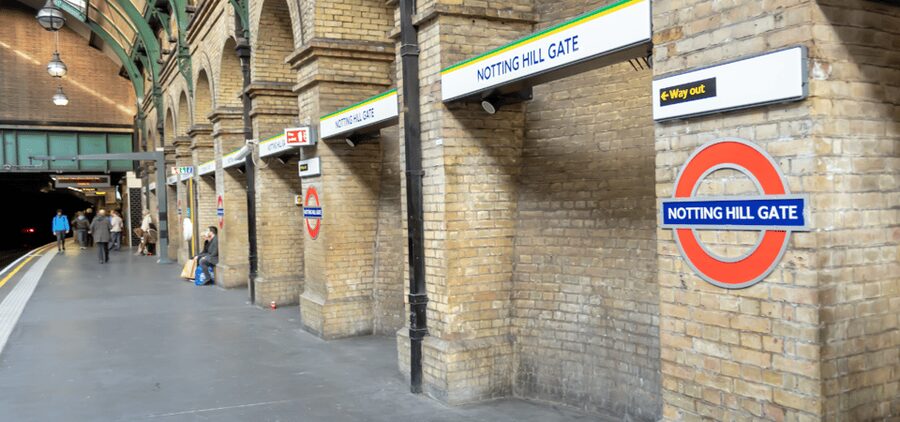
You are walking a compact, neighborhood-focused loop that starts at Notting Hill Gate and ends at Westbourne Park Station. That matters because it keeps the route feeling like one continuous neighborhood stroll instead of a long transit day.
The total time is about 2 hours, so you should treat it like an efficient orientation walk. It is long enough to cover major photo moments and several side streets, but short enough that you can still add your own stop after the walk, like a sit-down meal near Portobello Road or a quick look around the station area where the route finishes.
You will move through a string of named streets and squares that each have their own vibe. The trick is knowing what to look for at each one, because Notting Hill’s big draw is visual, not museum-style information.
Cinematic photo stops: blue door, bookshop scenes, and Electric Cinema
If your idea of Notting Hill includes movie memories, this tour is tuned to that. The highlight list specifically calls out the classic blue door shot, plus a bookshop angle tied to the Hugh Grant-era film legacy people associate with the area. Even if you are not a hardcore film buff, these are easy to recognize and they make great “I am here” photos.
As you keep walking, you will also reach Electric, the cinema named in the highlights. Electric gives the route a modern London entertainment beat, and it is a nice counterpoint to the residential streets. Think of it as a reminder that Notting Hill is not stuck in a single decade. It is a living neighborhood with nightlife, shopping, and foot traffic.
A small practical tip for photo stops: pace yourself around these points. The narration is audio-guided, so if you wait until you are at the exact spot to pull out your phone, you might feel rushed. If you want clean shots, take a second to reposition, then let the audio catch you again right after.
Portobello Road: the market-energy moment in the middle

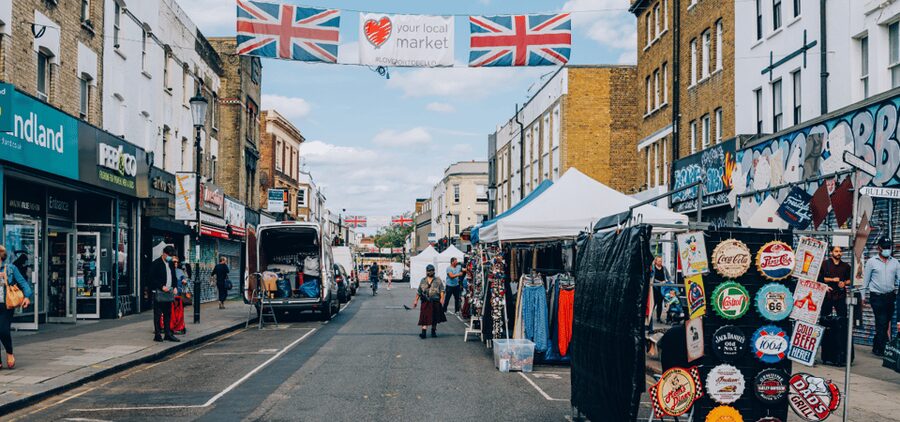
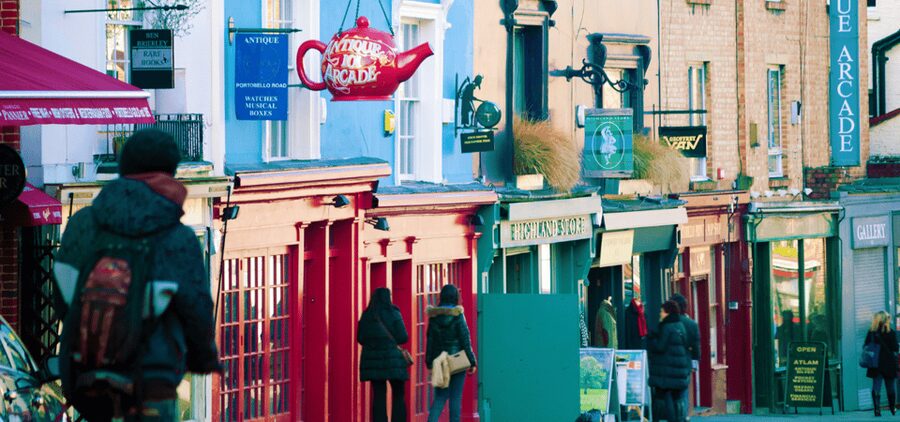
Portobello Road is mentioned as a key part of the experience, and it is where the neighborhood energy turns up. This is the segment where you will likely slow down, even if you do not mean to, because the street itself pulls you toward shopfronts, market stalls, and the general buzz of people moving in every direction.
The tour gives you context so Portobello Road does not feel random. The practical value here is pacing. Use this area to break your “all audio all the time” rhythm. If you want one quick snack or a look around, Portobello Road is the place to do it during the 2-hour window, not after you have finished and reached Westbourne Park.
Keep your expectations realistic. A market street is active. You do not need to win the crowd, just choose a path, take a few photos, then keep the route moving so you still catch the mews and crescents near the end.
More Walking Tours in London
- Magical London: Harry Potter Guided Walking Tour
★ 4.7 · 22,044 reviews - London: The Original Jack the Ripper Walking Tour
★ 4.7 · 7,833 reviews - London: Harry Potter Movies Walking Tour (Kids Go Free)
★ 4.7 · 3,071 reviews - London: The Great British Rock and Roll Music Walking Tour
★ 4.9 · 1,783 reviews
Pembridge Crescent to Elgin Crescent: the residential look that sells Notting Hill
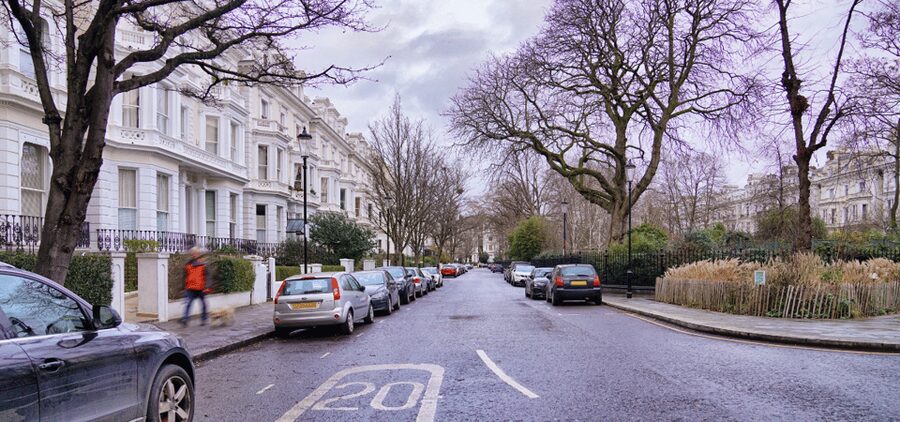
After Notting Hill Gate, the walk pivots into streets where architecture does the talking. You will visit Pembridge Crescent, and the tour description frames it as old-world charming. This is the kind of street where you can look at the rhythm of houses, the way doors and windows repeat down a façade, and the way the street shape nudges you toward the next turn.
Next up is Simon Close, described as quiet and pretty. Even without a formal “sight,” these short residential sections are where you start to feel what movie sets copy. Notting Hill’s charm is often about scale and neat details: tidy streets, careful building proportions, and that slightly off-center feeling where you are still in London, just far from the big landmarks crowd.
You will also see Denbigh Terrace, called out as old and beautiful houses. This is a “slow your steps” stop, because terraces are meant to be looked at from multiple angles. If you rush, you miss the visual pattern that makes the street feel special.
Then the route shifts to Elgin Crescent, highlighted as colorful and busy. This is where you will likely notice brighter house fronts, more street activity, and more of that classic Notting Hill contrast between curated-looking façades and everyday street life. If you are the kind of visitor who loves “where do I stand to get the best view of the street,” Elgin Crescent is a strong candidate for pausing and experimenting with angles.
Lansdowne Crescent arches and Ormrod Court: small streets, big payoff
Lansdowne Crescent is called out for its big arches. That is a clue for you. When you approach, do not just glance and move on. Position yourself so you can see the arches as a whole, because the shape is the whole point.
From there you get Ormrod Court, described as hidden spots. The value of a “hidden” stop on a self-guided route is simple: it breaks the cookie-cutter pattern. You are not only seeing the obvious streets, you are getting a taste of the footpath logic locals use, where tucked-away courtyards and side corners provide variety.
This is also where the self-guided format helps. You can listen to the audio while standing where it makes sense, then move on when you want. There is no group compression.
St Luke’s Mews and Powis Mews: the movie-adjacent lanes
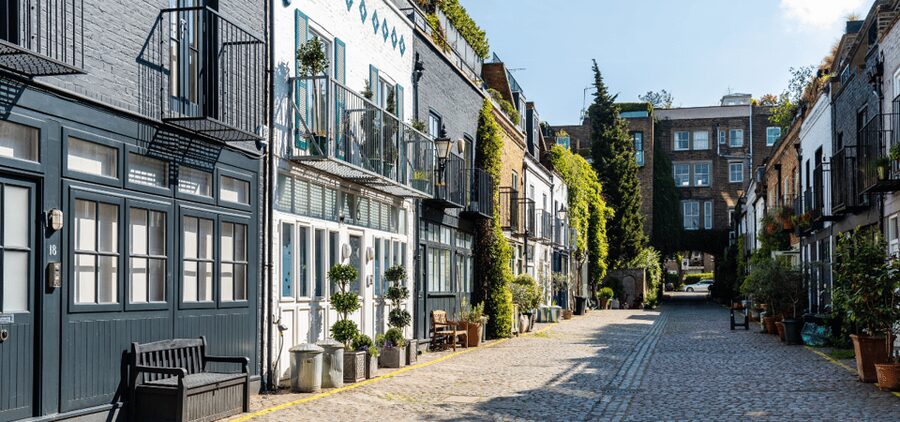
St Luke’s Mews is described as colorful and famous in movies. Mews lanes are often narrow and a little theatrical, which makes them perfect for film-familiar visitors. Even if you do not spot every reference, the payoff is the look and feel. It is a different texture than crescents and main roads, more intimate and photo-friendly.
Then you reach Powis Mews, where history is framed as coming alive. The key idea here is not that you are touring a museum. It is that a short stretch of lane can carry a lot of story through architecture, placement, and the way the neighborhood has been used in popular culture.
If you want the best results from these mews stops, use this technique: pause longer than you think you need at the entrance, then walk slowly through the lane while the audio is speaking. That way you catch both the narration points and the visual details at the same time.
Finishing touch: Westbourne Park Station and what to do next
You end at Westbourne Park Station, and that is useful because it gives you a clean “reset point.” By the time you arrive, you have gone through the cinematic photo locations, multiple crescents and terraces, and the mews sections that make Notting Hill feel like more than just a set of famous streets.
This is also where you can decide what kind of traveler you are today. If you want more neighborhood wandering, keep walking from the station area. If you want to eat or rest, you are in a spot that can work for an easy transition into your next plan.
Price and value: is $14 for 2 hours a good deal?

At $14 per person for about 2 hours, this is priced as a low-cost way to get structure without paying for a full guided group. The value is not only the route itself. It is the combination of over 20 audio narration points, detailed directions, and the ability to revisit or rewind sections if you want more time at a particular spot.
In practical terms, you are paying to avoid two common problems on self-guided walking days. First, you do not have to keep checking maps every few minutes, because the directions are built into the route flow. Second, you are not stuck figuring out what you are looking at. The audio narration points give you a reason to pay attention when you might otherwise just pass by.
If you are the type who uses your phone for audio anyway, this price starts to make even more sense. It turns an afternoon stroll into a guided-by-sound experience that you control.
Who this self-guided Notting Hill walk is best for
This tour fits best if you want a clear route and you like moving on your own terms. It is ideal for:
- Movie fans who want photo-friendly stops like the blue door and bookshop scenes, plus Electric Cinema
- First-time Notting Hill visitors who want an efficient sampler of crescents, terraces, and mews
- Solo travelers or small groups who do not want to match someone else’s pace
- Smartphone-ready travelers who can handle Wi-Fi download and headphone use
It is also a good fit if your schedule is tight. Two hours is long enough to cover a lot of the neighborhood feel, but short enough to pair with Portobello Road shopping or a pub meal afterward.
If you dislike phone-based experiences, this might feel like work rather than fun. The tour is built on the idea that you are guiding yourself with the app, not that you are being guided by a person.
Should you book this Notting Hill app walking tour?
I would book it if you want a structured way to see Notting Hill’s famous and quieter corners without paying for a full guided group. The combination of movie-recognizable photo points, a well-defined 2-hour route, and over 20 narration moments makes it easy to get value quickly.
I would skip it, or at least reconsider, if you do not want to rely on internet for download, if you are likely to lose headphone audio, or if you are sensitive to AI narration quirks in the language you plan to use. The route depends on your tech working smoothly.
If your phone cooperates and you go in with realistic expectations, this is a solid way to experience the neighborhood’s look, not just read about it.
FAQ
Do I need an app to do this tour?
Yes. You install and access the tour in the Trippy Tour Guide app. You also need to check your email for instructions and credentials to download the tour.
Where does the tour start and where does it end?
The tour starts at Notting Hill Gate and finishes at Westbourne Park Station.
How long is the walking tour?
It lasts about 2 hours.
What do I need to bring?
Bring headphones, a charged smartphone, the downloaded Trippy Tour Guide app, and water.
Do I need internet to start the tour?
Yes. You must install and download the tour using Wi-Fi, so you will want a strong internet connection during those steps.
Are entry fees included?
No. Entry fees are not included.
What languages are available for the audio?
The tour audio is available in English, Spanish, German, French, Italian, and Chinese.
Can I cancel if my plans change?
Yes. Free cancellation is available up to 24 hours in advance for a full refund.
More Self-Guided Routes in London
- Buckingham Palace State Rooms Entry & Royal London Audio App
★ 4.5 · 95 reviews - London: App-Based Walking Tour with 30 Stops
★ 4.1 · 3 reviews - Bath: Roman Baths Entry Ticket with Audio Guide
★ 4.7 · 425 reviews - Canterbury Cathedral: Entry Ticket with Audio Guide
★ 4.6 · 266 reviews
Newly listed near London
- London: 3-Hours Private Walking Tour★ 4.4 · 8 reviews
- London: 3-hour Outdoor Escape Room Game★ 4.0 · 5 reviews
- London: 3 Most Famous Art Galleries Tour★ 5.0 · 3 reviews
- London: 24-Hour Hop-On Hop-Off Bus Pass★ 3.1 · 133 reviews
- London: Secret Beer Tour★ 4.9 · 10 reviews
- London: 3 Days of Must-See Attractions including London Eye★ 4.5 · 22 reviews
- London: Private Underground and Tube Tour★ 4.6 · 42 reviews
- London: 20-Minute Tower RIB Blast from Tower Pier★ 4.7 · 135 reviews
Self-Guided Tours, compared.

Emirates Stadium Entry Ticket and Audio Guide
Read our review →

Canterbury Cathedral: Entry Ticket with Audio Guide
Read our review →
Churchill War Rooms Ticket & Political London Audio
Read our review →
Royal Walking Tour and Buckingham Palace Audio Tour
Read our review →
Buckingham Palace State Rooms Entry & Royal London Audio App
Read our review →
Isle of Skye Driving Tour from Portree with an APP
Read our review →Browse the lists this tour appears in