

Review · SELF-GUIDED TOURS
Canterbury Cathedral: Entry Ticket with Audio Guide
Canterbury Cathedral is history you can walk through. I like that this visit is built around a handset audio guide, so you control the pace while learning how the cathedral shaped England’s religious story for 1,400 years. I also love the payoff, you get the big-ticket spaces like the Chapter House and the Great Cloister, plus stained glass and museum-style commentary that turns architecture into real stories.
One drawback to plan for: the site can be a bit tricky to follow, since some visitors find wayfinding confusing without clearer numbered signs, so give yourself extra time to re-find the next stop.
In This Review
- Key points to know before you go
- Entering Canterbury Cathedral, and why the audio guide matters
- Your first stop: the voucher desk and getting set up fast
- The cathedral interior: high ceilings, royals, monks, and martyrs
- Stained glass at Canterbury: why the windows feel different
- Chapter House: detailed ceiling and the kind of room that holds your attention
- The Great Cloister: where monks walked, and why the air changes
- Ruins, precincts, and the garden spaces that make the day feel human
- Exhibitions on site: add-on context, up to three stops
- How long to plan: timing that matches real attention spans
- Cost and value: what about $31 gets you
- Who should book this Canterbury audio visit
- Should you book Canterbury Cathedral with an audio guide?
- FAQ
- What does the ticket include?
- What languages is the audio available in?
- Where do I pick up the audio guide?
- How long should I plan for this visit?
- Is Canterbury Cathedral wheelchair accessible?
- Can I take photos or video?
Key points to know before you go
- Self-guided handset audio with headphones, in English, German, French, or Japanese
- Skip-the-line entry that helps you start exploring faster
- Access to Chapter House and the Great Cloister, plus scenic gardens
- Visit up to three exhibitions during your timed visit (availability varies)
- Spend about 2 to 3 hours easily, then linger if you want
- Watch your steps, with uneven floors and some stone steps in entry areas
Entering Canterbury Cathedral, and why the audio guide matters
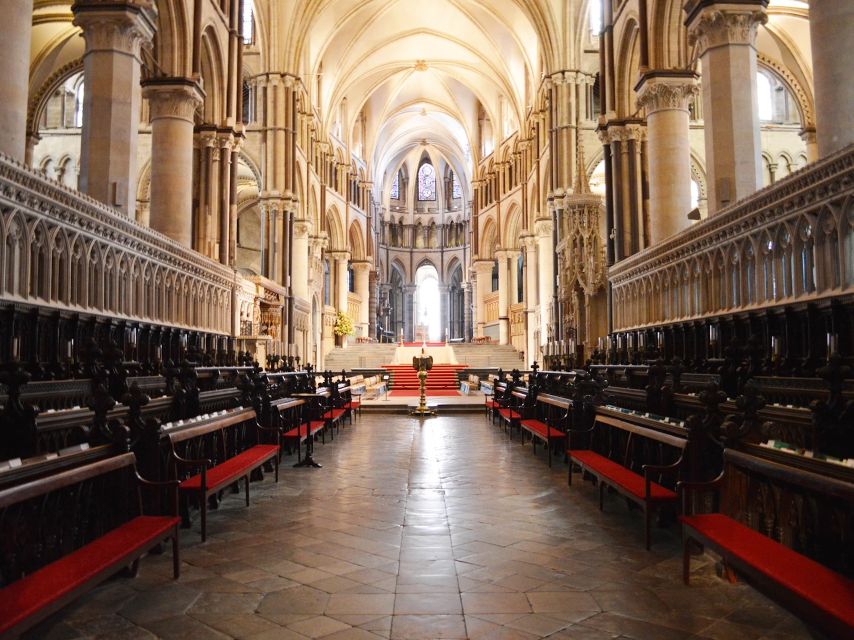
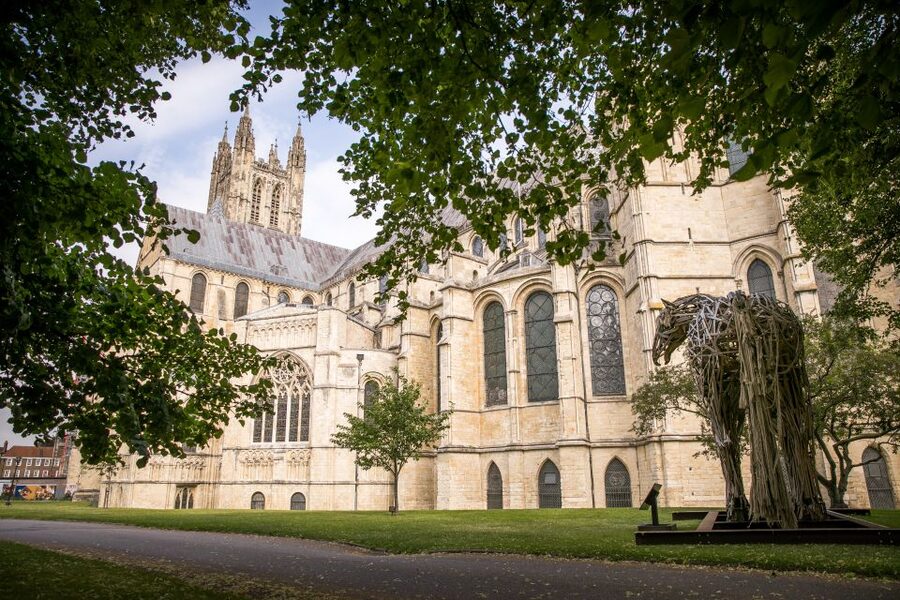
Canterbury Cathedral sits at the center of England’s church history, and the building makes that obvious fast. It is also the seat of the Archbishop of Canterbury and the mother church of the worldwide Anglican Communion, so you are not just looking at old stone, you are seeing how authority, worship, and pilgrimage took physical form.
What makes this experience especially workable is that you are not waiting for a group pace. You get a handset and headphones as part of the ticket, then you follow the cathedral at your own rhythm, stopping to read details when you want and moving on when you are ready. In plain terms, the audio guide helps you stop treating the place like a maze and start treating it like a story with chapters.
The other practical win is how well the audio format fits Canterbury’s layout. There is a lot to cover in one day: the main cathedral, historic precinct spaces, and areas tied to the cathedral’s museum interpretation. With audio in your ears, you can connect what you are seeing to the bigger timeline, from early missions to later rebuilds.
And yes, you should expect uneven footing and mixed access routes. Some entryways have stone steps, while some areas offer ramps. If you use mobility supports, plan on slower movement and be ready to adjust if certain areas close on short notice.
A few more Canterbury & Kent days worth comparing
- London: Emirates Stadium Entry Ticket and Audio Guide
★ 4.7 · 5,513 reviews - Bath: Roman Baths Entry Ticket with Audio Guide
★ 4.7 · 425 reviews - London: Churchill War Rooms Ticket & Political London Audio
★ 4.6 · 224 reviews
Your first stop: the voucher desk and getting set up fast
This is a simple, low-stress start if you know what to do. Bring your voucher to Canterbury Cathedral, then you will be directed to the desk where you pick up your media guide set and headphones.
With small groups limited to just 9 participants, the pickup process tends to feel manageable compared with big tourist waves. Still, I suggest arriving with a little buffer, especially if you want your audio ready before you step into the cathedral precincts. Getting comfortable with the handset buttons early saves you from the slow hunt that can happen once you are already surrounded by stone, shadows, and crowds.
Once you have the handset and headphones on, you can treat the rest of the day like a choose-your-own-walk. You get suggested pacing and segments, but you are not locked into one rigid script. A lot of visitors like that the audio breaks the visit into natural chunks, which makes it easier to absorb the architecture instead of rushing through it.
The cathedral interior: high ceilings, royals, monks, and martyrs
The heart of Canterbury Cathedral is built to feel both vast and intimate at the same time. High ceilings pull your gaze upward, and the atmosphere changes as you move between open views and more enclosed corners.
The audio guide is designed to connect those shifts to meaning. You will hear stories tied to royals, monks, and martyrs as you walk under the cathedral’s soaring interior spaces. That matters because stained glass, carvings, and layout details can look abstract if you only glance and move on. With the audio playing, you tend to notice the specific features the cathedral is known for.
You also get a guided lens on the building’s long evolution. Canterbury was shaped through repeated building and rebuilding, with style changes across the medieval period. One big historical anchor is the 1174 fire. After that, parts were rebuilt in the Perpendicular Gothic style, which you can often spot in the way vertical lines and structural rhythm show up.
If you care about how buildings tell time, this is where the cathedral becomes more than impressive. You start seeing layers, not just a single era frozen in place.
Stained glass at Canterbury: why the windows feel different

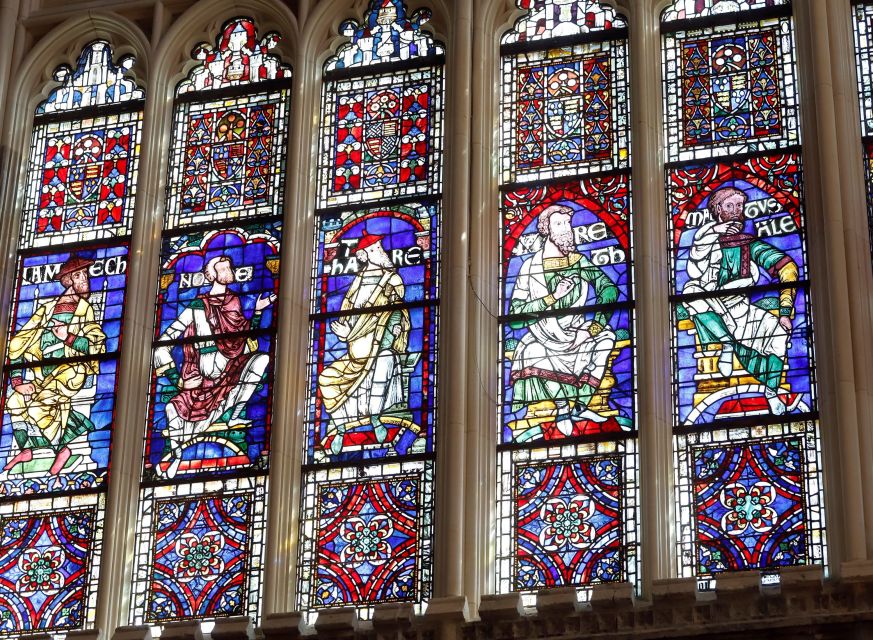
Canterbury’s stained glass is a major reason people make a detour here. Some of the windows are among the oldest in the world, and that changes how you experience them.
Instead of just admiring color, you can listen for what the windows represent and why they matter in a cathedral setting. In many churches, stained glass is treated as decoration. In Canterbury, it comes across as instruction and memory, built to catch light and translate belief into visual form.
Practical tip: spend a few minutes just letting the light do its work. You do not need to rush to the next audio point immediately. If you pause during the window moments, the cathedral’s story lands more clearly, because you are letting the space set the mood.
More self-guided routes in Canterbury & Kent:
- London: Royal Walking Tour and Buckingham Palace Audio Tour
★ 4.8 · 154 reviews - Bristol: Self-Guided Sightseeing Audio Tour
★ 4.4 · 151 reviews - London: Self-Guided Notting Hill Walking Tour with an APP
★ 4.3 · 120 reviews - Buckingham Palace State Rooms Entry & Royal London Audio App
★ 4.5 · 95 reviews
Chapter House: detailed ceiling and the kind of room that holds your attention

The Chapter House is one of those spaces that makes you stop talking and start looking. The ceiling detail is famous enough that people often mention it as a standout, and it has a way of rewarding slow walking.
In this visit format, the Chapter House is not a quick stop. Your ticket includes access, and the audio helps frame what you are seeing in the broader timeline. That is important because rooms like this are easy to skim, especially if you are carrying your whole day in your head. Listening as you enter helps you understand why the room existed as it did, not just what it looks like.
One more reason I recommend giving it time: the Chapter House can act like a reset point in your itinerary. After walking the cathedral spaces, you can shift from soaring grandeur to concentrated craft and detail. It is a different kind of wow, and Canterbury has more than one.
The Great Cloister: where monks walked, and why the air changes
The Great Cloister is atmospheric in the best way, the kind of place that feels made for walking slowly. This is the precinct space associated with monks for centuries, and even if you have only a general sense of monastic life, the layout helps you imagine routine and quiet.
The audio guide supports this by turning the cloister into a lived setting rather than an empty corridor. You are not just moving through space, you are tracing how people used these spaces day after day.
Practical tip: bring patience for the cloister transitions. The cathedral precinct is old and intricate, and it takes a few minutes for your bearings to settle. If you have ever tried to follow audio in a place with lots of similar stone doorways, you know what I mean. Here, that calm pause helps you avoid backtracking.
If you prefer clearer navigation, do not be afraid to stop and visually confirm where you are before you tap to the next segment. Some visitors wished for more obvious numbering, so using your eyes as much as your handset makes the day smoother.
Ruins, precincts, and the garden spaces that make the day feel human
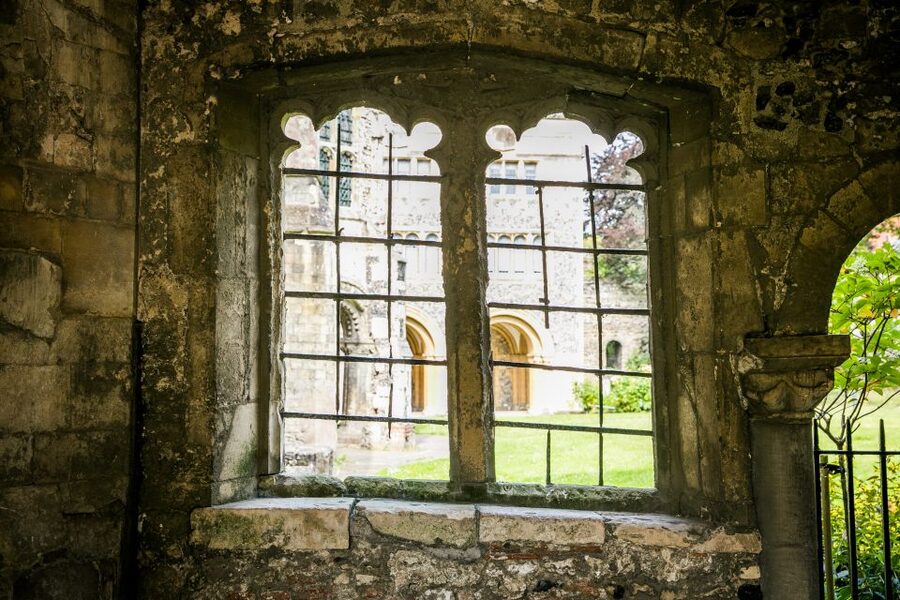
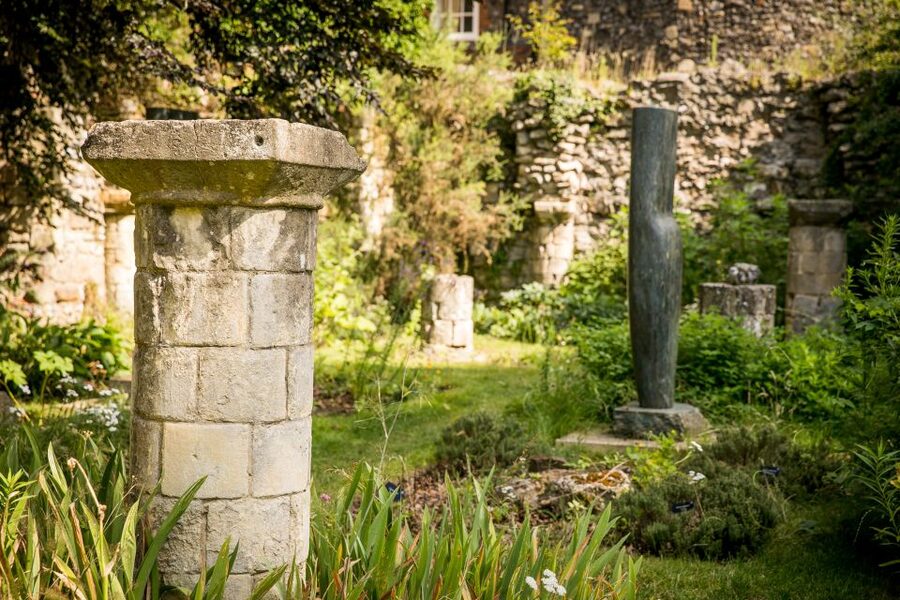
Canterbury is not only inside the main church shell. Your ticket includes access to historic ruins, atmospheric precinct areas, and scenic gardens, including three public gardens.
That garden time is not filler. It gives you a break from stone density and helps you digest what you just learned. When you come back in, the architecture feels more legible, like your brain has had time to reorganize the timeline.
One garden feature gets special mention, a reimagining of a medieval Herbarium. That kind of interpretive space works well alongside a cathedral visit because it keeps the medieval world tangible. Even if you are not a plant expert, you can still appreciate the idea that knowledge, healing, and daily life all touched religious institutions.
Take this as permission to slow down. If you are the type who wants photos and details, gardens give you room to do that without feeling like you are sprinting between major sights.
Exhibitions on site: add-on context, up to three stops

Your entry ticket also includes access to up to three exhibitions around the cathedral site. Exhibitions can be hit or miss in general, but in a place like Canterbury, they usually help you connect the building to the people and events that shaped it.
Think of exhibitions as your chance to fill gaps. The cathedral itself is a huge story, and some elements make more sense after you see supporting interpretation. If you are a history lover, this is where you can extend the day beyond the main spaces.
Because availability can vary, keep the exhibitions flexible. If you arrive and two areas are closed, you still have plenty to do with the core cathedral, Chapter House, cloisters, and gardens. The structure of the ticket is built so you are not dependent on every add-on slot being open.
How long to plan: timing that matches real attention spans

This experience is listed as valid for 1 day, and starting times depend on availability. In practice, you will feel comfortable planning around 2 to 3 hours inside and around the cathedral precincts.
That time window is based on how much there is to read and listen to. The audio guide covers multiple eras and themes, and it also gives natural breaks between segments. If you rush, you can cut it down. If you like to pause at windows and detailed interiors, you can comfortably run longer.
One more timing consideration: some areas may close at short notice. That means you should build in a little slack rather than scheduling everything else tightly on the same day.
Cost and value: what about $31 gets you
At about $31 per person, this ticket is not trying to sell you a fancy tour bus experience. You are paying for direct access to a major historic site plus the equipment that turns it from random sightseeing into a structured narrative.
Here is why the value equation works:
- You get skip-the-line entry, which matters in busy heritage sites.
- You get a handset and headphones included, so you do not need your own device setup.
- You get access to key indoor spaces like the Chapter House and the Great Cloister, plus gardens and up to three exhibitions.
In other words, you are buying time and clarity. If you love historic architecture but hate guessing what to look for, the audio guide is the part that pays you back fast.
Who should book this Canterbury audio visit
I think this works best if you want history that is concrete. If you enjoy religious art, medieval architecture, and the way buildings carry political and spiritual power, Canterbury Cathedral rewards your attention.
You will also like it if you travel at your own speed. The small group limit is handy, but the real freedom comes from using the audio guide in your own order of stops within the site.
It is a strong pick for:
- History buffs who want context without a live tour schedule
- Couples and solo travelers who prefer quiet exploration
- Families who can manage a self-guided setup, as long as kids under 16 stay with an adult
It may be less ideal if you rely heavily on visual navigation cues. Even with an audio guide and segments, uneven signage and complex layout can mean backtracking.
Should you book Canterbury Cathedral with an audio guide?
Yes, if your goal is to understand what you are seeing, not just stand in front of it. This ticket gives you the cathedral’s core spaces, the cloisters, gardens, and optional exhibitions, then wraps it all with audio storytelling in multiple languages.
If you hate tech hiccups, do one thing: test the handset and headphones right away at pickup. And if wayfinding stresses you out, give yourself extra time to settle into the space before you commit to the next segment. With that small approach, you get a powerful day that turns Canterbury into a place you can actually follow.
FAQ
What does the ticket include?
The ticket includes entry to Canterbury Cathedral, an audio guide in one of the listed languages, and a handset with headphones.
What languages is the audio available in?
The audio guide is available in English, German, French, and Japanese.
Where do I pick up the audio guide?
You present your voucher at Canterbury Cathedral, then you are directed to the desk to receive the media guide sets and headsets.
How long should I plan for this visit?
The visit is valid for 1 day, and many people spend around 2 to 3 hours inside and around the cathedral precincts.
Is Canterbury Cathedral wheelchair accessible?
Yes, it is wheelchair accessible, though floors can be uneven in places and some entryways have stone steps while some have ramps.
Can I take photos or video?
Commercial photography is not permitted. No photography or video recording is permitted at any time in the crypt.
Newly listed near Canterbury & Kent
- Kent: England’s Longest Zip Wire – 720m Flight over Quarry★ 5.0 · 4 reviews
- Guided Nature Tour: Pilgrims Way & Bigbury Fort★ 5.0 · 8 reviews
- From London: Christmas in Canterbury, Dover & Greenwich★ 3.6 · 5 reviews
- From London: Canterbury and White Cliffs of Dover Group Tour★ 3.4 · 5 reviews
- From Brighton: Leeds Castle & Canterbury Full-Day Trip★ 4.9 · 8 reviews
- Dover, Canterbury, and Leeds Castle Private Tour★ 4.7 · 3 reviews
- Canterbury: Yoga with Goats and Sheep★ 5.0 · 9 reviews
- Canterbury: City & Cathedral Private Guided Tour★ 5.0 · 5 reviews
Self-Guided Tours, compared.

Emirates Stadium Entry Ticket and Audio Guide
Read our review →

Churchill War Rooms Ticket & Political London Audio
Read our review →
Royal Walking Tour and Buckingham Palace Audio Tour
Read our review →

Self-Guided Notting Hill Walking Tour with an APP
Read our review →
Buckingham Palace State Rooms Entry & Royal London Audio App
Read our review →
Isle of Skye Driving Tour from Portree with an APP
Read our review →Browse the lists this tour appears in