
Review · CITY TOURS
Canterbury: City & Cathedral Private Guided Tour
Canterbury can feel like a timeline under your shoes, and this private tour turns the streets into a story you can walk through. I especially like the trained guide setup, with Green Badge city guiding plus a qualified cathedral guide. I also like that you get both a medieval city walk and an in-depth inside look at Canterbury Cathedral. The one drawback to keep in mind is the schedule is tight, so you will want comfortable shoes and a bit of stamina.
The city portion keeps you moving through cobbled lanes and the Cathedral Precincts, then the tour settles into the building itself for serious architecture time. I like the fact that you are not just seeing famous sights, you are hearing how Canterbury became a magnet for pilgrims and how darker chapters such as plague and unrest fit into the same streets. If you are hoping for lots of free time for independent exploring, you may find the pacing geared toward guided explanation.
In This Review
- Key points to know before you go
- Starting on the Buttermarket, where Canterbury’s old center begins
- Buttermarket to Butchery Lane: why street names matter here
- The High Street and Eastbridge Hospital: power, charity, and real urban life
- The Marlowe and the Precincts: getting to the Cathedral’s doorstep
- Entering Canterbury Cathedral: 1,400 years in one building
- Thomas Becket’s murder and the pilgrimage story that followed
- Your walkthrough stops, translated into what you should actually look for
- Price and logistics: is a private tour worth it for two people?
- Who should book this Canterbury City and Cathedral tour
- Should you book this private Canterbury tour?
- FAQ
- How long is the Canterbury City and Cathedral Private Guided Tour?
- What is included in the tour price?
- How many people is the private tour for?
- Where does the tour meet?
- Is Canterbury Cathedral entry included?
- Is the tour wheelchair accessible?
- Is video recording allowed?
- What language is the tour guide?
- What is the weather recommendation?
Key points to know before you go
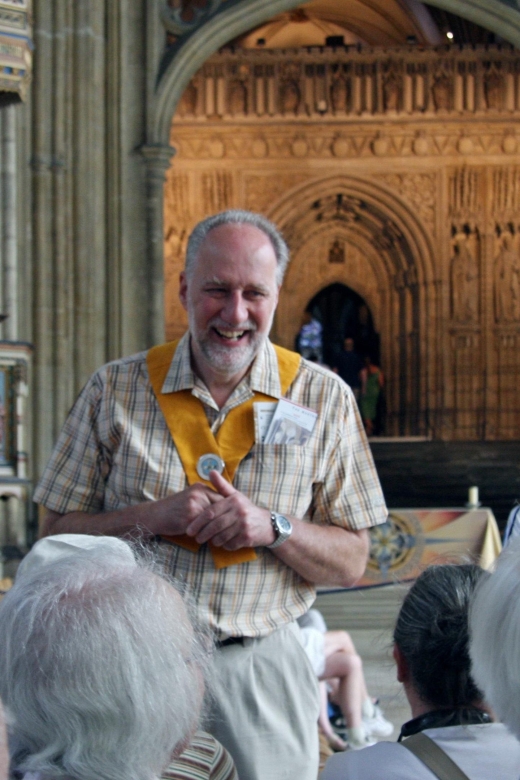
- Green Badge city guide + cathedral guide means you get two kinds of expertise, not one.
- Skip-the-ticket-line entry helps you spend more time where it counts, inside the Cathedral.
- A murder site you can stand at, connected to Thomas Becket and the surge of pilgrimage.
- Street-level history in lanes like Butchery Lane and Mercery Lane, where names reflect old trades.
- Perpendicular Gothic inside views focus on the nave, crypt, and Trinity Chapel.
- Private group format is built for questions and a more tailored pace for up to two people.
Starting on the Buttermarket, where Canterbury’s old center begins
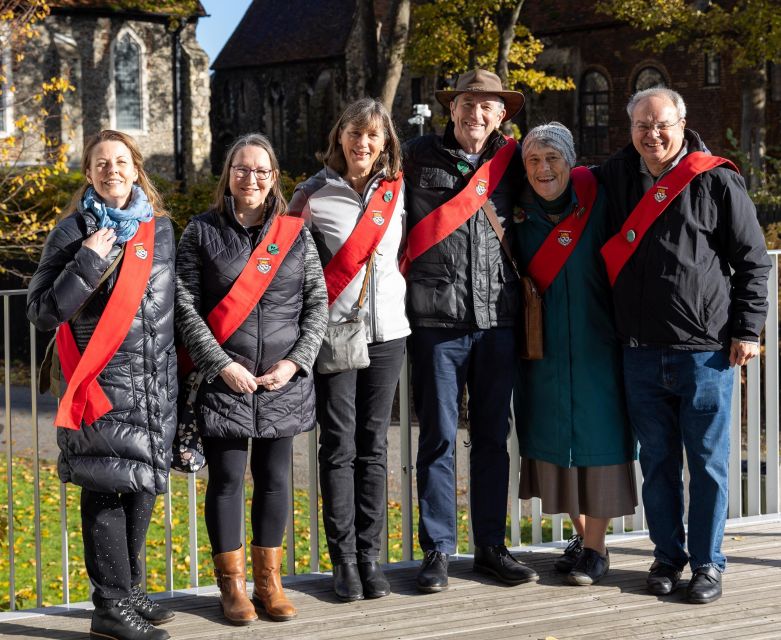
Your tour starts in the area of the Buttermarket, near the Cathedral entrance, with the guide identifiable by a red sash by the War Memorial. That matters because Canterbury Cathedral is busy, and when you are meeting in the right spot you get moving quickly instead of hunting around.
From the first stop, the vibe is practical and story-driven. You will begin with short photo stops and brief guided context, then the pacing builds as you work your way through lanes and key landmarks. This is a good way to get your bearings fast, because Canterbury is compact but packed with small turns. I like that you are not just dropped in front of the Cathedral and left to figure it out.
The Buttermarket itself is used as a starting anchor, a familiar-looking public square that connects you to the surrounding medieval fabric. If you like understanding how a town functioned day to day, this kind of opening is the right tone: trade, people, and movement, all around you.
A few more Canterbury & Kent days worth comparing
- Dover Castle Admission Ticket
★ 4.7 · 735 reviews - Canterbury: Walking Tour with Green Badge Guide
★ 4.8 · 709 reviews - Canterbury Cathedral: Entry Ticket with Audio Guide
★ 4.6 · 266 reviews
Buttermarket to Butchery Lane: why street names matter here
After the initial photo moment at the Buttermarket, you move into lanes that feel medieval because they still are. Butchery Lane and Mercery Lane are not random street names, they are clues to how trades shaped the city.
Here is what you should listen for during these lane stops. The guide will be tying the street layout to everyday life and the kinds of roles people had. Even in a short pause, street names can act like labels on a map from the past. You are basically learning to read the town: where food was prepared, where commerce happened, and how close people were to one another.
This approach is especially helpful if Canterbury is one of several stops on your trip. When you can attach specific meanings to the places you pass, the day feels more connected and less like a list of monuments.
Photo stops like these also create an easy rhythm. You are not sprinting every minute, but you are never stuck standing around either. It is a comfortable balance for most visitors.
The High Street and Eastbridge Hospital: power, charity, and real urban life
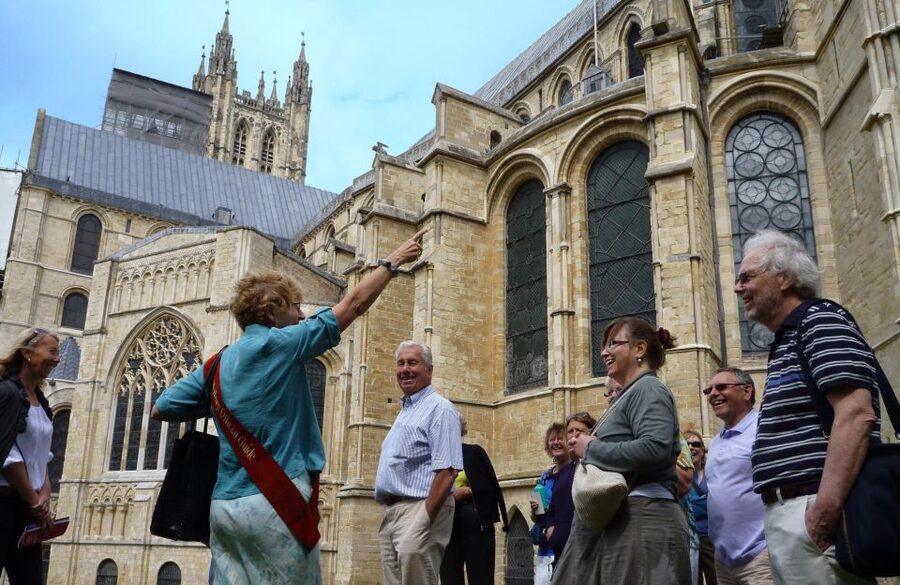
Next up is the High Street, which functions as a main line through the city. Streets like this often look straightforward compared with the lanes, but they tend to reveal layers fast. Expect the guide to connect the city’s public face to the people who moved through it, worked there, and made decisions that echoed for generations.
From there, you head toward Eastbridge Hospital of St Thomas the Martyr. This kind of stop is valuable because not every historic moment is about kings, battles, or big architectural achievements. Hospitals and charitable institutions tell you how communities responded to illness and hardship, and that connects directly to the tour’s willingness to talk about tough chapters, including plague.
If you are the type of traveler who likes to understand how societies actually ran, you will appreciate that the tour does not stay purely on the grand cathedral storyline. Canterbury is famous for pilgrimage, but it was also a place where people faced sickness, poverty, and daily survival.
The Marlowe and the Precincts: getting to the Cathedral’s doorstep
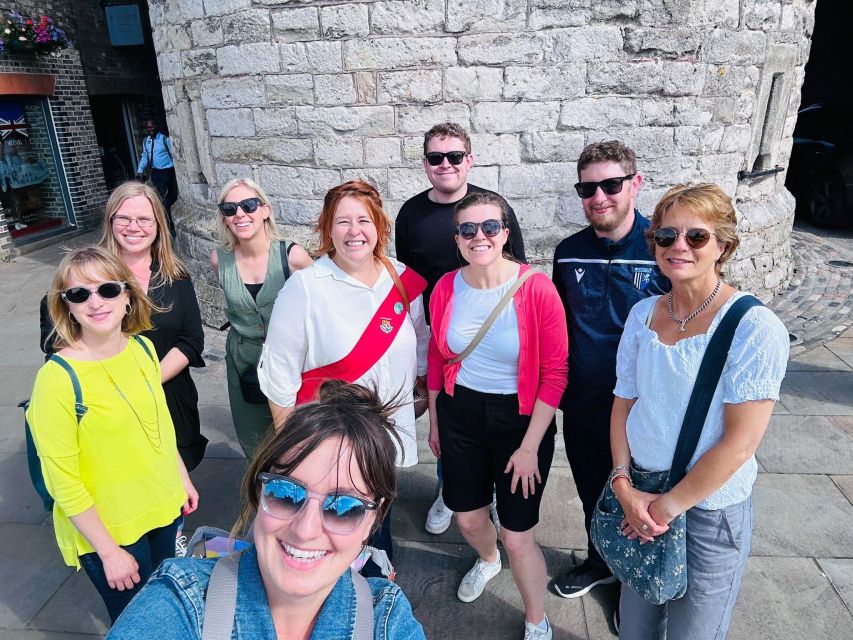
As you continue, the stop near The Marlowe adds another layer to the day. This is a reminder that Canterbury is not trapped in the Middle Ages. It still has a modern cultural presence, which helps you keep the Cathedral in a living town context.
Then the tour reaches the Precincts. This is where the mood changes. Precinct spaces are designed to transition you from city noise into a sacred zone. I like this part because it helps you switch gears before you ever cross the Cathedral threshold.
The Precincts stop is longer, giving you time to absorb the setting and settle your eyes on how the buildings relate to one another. If you tend to get distracted by crowds, arrive ready to slow down slightly here. The guide’s stories make the space feel less like scenery and more like a functioning part of Canterbury’s identity.
Same corner of Britain, a different sort of outing:
- Chatham Historic Dockyard: Call the Midwife Tour
★ 4.6 · 216 reviews - Canterbury: Private Guided Walking Tour with Official Guide
★ 5.0 · 15 reviews - Canterbury: Yoga with Goats and Sheep
★ 5.0 · 9 reviews - Guided Nature Tour: Pilgrims Way & Bigbury Fort
★ 5.0 · 8 reviews
Entering Canterbury Cathedral: 1,400 years in one building

When you step inside Canterbury Cathedral, you are in England’s first Cathedral, and it is also a UNESCO World Heritage Site. The tour focuses on how the building evolved and what each architectural area is designed to do for worship and movement.
You will get around 75 minutes inside, guided and structured around major spaces. The tour highlights the Perpendicular Gothic Nave, which is worth paying attention to even if you are not a big architecture fan. Perpendicular Gothic is about verticality and detailed structure, and it tends to change how light lands in the Cathedral, making the space feel different from room to room.
The guide also takes you into the crypt and onward toward the Trinity Chapel. These are the kinds of areas where the Cathedral feels older and more enclosed. Even if you have seen photos, seeing these spaces in person changes the experience because you start noticing scale and texture, not just famous features.
This is also where the private format pays off. You can ask questions about what you are seeing in the moment, and the guide can point out what to focus on instead of you guessing where to look next.
You should also know that you will be there enough to notice details, but not so long that you feel trapped. It is a strong length for most visitors, especially when you already walked for the first half of the tour.
Thomas Becket’s murder and the pilgrimage story that followed
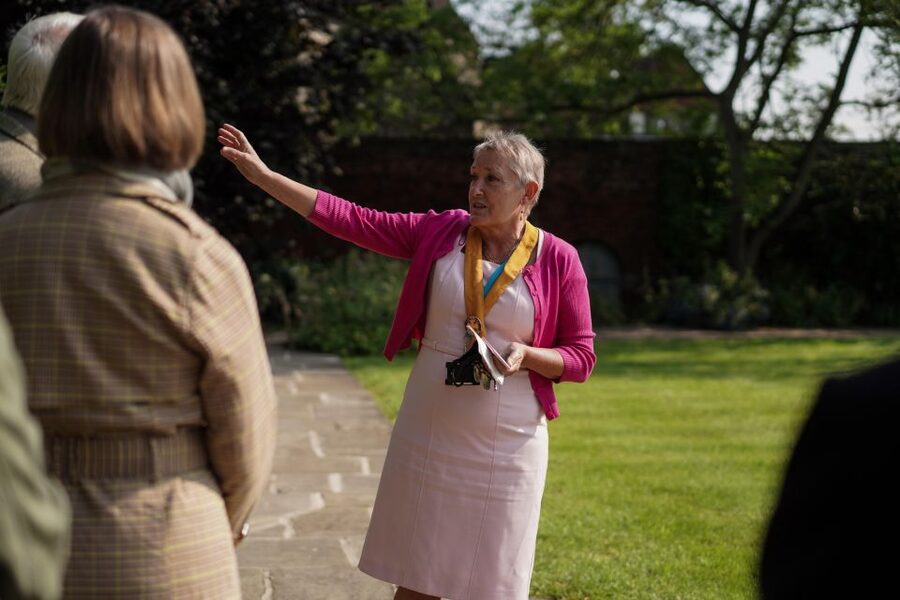
The most emotionally charged part of the day centers on Thomas Becket and the place where he was murdered in 1170. The guide will connect this event to why Canterbury became a major pilgrimage destination, including how stories spread and why people felt compelled to travel.
I like that this tour treats Becket as more than a name on a plaque. The Cathedral’s later reputation is linked to what happened here, and that connection gives the building extra weight. When you can connect cause and effect, the architecture stops being just a visual and becomes part of the narrative.
This is also where Geoffrey Chaucer’s Canterbury Tales enters the conversation. Even if you know the tales only from reading summaries, hearing how the tradition of pilgrims and storytelling connects back to Canterbury helps you place the cultural echo of medieval travel.
And then the tour widens again, so it is not only about devotion. You will hear about pilgrims alongside other pressures faced by the city, including plague and peasants’ revolts. It is a reminder that in the Middle Ages, belief and hardship lived side by side.
Your walkthrough stops, translated into what you should actually look for
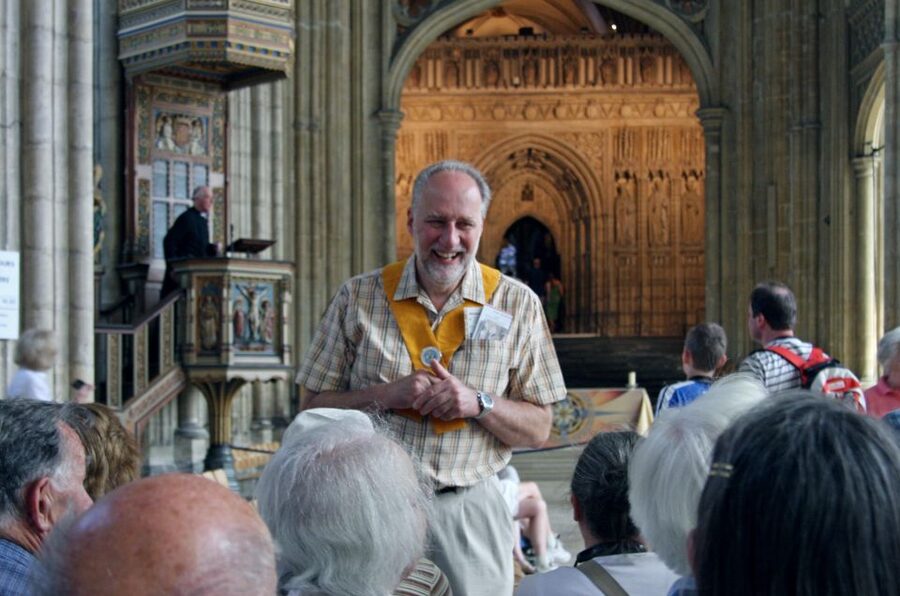
For this kind of private tour, the best value comes from knowing what to pay attention to at each moment. Here is how to use the day well.
At the Buttermarket and in the early lanes, focus on street structure and names. Where do lanes bend and narrow? Which routes feel like they funnel people naturally toward the Cathedral zone? Those small observations make the guided stories click.
At the High Street and around Eastbridge Hospital, your best focus is on the idea of civic life. Canterbury is not only a religious destination, it is a city with charity, trade, and public movement. Let the guide’s context help you build the full picture.
In the Precincts and inside the Cathedral, switch your attention from streets to space. Look up during the nave segment and notice how the Cathedral’s lines guide your eyes. Then lower your gaze in the crypt and nearby areas, because the feeling often changes when you move from grand open space to older, quieter zones.
If you do this, you will leave with a mental map that lasts longer than the photos.
Price and logistics: is a private tour worth it for two people?
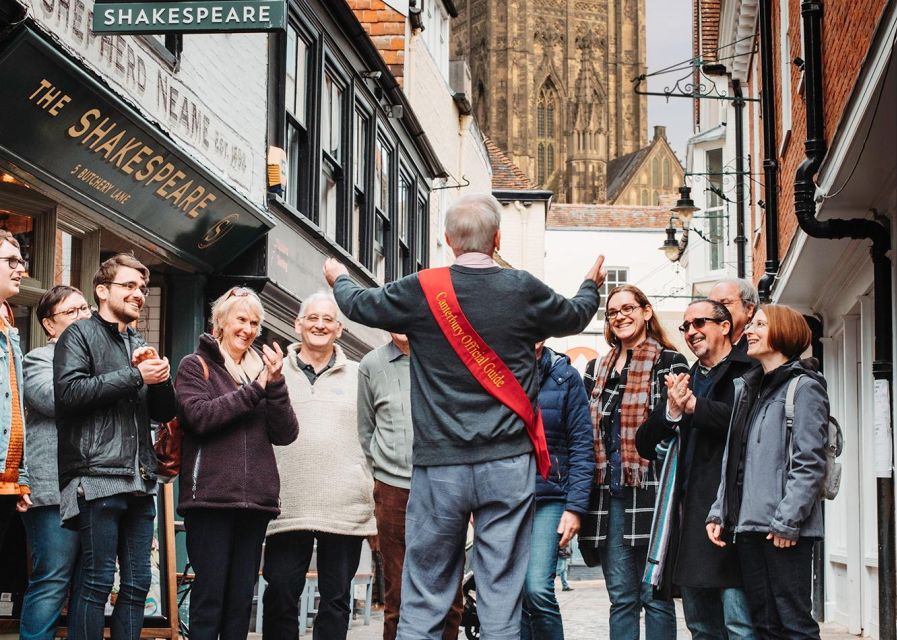
At about $342 per group up to 2, this is not a budget option, and that is exactly why the private format matters. You are paying for two things that are hard to replicate on a cheaper group tour: expert guidance at the street level, and guided time inside the Cathedral with someone focused on interpretation.
If you are traveling as a pair, the math starts to make sense. A guided walk plus a Cathedral interior tour that includes skip-the-line entry is time-efficient, and time is one of the biggest hidden costs in old cities. You also avoid the stress of coordinating your own route through lanes and then figuring out how long you should spend in each Cathedral space.
A small planning note: there is no video recording allowed, so if you rely on filming for later review, plan on photos instead. Also, the walking time is meaningful, and the total duration is around 165 minutes. Wear shoes you trust, and dress for the weather. Canterbury weather can change quickly, and you do not want damp discomfort to steal attention from the guide.
Who should book this Canterbury City and Cathedral tour
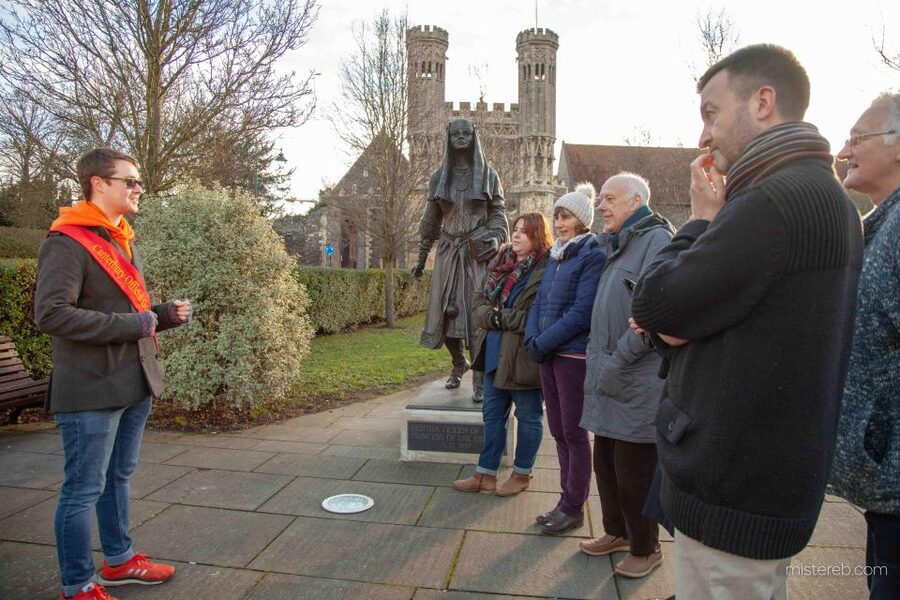
This tour is a strong match if you want a guided day that combines medieval city atmosphere with Cathedral architecture and storytelling about Thomas Becket.
I would especially recommend it if:
- You care about stories that include both the sacred and the difficult parts of medieval life, like plague and unrest
- You like asking questions and getting direct answers while you are standing in the actual place
- You want a quieter, controlled experience for up to two people
- You are visiting Canterbury as a stop and want high value from limited time
It is less ideal if you want a mostly self-guided afternoon, with long breaks and minimal structure. The tour is designed to keep momentum and meaning moving together.
Should you book this private Canterbury tour?
Yes, if your goal is to understand Canterbury instead of just scanning highlights. The combination of a Green Badge city guide, a qualified Cathedral guide, and focused time inside the Cathedral adds up to a day that feels organized without being rigid.
Skip it if you are determined to roam independently, or if you already know Canterbury well and only need a quick Cathedral look. In that case, you might prefer a lighter option.
But if you want the city streets to make sense and the Cathedral to feel personal, this is a very solid choice. You will walk away with a clearer mental map, a stronger sense of why pilgrimage mattered, and a better understanding of how tragedy and devotion shaped Canterbury into the place it is today.
FAQ
How long is the Canterbury City and Cathedral Private Guided Tour?
The tour duration is 165 minutes total, including the city walk and the time inside Canterbury Cathedral.
What is included in the tour price?
You get a private city tour with a fully qualified Canterbury City Green Badge Guide, a private Cathedral guide, a 90-minute city and Precincts guided experience, and entrance plus a 75-minute guided tour inside Canterbury Cathedral.
How many people is the private tour for?
The price is listed per group up to 2, and it is a private group experience.
Where does the tour meet?
The guide will be wearing a red sash and waiting near the War Memorial. The Buttermarket is described as a small square outside the Cathedral entrance.
Is Canterbury Cathedral entry included?
Yes. Entrance into Canterbury Cathedral is included, along with a 75-minute guided tour inside.
Is the tour wheelchair accessible?
Yes, the tour is listed as wheelchair accessible.
Is video recording allowed?
No, video recording is not allowed.
What language is the tour guide?
The live tour guide provides the tour in English.
What is the weather recommendation?
Bring weather-appropriate clothing since you will be walking through the city lanes and the Precincts.
Newly listed near Canterbury & Kent
- Kent: England’s Longest Zip Wire – 720m Flight over Quarry★ 5.0 · 4 reviews
- Guided Nature Tour: Pilgrims Way & Bigbury Fort★ 5.0 · 8 reviews
- From London: Christmas in Canterbury, Dover & Greenwich★ 3.6 · 5 reviews
- From London: Canterbury and White Cliffs of Dover Group Tour★ 3.4 · 5 reviews
- From Brighton: Leeds Castle & Canterbury Full-Day Trip★ 4.9 · 8 reviews
- Dover, Canterbury, and Leeds Castle Private Tour★ 4.7 · 3 reviews
- Canterbury: Yoga with Goats and Sheep★ 5.0 · 9 reviews
- Canterbury: Private Guided Walking Tour with Official Guide★ 5.0 · 15 reviews
City Tours, compared.

City Sightseeing London Hop-On Hop-Off Bus & Bookable Extras
Read our review →
City & Beatles Tour with Live Guide & Live Music
Read our review →
University and City Walking Tour with Alumni Guide
Read our review →
Etihad Stadium: The Manchester City Stadium Tour
Read our review →
City and University Tour, including college entry
Read our review →
City Walking Tour with Optional Roman Baths Entry
Read our review →
Go City Explorer Pass® – Tickets for 2-7 Attractions
Read our review →
Browse the lists this tour appears in