
Review · SELF-GUIDED TOURS
Oxford: City and Universities Express Tour & Audio Guide
Oxford’s university streets can feel like a maze at first. This 45-minute express tour turns the walking chaos into a clear route, with live English commentary that connects landmarks to the people and traditions behind them. I love how quickly it gives you the big-name sights, and how it sets you up to keep exploring right after. The main tradeoff is that it is a walk-and-look format, so entry inside attractions is not included, and some stops are best enjoyed from the outside.
If you want a fast, efficient orientation to Oxford, this works well. You start at the Oxford Visitor Information Point on High Street, then you follow a guided circuit that hits key buildings like the Radcliffe Camera and Bodleian Library. Afterward, you download the Vox City app (via QR code on your voucher) and continue with self-guided audio routes across Oxford. The tour is short, so you will see plenty, but you will not have long to linger at every corner.
In This Review
- Key Points Before You Go
- Oxford Express Start: Where the Tour Begins and How It Flows
- Price and Value for a 45-Minute Oxford University Walk
- The Tour Route, Stop by Stop, and What You Should Watch For
- High Street, Oxford: Your Orientation Anchor
- University Church of St Mary the Virgin: A Landmark You Can Read
- All Souls College: Gothic Identity in a Nutshell
- Radcliffe Camera: The “Bookish” Oxford Icon
- Bodleian Library: History You Can Notice Even at a Walk-By
- Bridge of Sighs: Where Story Meets Stone
- Hertford College: Another College Facade, Another Layer
- University of Oxford: Context That Helps Everything Else Click
- Weston Library and the History of Science Museum Area: Thinking About Ideas
- The Sheldonian Theatre: A Visual Break in the Academic Loop
- University College: More Oxford, Still in Quick Strides
- What Happens After the Guided Portion: Vox City Audio Routes
- Self-Guided Route Ideas That Fit Different Moods
- Walking Practicalities: How to Make the Most of 45 Minutes
- Where This Tour Fits Best (And Where It Does Not)
- Should You Book Oxford: City and Universities Express Tour & Audio Guide?
Key Points Before You Go

- Small-group feel (about 8 people) keeps the pace human and the explanations clear.
- High Street to the colleges gives you a practical first loop through Oxford’s most recognizable sights.
- Bodleian Library and the Bridge of Sighs are highlighted in a way that makes the architecture easier to read.
- You get the Vox City app so your ticket continues beyond the 45 minutes.
- Most stops are exterior views, which is great for orientation, but not ideal if you want full interior access.
- Quick orientation makes it easier to plan a longer day later, or fit Oxford into a tight schedule.
Oxford Express Start: Where the Tour Begins and How It Flows

The meeting point is convenient, right on High Street inside the Oxford Visitor Information Point at 44-45 High St, Oxford. That matters because Oxford is one of those cities where you can waste time simply getting oriented, even when your map app is working fine. This start point anchors your route early, so you get moving instead of wandering.
The tour itself runs for about 45 minutes, and it is guided in English. Think of it like a guided highlights reel: enough context to make the main sights click, but not so long that it drags when you have other plans. I also like that the experience is designed as a stepping stone, because you will keep going with the app after the walk.
More City Tours in Oxford
- Oxford: University and City Walking Tour with Alumni Guide
★ 4.7 · 4,429 reviews - Oxford: City and University Tour, including college entry
★ 4.5 · 2,243 reviews - Oxford: City Sightseeing Hop-On Hop-Off Bus Tour
★ 4.5 · 706 reviews
Price and Value for a 45-Minute Oxford University Walk
At $14 per person for a short guided loop plus app access, the value depends on your priorities. If you want a low-cost way to understand Oxford’s layout, college culture, and standout architecture, this is a smart use of time. You are paying for context and direction, not for museum tickets or paid entry into buildings.
There is also a nice layered value here. The guided part covers the headline sights, and then you can continue with additional audio routes on your own through the Vox City app. If you treat the 45 minutes as your orientation phase, the price starts to look even better, because you effectively extend your day without buying separate guided tours.
The Tour Route, Stop by Stop, and What You Should Watch For
Here is how the guided walk typically unfolds, and how to get more out of each stop. I suggest you keep your eyes up for architectural details, but also listen for the human stories behind the stones.
High Street, Oxford: Your Orientation Anchor
You begin on High Street, which is Oxford’s public spine and the easiest place to understand how the city flows. Even before the colleges start appearing in earnest, you get a sense of the historic town-and-gown mix.
This part is useful because it helps you build mental geography fast. When you later see the Radcliffe Camera or the Bodleian Library, they will land with more meaning because you already know which direction you came from.
A few more Oxford days worth comparing
- London: Emirates Stadium Entry Ticket and Audio Guide
★ 4.7 · 5,513 reviews - Bath: Roman Baths Entry Ticket with Audio Guide
★ 4.7 · 425 reviews - Canterbury Cathedral: Entry Ticket with Audio Guide
★ 4.6 · 266 reviews - London: Churchill War Rooms Ticket & Political London Audio
★ 4.6 · 224 reviews
University Church of St Mary the Virgin: A Landmark You Can Read
Next is the University Church of St Mary the Virgin. This stop is a classic Oxford moment because it signals the university’s deep roots in the city, not just in separate campuses.
In a short tour like this, the goal is not a long church visit. It is more about understanding why this kind of landmark sits where it does and what it represents for Oxford life.
All Souls College: Gothic Identity in a Nutshell
All Souls College is one of those Oxford names you hear constantly, so seeing it on a short route feels like a real payoff. College architecture here can be a clue to periods of expansion and the university’s long-running traditions.
Because entry is not part of this experience, you will likely focus on what you can see from outside. Use that to your advantage, look for the shape of the buildings, the symmetry, and the way stonework creates a sense of order.
Radcliffe Camera: The “Bookish” Oxford Icon
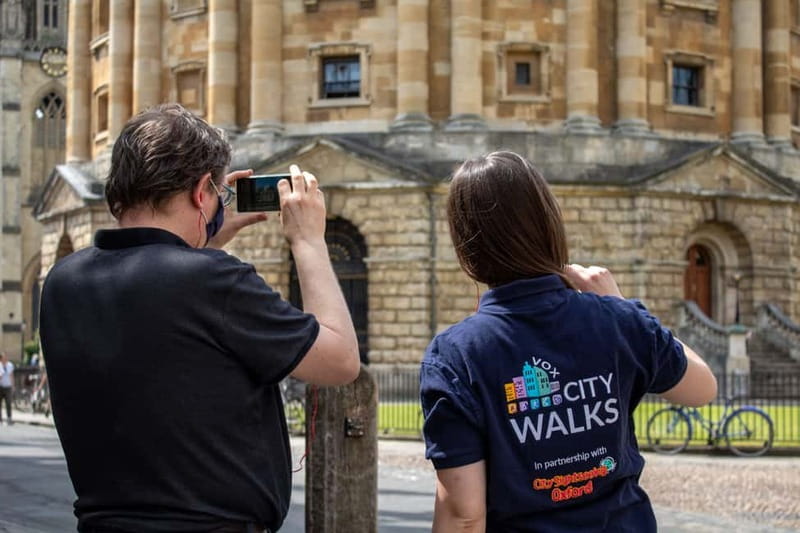
The Radcliffe Camera is one of Oxford’s most photographed buildings, and it earns its reputation. On this tour, you get the quick background that helps you see it as more than a pretty facade.
When the guide explains its place in Oxford’s story, it becomes easier to connect it to the intellectual world of libraries and scholarship. If you like architecture, this is one of the stops where the building reads clearly even from the outside.
Bodleian Library: History You Can Notice Even at a Walk-By
The Bodleian Library is a headline stop, and it is the kind of place where listening adds a lot. You will stroll through the area and hear history tied to the library’s role over time.
A practical tip: take a moment to look at how the building faces the street. Libraries often feel internal, but here Oxford keeps showing you that scholarship is part of the city’s public identity.
Bridge of Sighs: Where Story Meets Stone
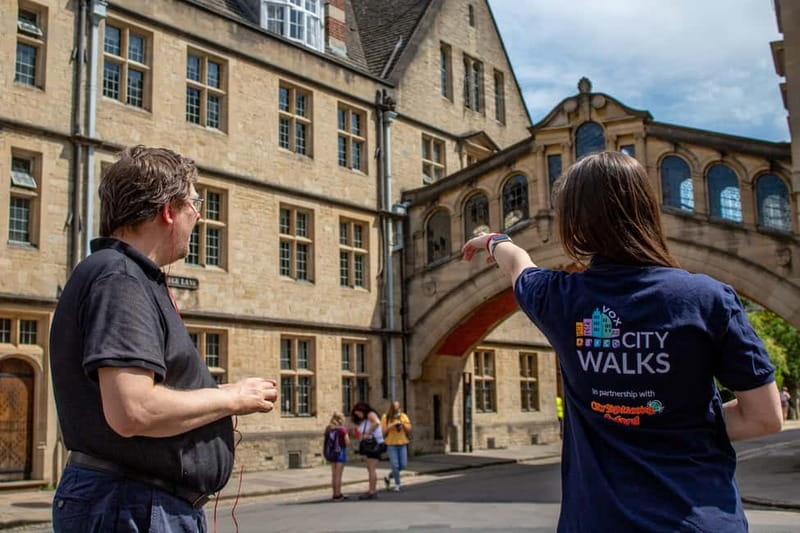
The Bridge of Sighs is one of those locations that feels famous the moment you arrive. On a short walk, it is best approached with a flexible mindset: you are there to learn what the bridge represents and why it became iconic.
If you are expecting a long photo session, consider doing quick shots first. Then shift to listening so you actually leave understanding why it has the nickname it does, and what it signals about the college and university world.
Hertford College: Another College Facade, Another Layer
Hertford College is another key stop that gives you a sense of how Oxford colleges vary while still sharing a recognizable style. Even without going inside, you can notice details that reflect different eras and functions.
In a brief itinerary, this is where the guide’s “make it make sense” approach really helps. You start to see colleges as living communities, not just backdrops.
University of Oxford: Context That Helps Everything Else Click
The tour also references the wider University of Oxford, which matters because the colleges can feel like separate worlds when you are only seeing exteriors. This is where you tie the group of landmarks together into one bigger picture.
For many first-timers, this is the difference between sightseeing and understanding. It helps you plan your next move after the walk, because you know what is most important to chase for your interests.
Weston Library and the History of Science Museum Area: Thinking About Ideas
You will pass by the Weston Library and the History of Science Museum. This combination is great for people who like Oxford not just for famous names, but for how ideas have been studied and recorded.
Since entry is not included, focus on how the university buildings communicate learning. If you are the kind of visitor who enjoys museums but wants to start with a quick orientation first, these stops are a strong taste-test.
The Sheldonian Theatre: A Visual Break in the Academic Loop
The Sheldonian Theatre gives you a different architectural vibe, more dramatic and more event-focused. It helps you balance the tour so it is not only libraries and college streets.
In a short schedule, it also works as a reset point. You can step back, take a photo, and let the guide’s narrative connect academic life to performances and public gatherings.
University College: More Oxford, Still in Quick Strides
You finish the guided circuit near University College. This is another “name you recognize” stop that reinforces how many separate institutions share the same city space.
If you have stamina for a bit more walking, this is also a good time to plan where you want to go after the tour ends. You will have fewer guesses, because the route has already pointed your direction.
What Happens After the Guided Portion: Vox City Audio Routes

One of the best parts of this experience is that it does not end when the guide does. You download the Vox City app after the tour, using the QR code on your voucher, and you get multiple city walking routes.
This is where the ticket becomes more than a quick sampler. You can keep exploring Oxford at your pace, stopping when something catches your eye.
The self-guided menu includes highlights like Carfax Tower, the Covered Market, and the Oxford Castle and Prison area. It also includes spots that feel fun and specific, like the White Horse, Alice’s Shop, and the Headington Shark.
If you like to plan intelligently, pick one route and commit to it while the app is fresh in your mind. Otherwise, Oxford can feel like too many options after a short guided walk.
Self-Guided Route Ideas That Fit Different Moods
Here are a few ways you can use the app list strategically, without trying to do everything.
If you want university atmosphere, look for stops like the Ashmolean Museum, New College, All Souls College, and the Old Schools Quad. If you want scenic variety, you can pair the historic center with walks through areas like Port Meadow and the Martyrs Memorial.
If you want quirky Oxford flavor, aim for Alice’s Shop and the Headington Shark. It is a good reminder that Oxford is not only textbooks and towers, it is also local character.
Walking Practicalities: How to Make the Most of 45 Minutes
Because the tour is short, you will get the most out of it by arriving ready to move. Wear comfortable shoes, and don’t expect to spend lots of time parked in one spot unless the guide pauses.
Also, keep your expectations aligned with the format. The tour emphasizes sighting, pass-by stops, and exterior viewing, and the listed highlights are mostly about landmarks and streets. If your dream is to tour interiors, you may need to plan separate tickets later.
One small positive detail: the group size is described as about 8 people in at least one instance, which helps keep the walk smooth and makes it easier to hear the guide without constant jostling.
Where This Tour Fits Best (And Where It Does Not)
This tour is a great fit if you are on a timetable. If you have half a day, a short layover, or you are pairing Oxford with other stops in southern England, the pace gives you a strong first impression without turning your feet into sad souvenirs.
It is also a good pick if you want to understand Oxford quickly before choosing what to do next. Once you know where the Radcliffe Camera, Bodleian Library area, and Bridge of Sighs sit relative to High Street, your decision-making gets easier.
The main mismatch is also clear. If you want deep access inside major buildings, this is not that experience. Since entry to attractions is not included, your best bet is to use this tour for orientation and then add interior visits later if they interest you.
Should You Book Oxford: City and Universities Express Tour & Audio Guide?
Book it if you want a time-efficient introduction to Oxford’s most recognizable university sights, plus a built-in way to continue exploring with audio on your own. At $14, the value is strongest when you treat the guided walk as setup for a self-guided follow-up.
Consider skipping or pairing it with other plans if your top priority is going inside attractions. This route focuses on the main landmarks and stories you can learn quickly, not on ticketed entry.
If your goal is to leave Oxford with your bearings straight and a list of where you want to return, this express walk is a solid way to start.
More Self-Guided Routes in Oxford
- Oxford: City Tour & Exploration Game
★ 3.9 · 5 reviews - London: Royal Walking Tour and Buckingham Palace Audio Tour
★ 4.8 · 154 reviews - Bristol: Self-Guided Sightseeing Audio Tour
★ 4.4 · 151 reviews - London: Self-Guided Notting Hill Walking Tour with an APP
★ 4.3 · 120 reviews
Newly listed near Oxford
- Undiscovered Cotswolds Private Driving Tour★ 5.0 · 5 reviews
- Oxford University: Guided Small Group Walking Tour★ 4.8 · 90 reviews
- Private Downton Abbey Day Tour, including Pub Lunch★ 5.0 · 5 reviews
- Oxford: Town & Gown Walking Tour★ 4.7 · 15 reviews
- Oxford: Tolkien, Lewis and Alice Walking Tour. Small group!★ 5.0 · 7 reviews
- Oxford: University Tour for Prospective Students★ 4.9 · 26 reviews
- Oxford: Sunset Cruise with a Glass of Prosecco★ 4.8 · 6 reviews
- Oxford: City & University Tour with College entry included★ 5.0 · 4 reviews
Self-Guided Tours, compared.

Emirates Stadium Entry Ticket and Audio Guide
Read our review →

Canterbury Cathedral: Entry Ticket with Audio Guide
Read our review →
Churchill War Rooms Ticket & Political London Audio
Read our review →
Royal Walking Tour and Buckingham Palace Audio Tour
Read our review →

Self-Guided Notting Hill Walking Tour with an APP
Read our review →
Buckingham Palace State Rooms Entry & Royal London Audio App
Read our review →Browse the lists this tour appears in